14 Drenched Dining Room Ideas That Feel Moody, Stylish, and Inviting
A dining room can feel completely different when you stop treating it as just a place to eat. Rich color, layered lighting, and thoughtful textures can turn an ordinary space into a dramatic retreat that makes every meal feel special. If your dining area feels flat, cold, or unfinished, a drenched dining room may be the transformation you’ve been looking for. From deep wall colors to matching ceilings, these ideas will help you create a cozy, sophisticated dining space with plenty of personality and warmth.
1. Go All In With Deep Forest Green
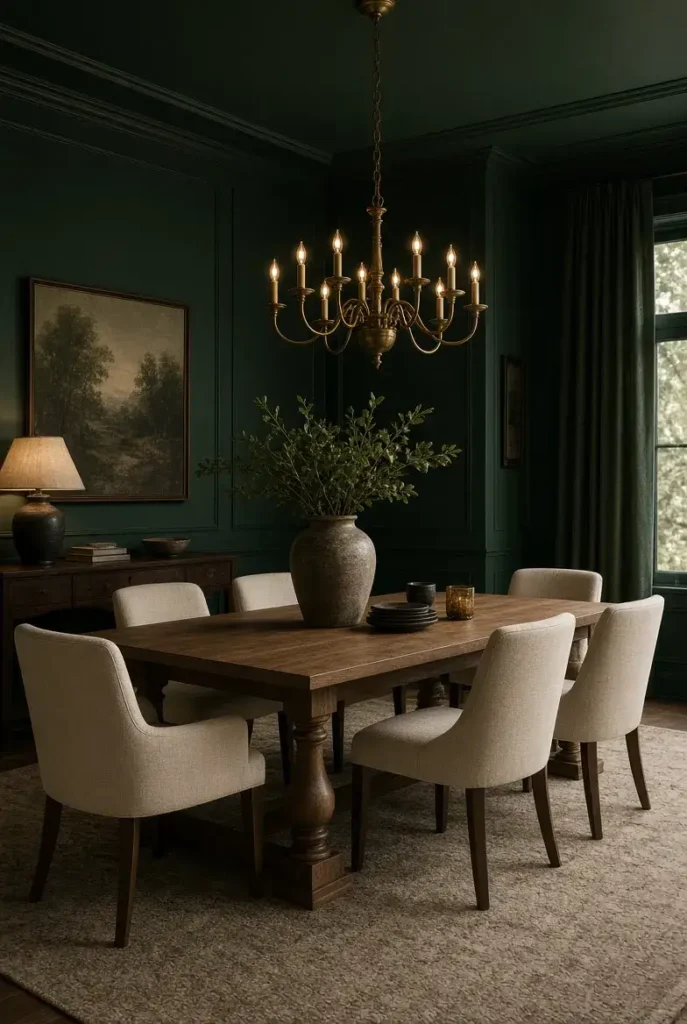
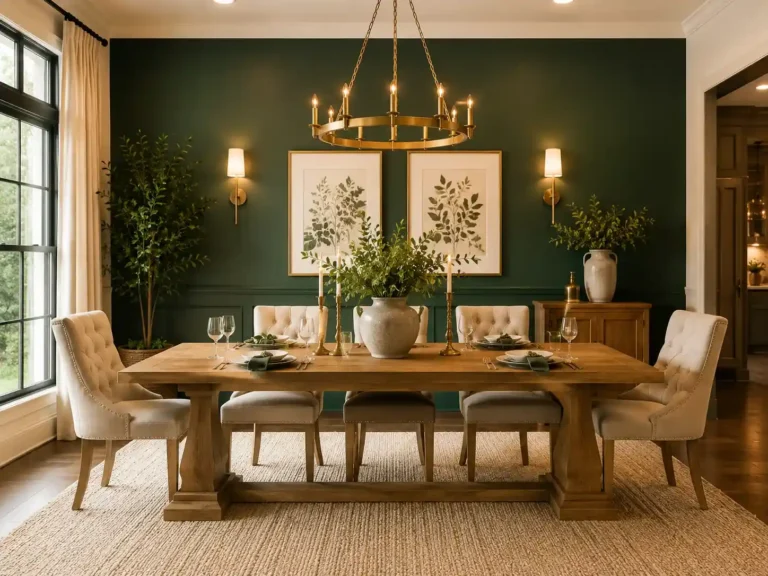
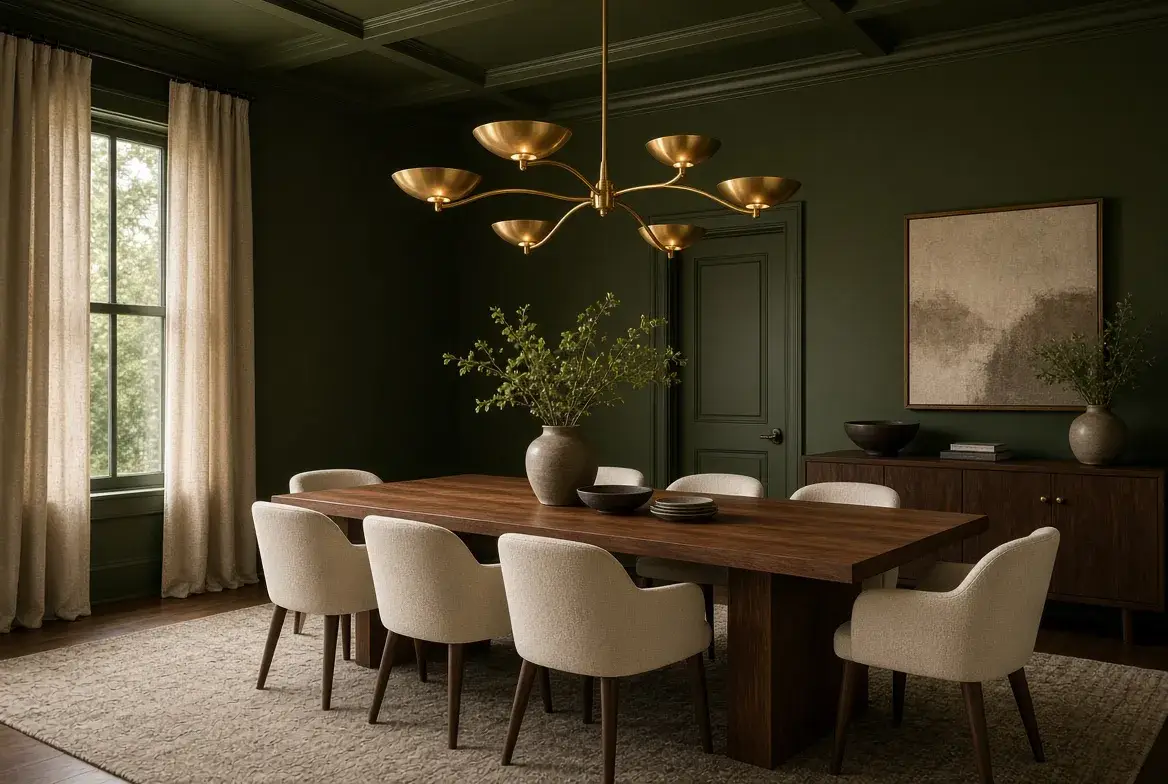
Create a dramatic drenched dining room with rich forest green covering the walls, trim, and even the ceiling. This deep shade brings a natural, sophisticated feeling while making the dining area feel intimate and cocoon-like. Pair it with a warm wooden table and cream upholstered chairs.
Brass lighting and antique-style accessories add beautiful contrast against the saturated green. Keep the flooring natural or lightly toned so the room doesn’t feel visually heavy. Soft lamps and candles can make the color glow beautifully in the evening.
Tip: Test your green paint in both daylight and artificial light before committing.
2. Create a Moody Navy Dining Space
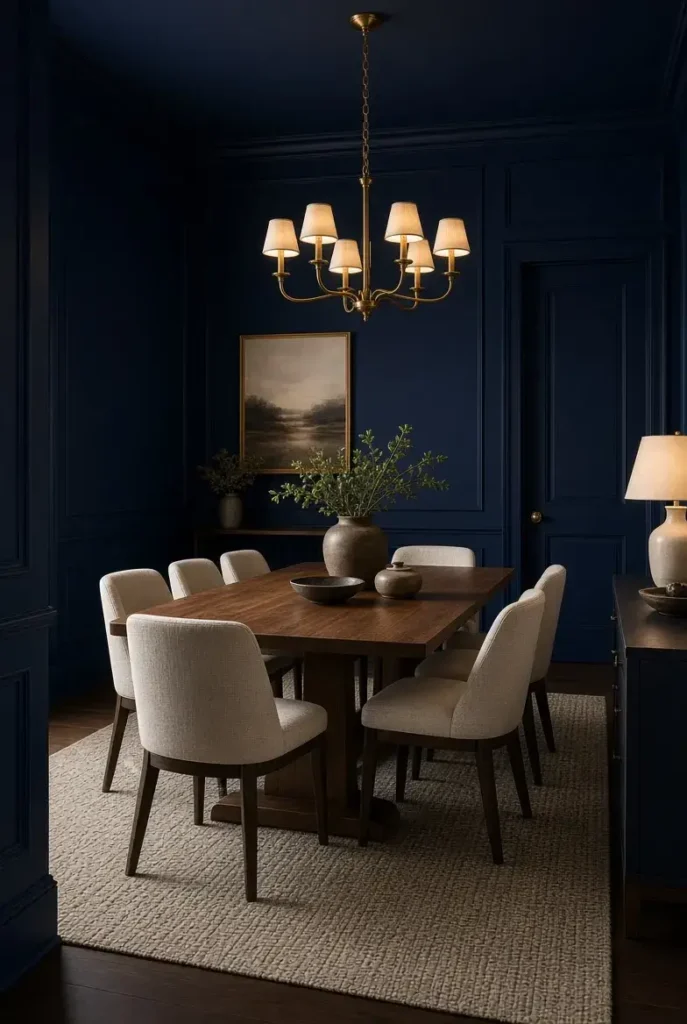
Navy blue is perfect when you want your dining room to feel elegant without becoming too dramatic. Paint the walls, doors, and trim in the same deep navy shade for a beautifully cohesive effect. A natural wood dining table can soften the darker palette.
Add linen chairs, warm brass hardware, and a textured rug to introduce contrast and comfort. Cream-colored artwork or ceramics can also stand out beautifully against the saturated walls. The result feels polished but still welcoming for everyday dinners. Tip: Choose warm white bulbs to prevent deep navy from looking too cold at night.
3. Try a Warm Chocolate Brown
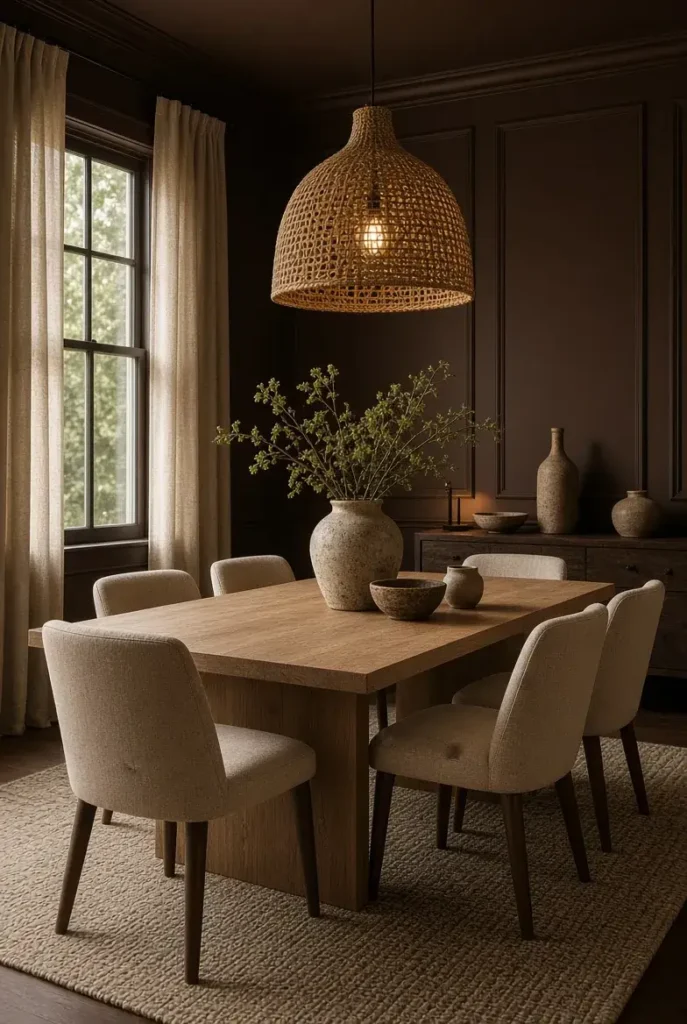
Chocolate brown creates an instantly cozy atmosphere and works especially well in dining rooms where you want warmth and depth. Use the shade across the walls and trim, then introduce lighter furniture to prevent the room from feeling too dark.
A pale oak table, beige dining chairs, and woven accessories create a balanced contrast against the rich brown backdrop. Add a large pendant light above the table to create a soft focal point. This combination feels earthy, sophisticated, and comfortable. Tip: Use natural textures such as wood, linen, and rattan to keep brown walls feeling fresh.
4. Make a Black Dining Room Feel Elegant
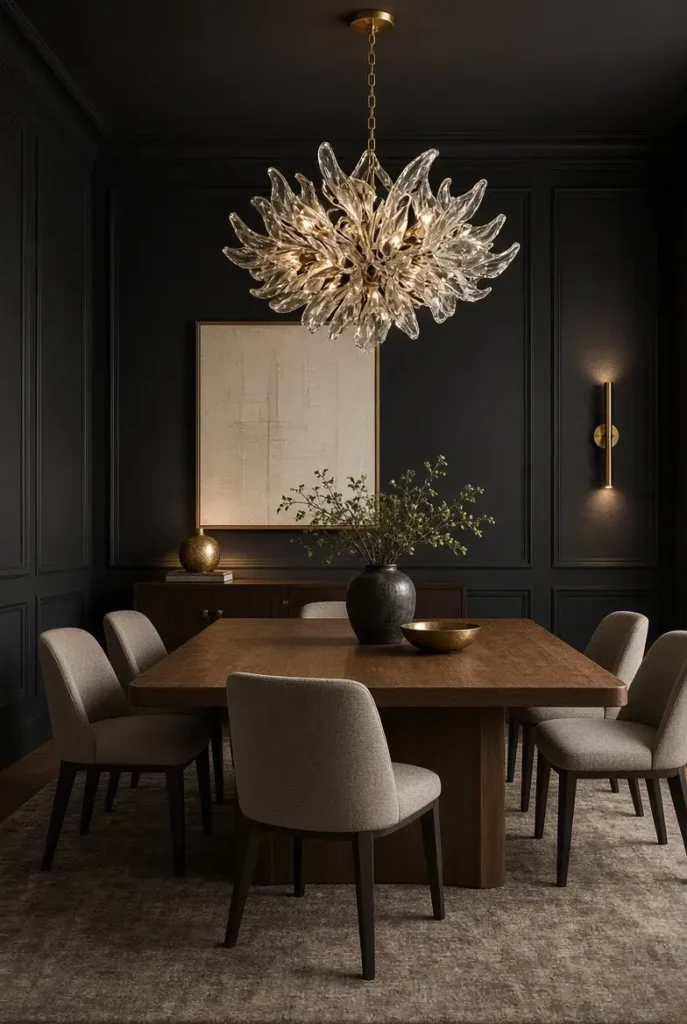
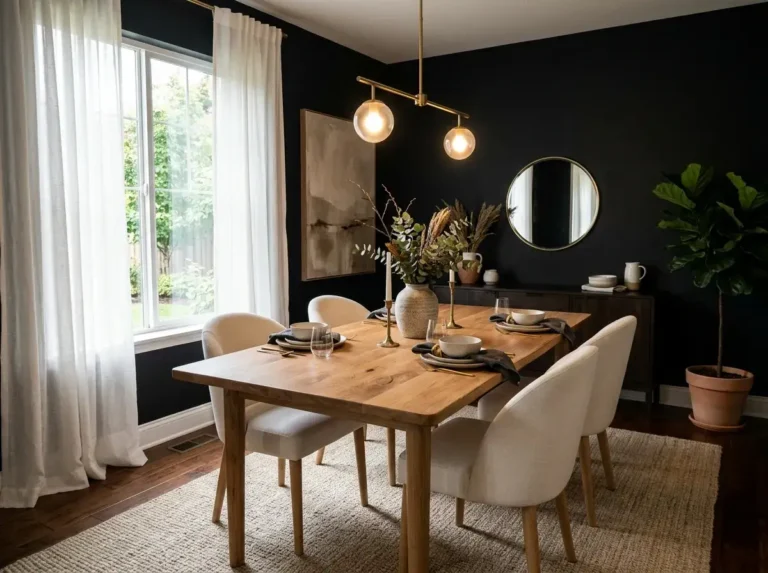
A black drenched dining room can look incredibly stylish when balanced with warm textures and thoughtful lighting. Cover the walls and trim in a soft black or charcoal shade rather than a harsh glossy black. This creates drama while maintaining a sophisticated mood.
Choose a light oak or medium-toned wooden table to break up the darkness. Upholstered chairs, a statement chandelier, and metallic accents add softness and visual interest. Artwork with warm neutral tones can also prevent the room from feeling stark. Tip: Use several light sources instead of relying on one overhead fixture.
5. Layer Rich Burgundy for a Romantic Mood
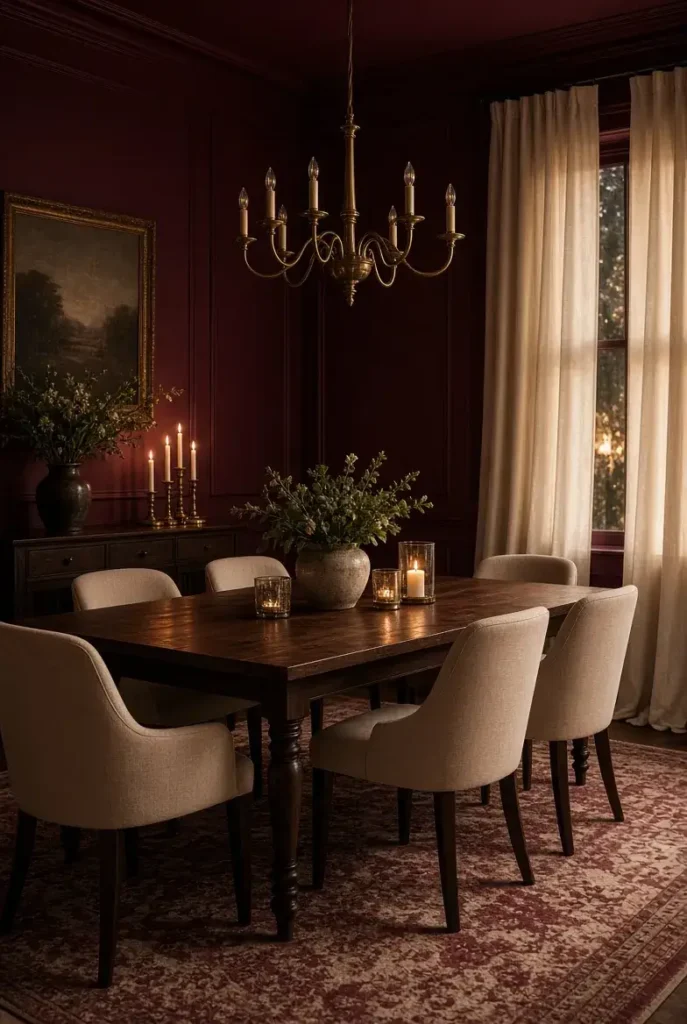
Burgundy brings warmth, richness, and a slightly romantic character to a dining room. Use this deep red shade on the walls and trim to create a bold color-drenched effect. It works beautifully with dark wood furniture and vintage-inspired details.
Introduce cream textiles, aged brass fixtures, and soft candlelight for a welcoming atmosphere. A patterned rug with muted red and neutral tones can tie everything together without competing with the walls. The space feels perfect for intimate dinners and entertaining. Tip: Keep accessories simple when using such a strong wall color.
6. Choose a Soft Olive Green
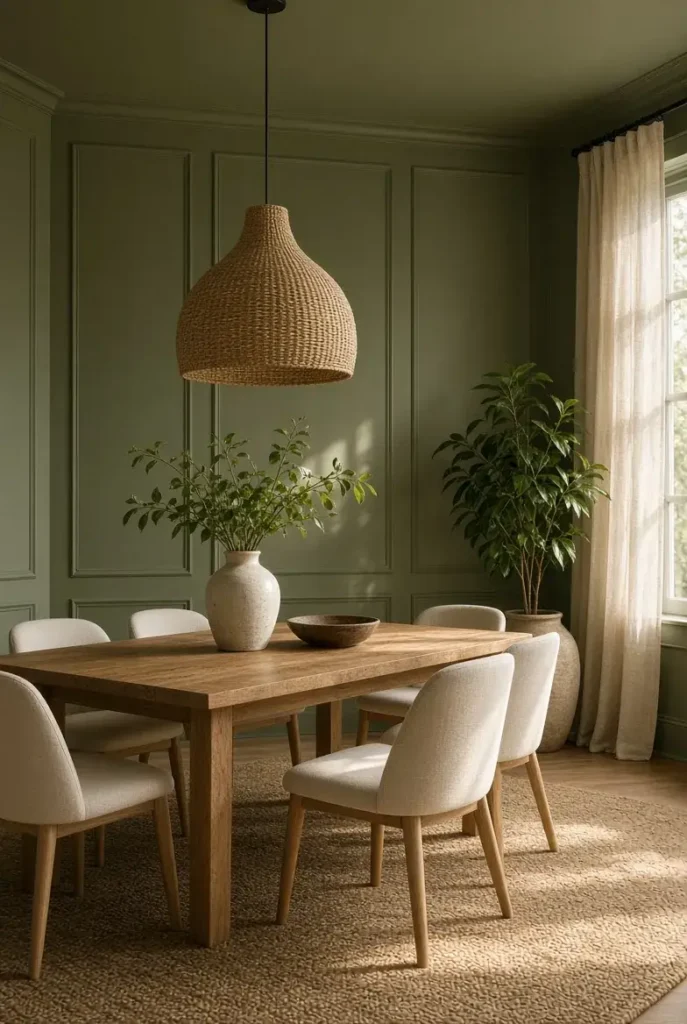
For a calmer approach, try olive green throughout your dining room. This earthy shade creates a cozy, organic feeling while remaining softer than dramatic emerald or forest green. Painting the walls and trim together gives the room a polished, enveloping appearance.
Pair olive with warm oak, woven textures, ivory upholstery, and aged brass accents. Natural materials help the color feel connected to the outdoors, while warm lighting adds a relaxing glow after sunset. Tip: Add one or two leafy plants to reinforce the natural character of the space.
7. Use Terracotta for Warmth and Character
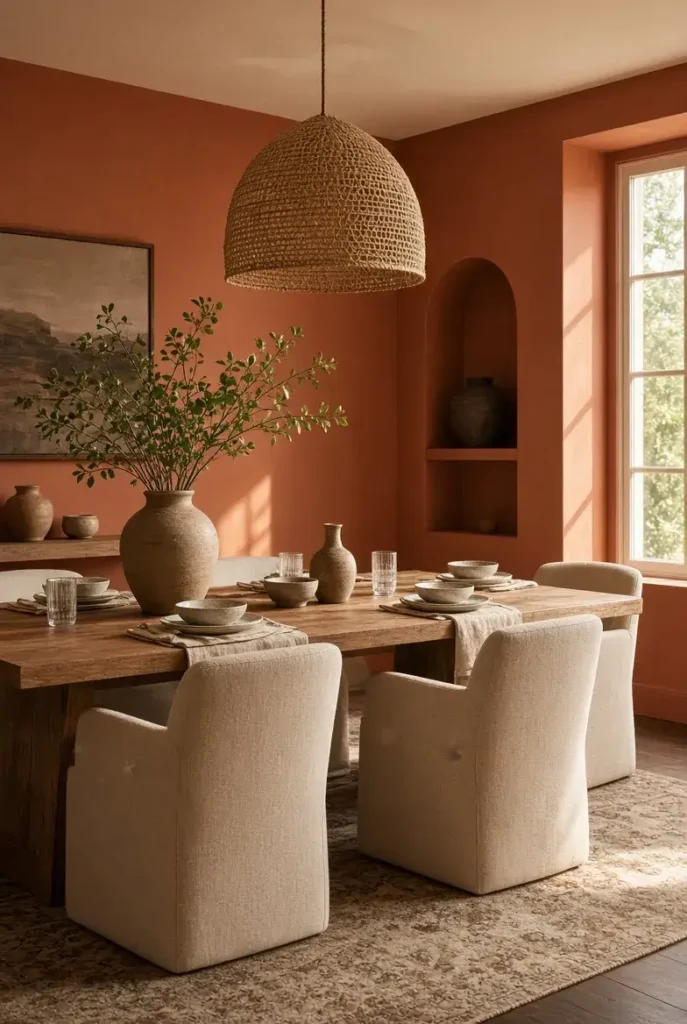
Terracotta can turn an ordinary dining room into a warm, inviting gathering space. Cover the walls and trim in a muted terracotta shade, then balance the rich color with natural wood furniture and creamy textiles. The palette feels earthy, cheerful, and beautifully grounded.
Choose woven pendant lighting, handmade ceramics, and linen napkins to enhance the relaxed atmosphere. A vintage-style rug can add another layer of pattern without overwhelming the room. This look works especially well in homes with plenty of natural light. Tip: Choose a muted terracotta rather than an overly bright orange for a more sophisticated finish.
8. Embrace a Dramatic Charcoal Palette
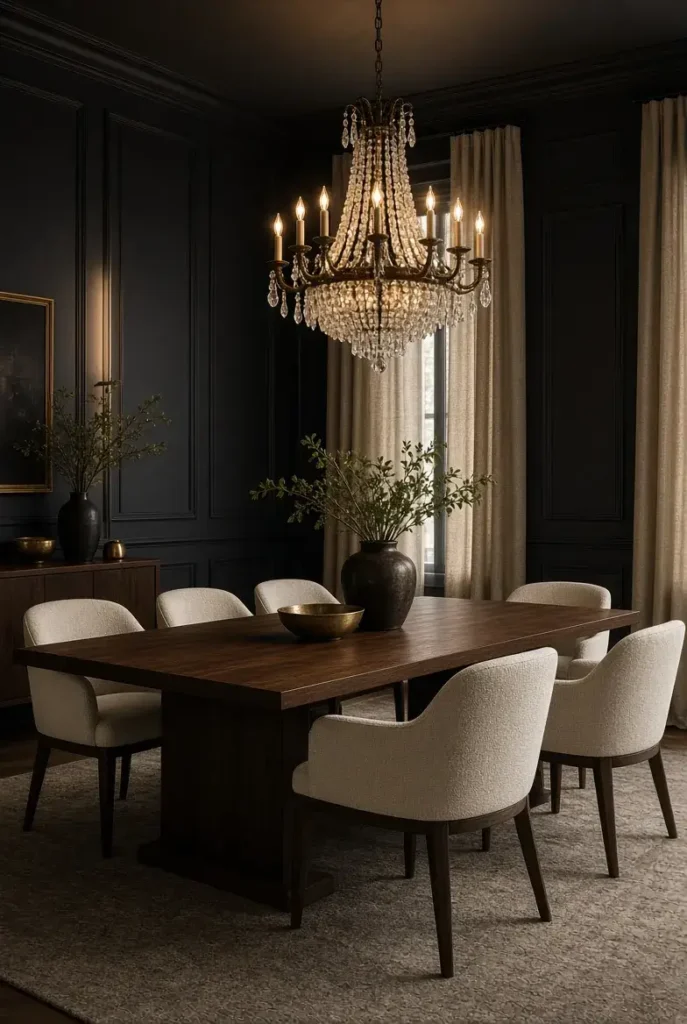
A charcoal dining room creates a sophisticated, intimate atmosphere without the intensity of true black. Paint the walls, doors, and trim in a deep charcoal shade to create a seamless backdrop. This darker palette works beautifully with warm wood, cream fabrics, and aged metallic finishes.
Add a sculptural chandelier above the table to draw attention upward and create a striking focal point. Soft beige curtains and a textured rug can keep the room comfortable rather than severe. Tip: Choose charcoal with warm undertones if you want the dining room to feel cozy instead of cold.
9. Create a Deep Teal Dining Room
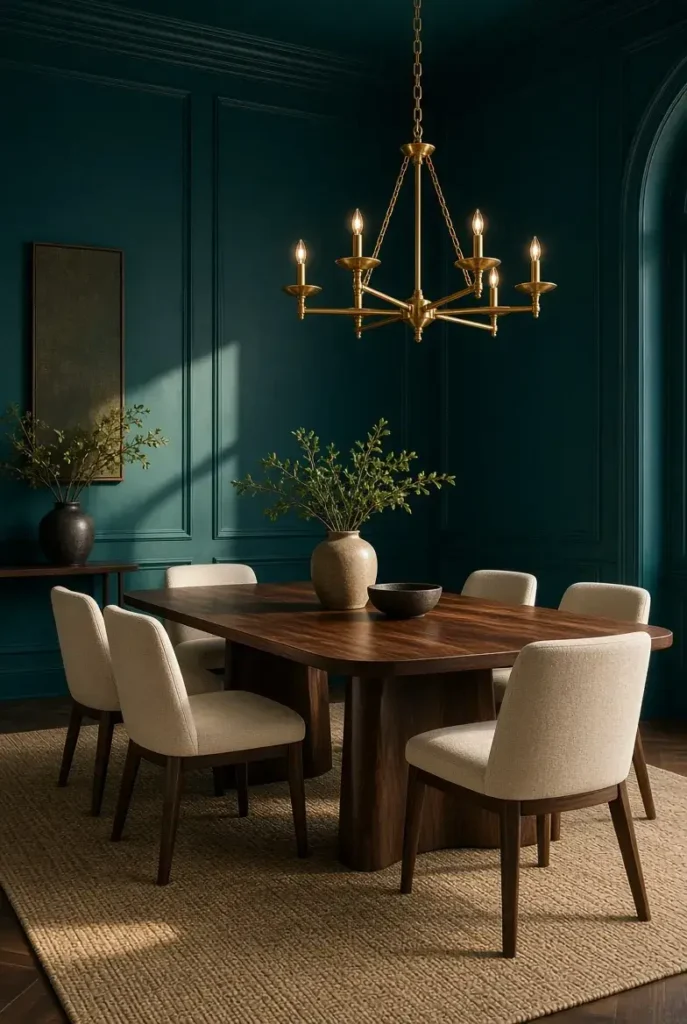
Deep teal combines the richness of blue with the natural character of green, making it a beautiful choice for a color-drenched dining space. Use the shade across your walls and trim for an immersive look that feels both dramatic and refreshing.
Pair teal with walnut furniture, creamy upholstery, and brushed brass lighting for an elegant contrast. Natural daylight will bring out the green undertones, while evening lighting makes the color feel deeper and moodier. Tip: Use warm neutral accessories to balance the intensity of deep teal.
10. Try a Soft Plum Dining Room
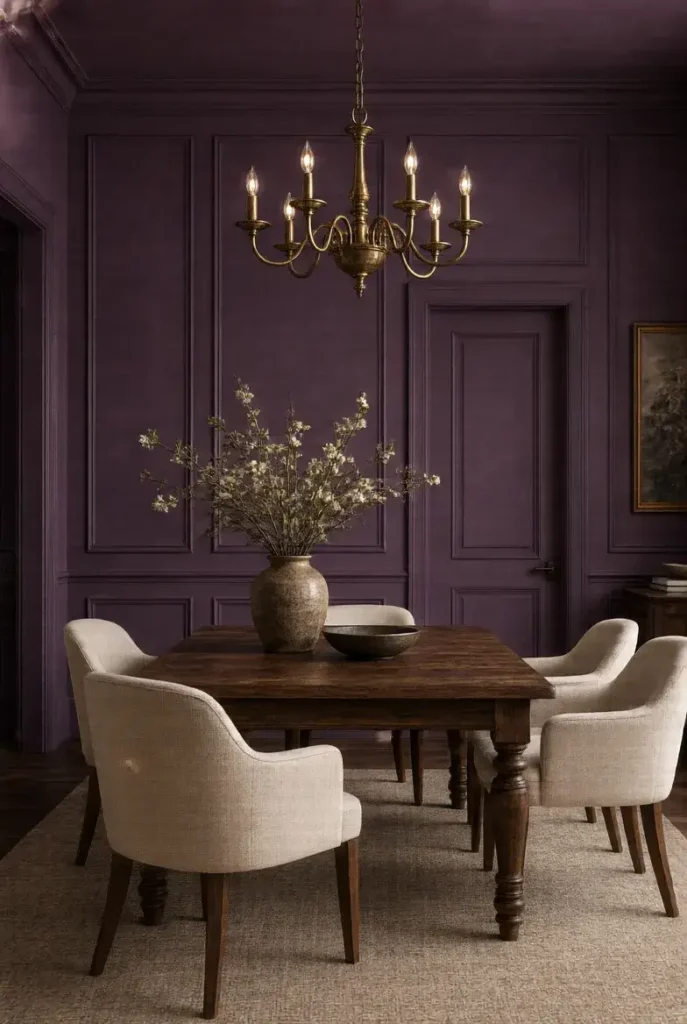
Soft plum adds personality while keeping a dining room warm and sophisticated. Instead of choosing an extremely bright purple, select a muted plum with earthy undertones. Applying it to the walls, trim, and doors creates a beautifully enveloping effect.
Balance the color with warm wood, ivory chairs, and antique brass details. A simple floral arrangement or ceramic centerpiece can add softness without taking attention away from the dramatic walls. Tip: Keep your artwork fairly simple so the rich plum color remains the star of the room.
11. Paint the Ceiling for a Cocooning Effect
If you want to take a drenched dining room even further, continue the wall color onto the ceiling. This technique removes the visual break between surfaces and creates a cozy, enveloping feeling. It can make a dining room feel intentional and surprisingly luxurious.
Choose a matte or low-sheen finish to prevent excessive reflection and keep the color sophisticated. Pair the ceiling with a beautiful pendant or chandelier positioned directly over the dining table. Tip: Use a lighter rug or furniture pieces to visually ground the darker overhead color.
12. Pair Rich Walls With Natural Wood
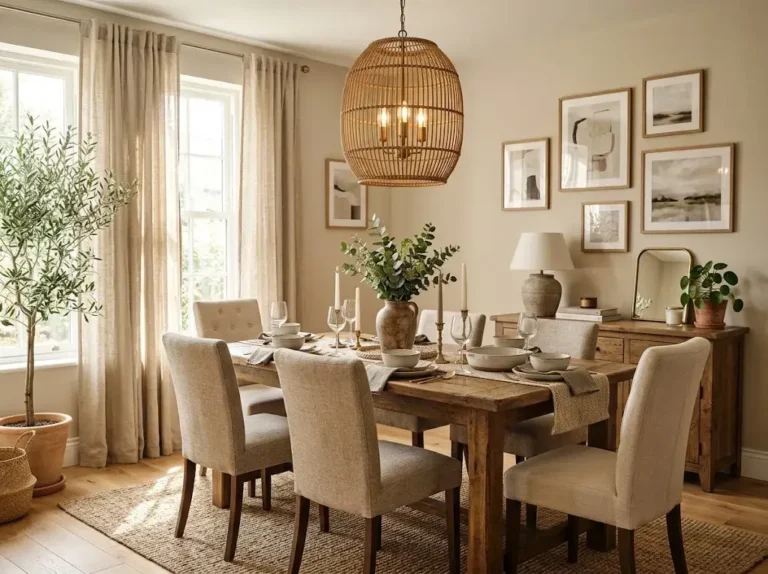
Dark, saturated walls become especially inviting when combined with natural wood furniture. Choose walnut, oak, or reclaimed wood for the dining table to introduce warmth and organic texture. The contrast keeps the room from feeling overly formal or visually heavy.
Add woven chairs, linen curtains, and handmade pottery for a relaxed modern organic feeling. Warm pendant lighting can highlight the wood grain and make the entire space feel softer in the evening. Tip: Let the natural wood remain visible rather than covering it with too many decorative accessories.
13. Add Vintage Details for Character
A richly painted dining room becomes even more interesting when you introduce vintage-inspired furniture and accessories. Think antique wooden chairs, an aged mirror, traditional artwork, or a slightly weathered dining table. These details give the saturated walls more personality.
Mix old and new pieces so the room feels collected rather than themed. Brass candlesticks, ceramic vases, and textured table linens can add small layers of visual interest. Tip: Choose just a few vintage pieces and mix them with modern lighting for a balanced look.
14. Finish With Warm Layered Lighting
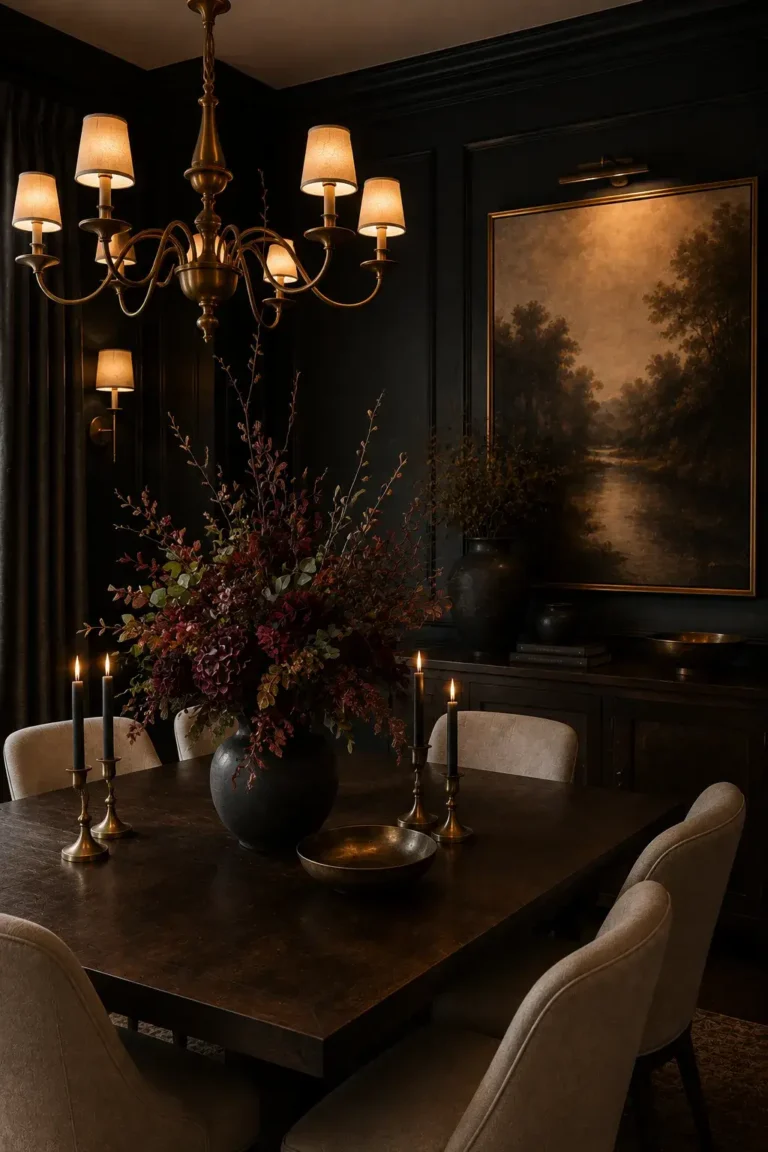
Lighting can completely change how a color-drenched dining room feels after sunset. Start with a statement chandelier or pendant above the dining table, then add wall sconces, table lamps, or candles to create several soft pools of light.
Warm illumination makes deep colors appear richer and brings out the texture of wood, linen, ceramics, and metal. It also creates a welcoming mood that encourages guests to linger around the table. Tip: Choose bulbs around 2700K to create a warm, comfortable glow for evening meals.
Conclusion
A beautiful dining room doesn’t need to be large or filled with expensive furniture to make an impression. The right color, texture, furniture, and lighting can completely transform the atmosphere. Whether you prefer forest green, deep navy, warm terracotta, charcoal, or rich teal, a drenched dining room gives you the freedom to create a space with personality and depth. Start with one color you genuinely love, then build around it with natural materials, soft fabrics, warm lighting, and meaningful accessories. Most importantly, create a room that feels inviting enough for everyday meals and special gatherings alike.