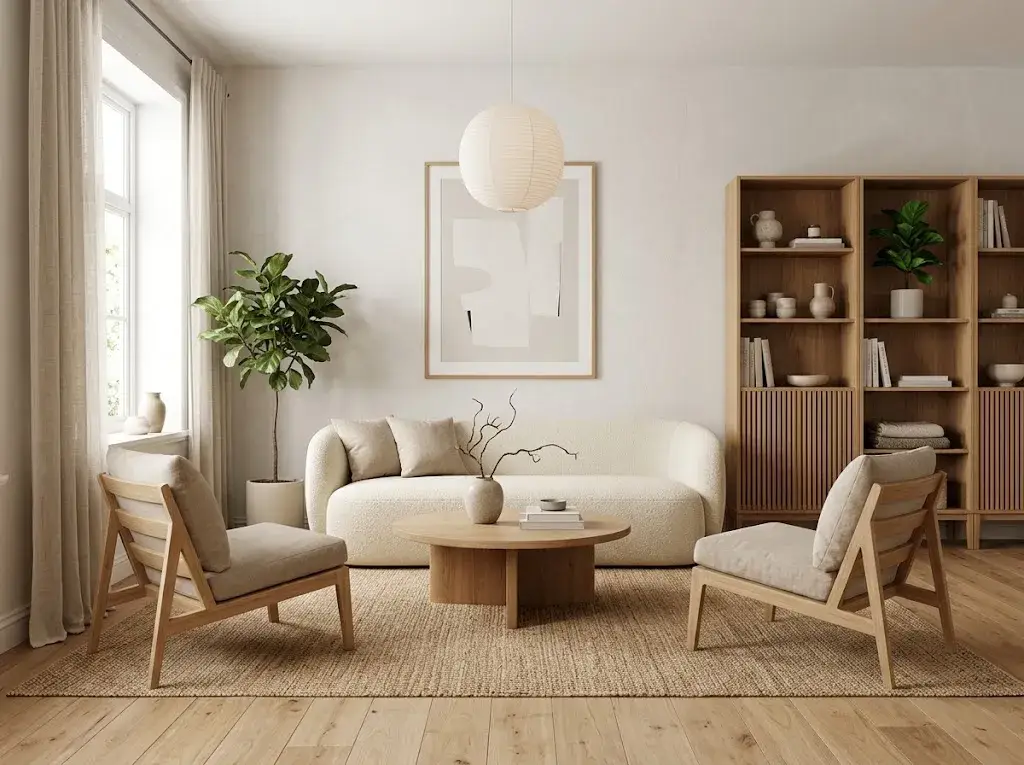
12 Japandi Living Room Ideas for a Calm and Beautiful Home
A living room can feel busy even when it is beautifully decorated. Too much furniture, harsh colors, and clutter can make the space feel restless instead of relaxing. A japandi living room offers a softer approach, blending Japanese simplicity with Scandinavian warmth. Think natural materials, calming neutrals, cozy textures, and thoughtful furniture placement. If you want your living room to feel peaceful, welcoming, and effortlessly stylish, these ideas will help you create a space that feels beautiful without ever feeling overdone.
1.Choose a Soft Neutral Color Palette
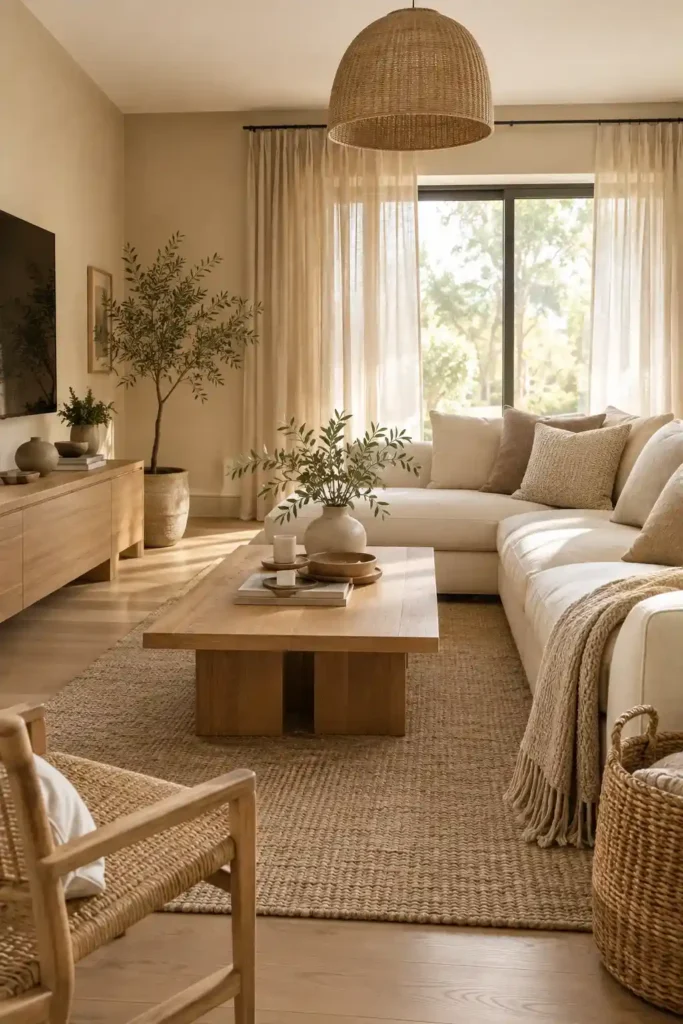
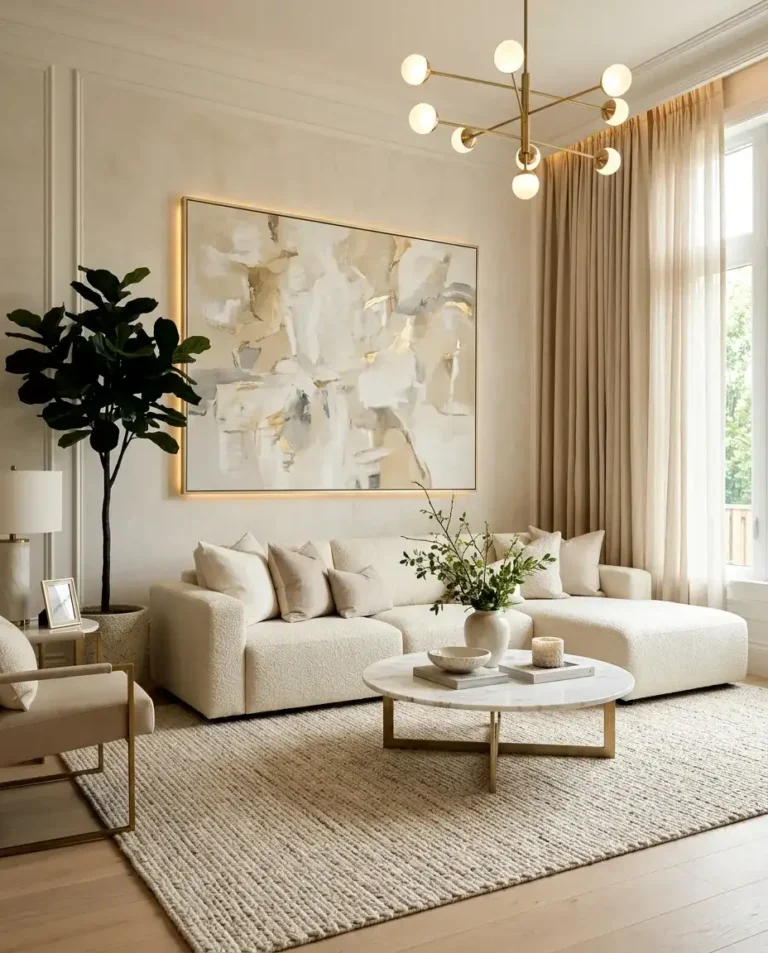
Start with warm, quiet colors that instantly make the room feel peaceful. Soft beige, creamy white, warm taupe, and light greige work beautifully on walls and larger furniture. Add subtle contrast through natural wood, woven baskets, and textured fabrics to keep the room from feeling flat.
This restrained palette creates the calm atmosphere that makes Japandi interiors so appealing. Instead of relying on bright colors, let texture and natural materials provide visual interest. The result feels airy, sophisticated, and comfortable at the same time.
Tip: choose three main neutral shades and repeat them throughout the room.
2.Add Natural Wood Furniture
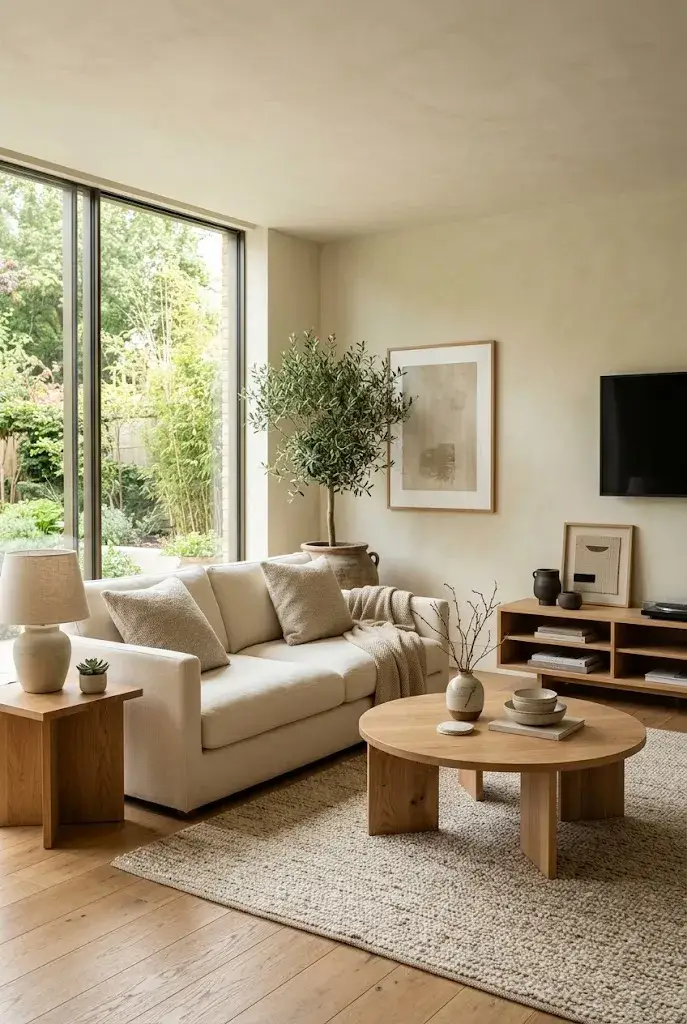
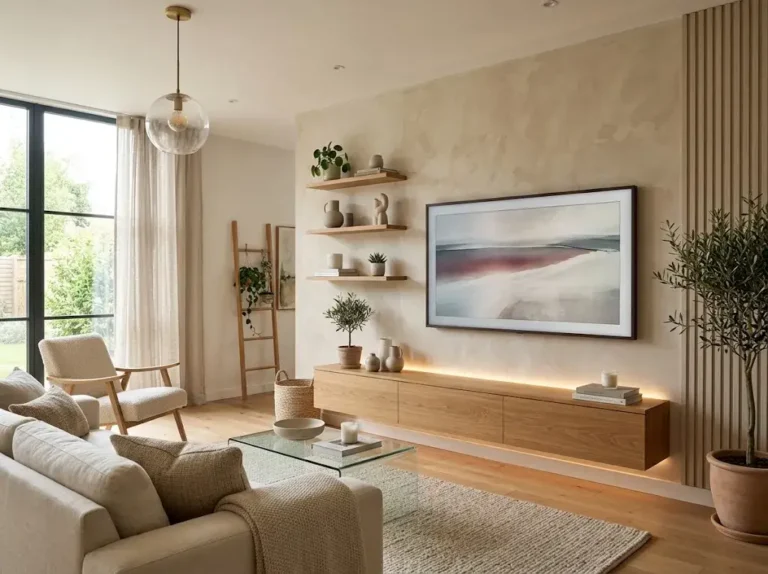
Natural wood brings warmth into a Japandi space and prevents minimalist interiors from feeling cold. Choose simple coffee tables, low media units, shelving, or side tables in oak, ash, walnut, or other softly finished woods. Look for visible grain and uncomplicated shapes.
Wood works especially well beside cream upholstery and neutral walls because it adds depth without overwhelming the room. A few carefully chosen pieces can make the entire space feel grounded and connected to nature.
Tip: mix similar wood tones rather than using many dramatically different finishes in one room.
3.Keep Furniture Low and Simple
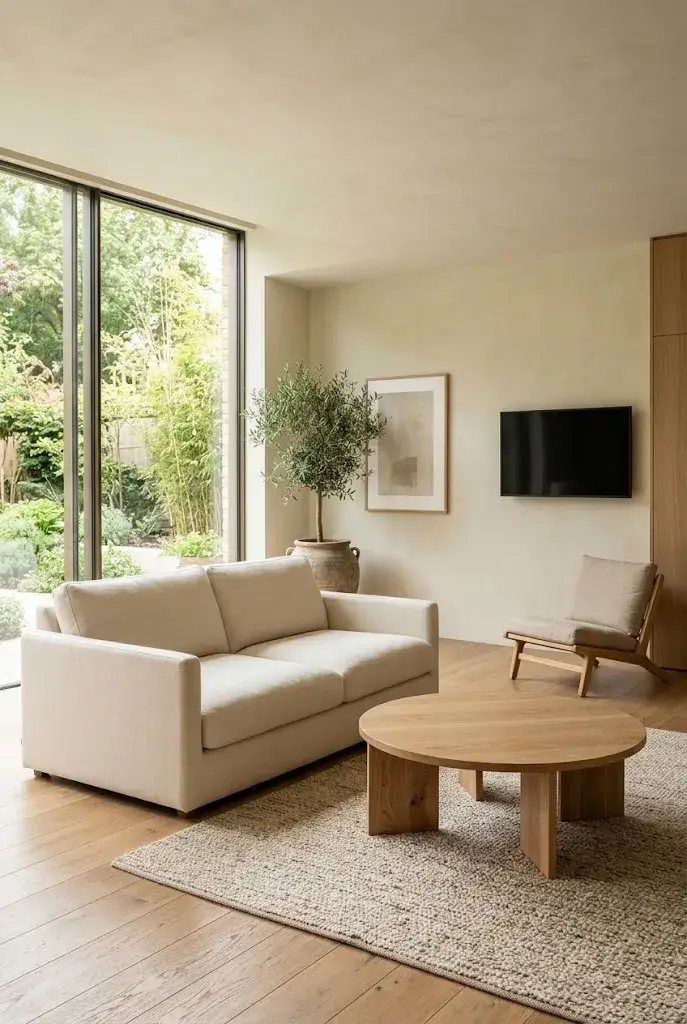
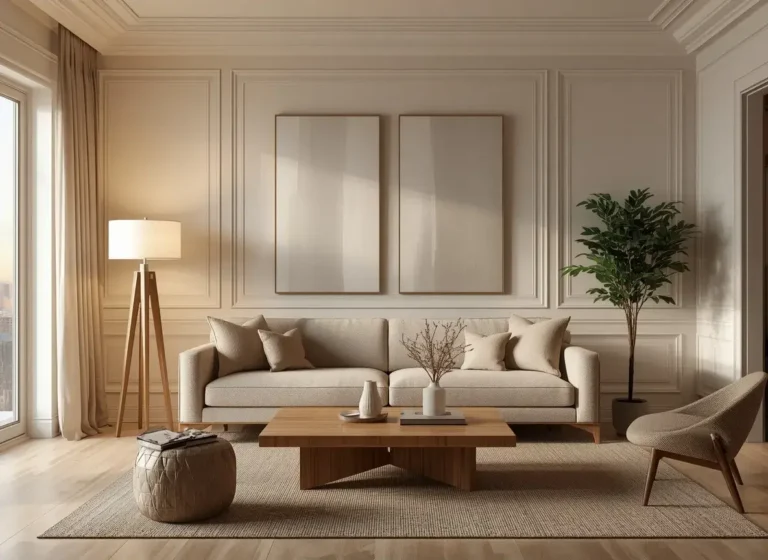
Low-profile furniture is one of the easiest ways to create a relaxed Japandi feeling. Choose a streamlined sofa, low coffee table, and simple lounge chairs with clean silhouettes. Avoid oversized furniture with complicated details that can make the room appear visually heavy.
Keeping furniture closer to the floor creates an open, grounded atmosphere while allowing more wall and floor space to remain visible. This makes the room feel calm rather than crowded.
Tip: leave comfortable walking space around each major piece so the layout feels intentional and easy to move through.
4.Layer Warm and Cozy Textures
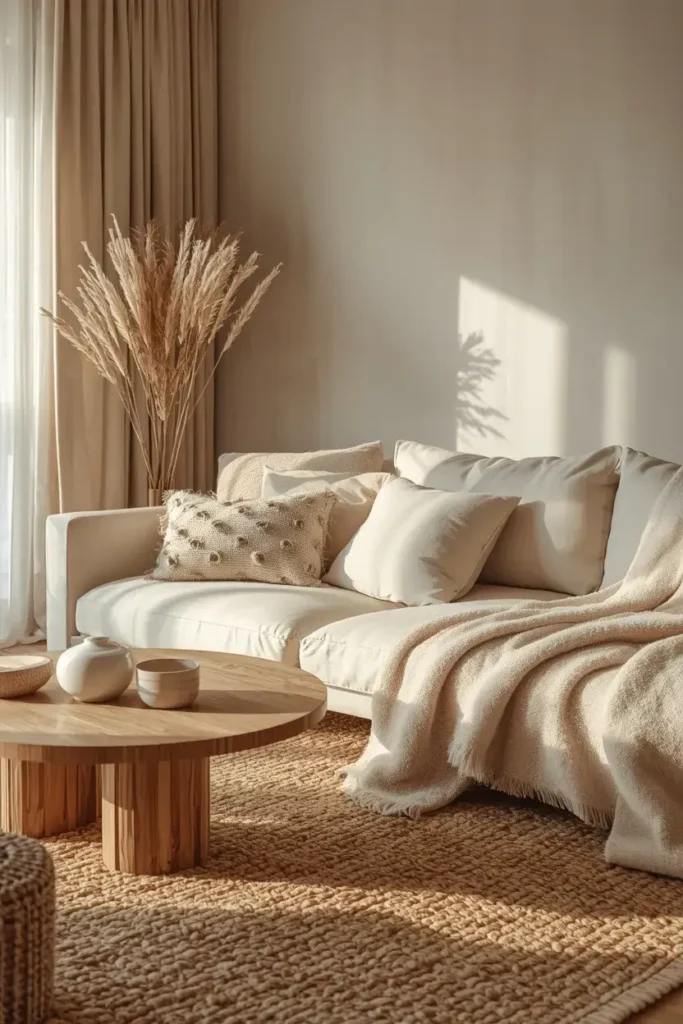
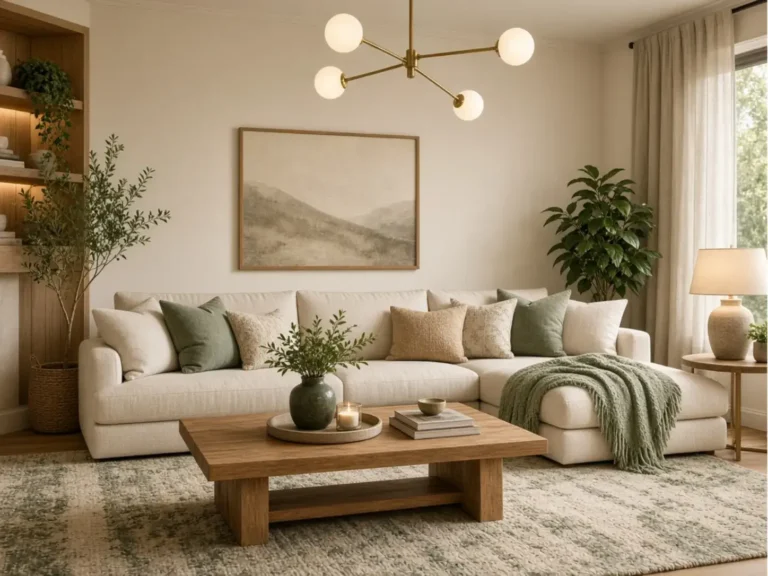
Minimalism does not have to mean uncomfortable. Bring warmth into your living room with linen curtains, soft cotton cushions, chunky throws, wool rugs, and subtly textured upholstery. Keep the colors neutral while allowing the materials to create the visual richness.
These layers make a simple room feel inviting without adding unnecessary decoration. A cream sofa paired with a woven rug and soft beige cushions can look incredibly cozy while still maintaining a clean appearance.
Tip: combine three or four different textures instead of adding lots of decorative objects.
5.Create a Japandi Living Room With Soft Lighting
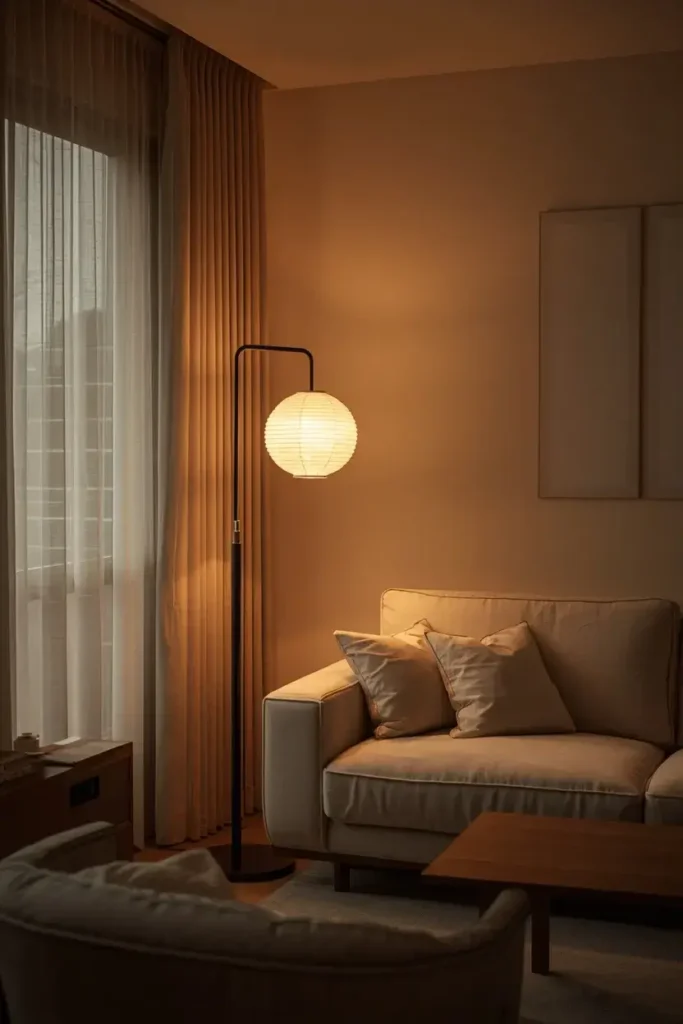
Lighting can completely change the mood of your living room. Use warm lamps, simple paper shades, sculptural table lamps, and understated floor lamps to create a gentle glow after sunset. During the day, allow natural sunlight to fill the room through lightweight curtains.Soft lighting highlights wood grain, woven fabrics, and neutral colors beautifully, making the entire space feel warmer and more relaxing. Avoid overly bright, cool-toned bulbs that can make the room feel stark.
Tip: use warm white bulbs around 2700K to create a cozy evening atmosphere.
6.Bring in Simple Greenery
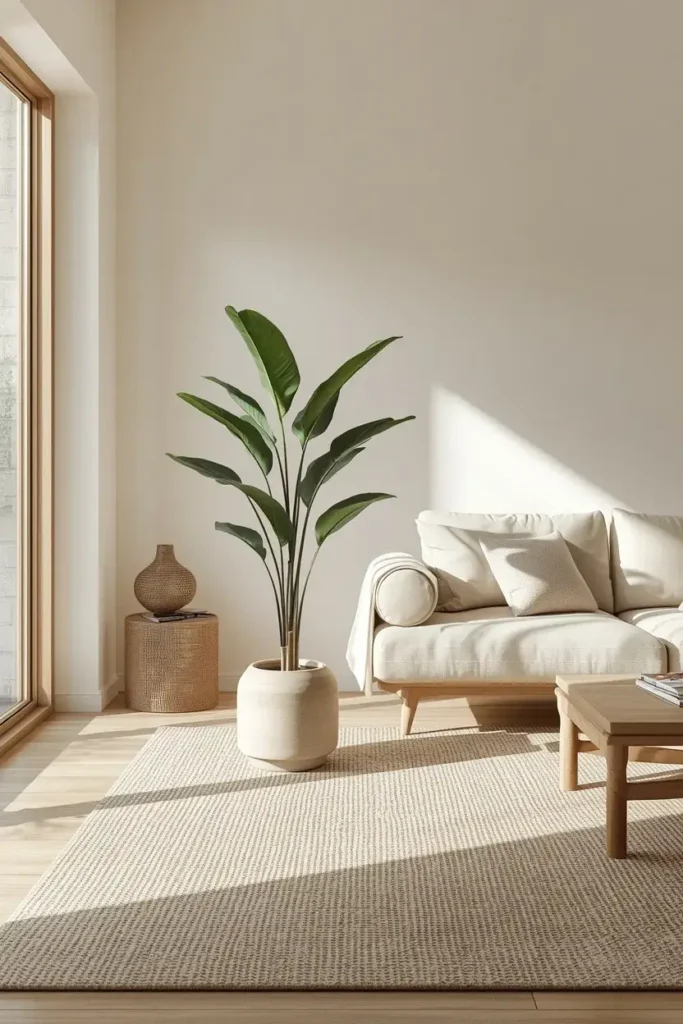
A little greenery can make a Japandi interior feel naturally alive. Choose plants with elegant shapes, such as an olive tree, rubber plant, fiddle leaf fig, or simple leafy houseplant. Place them in ceramic, stone, or woven planters with understated finishes.
Plants add color without disturbing the peaceful neutral palette. Their organic shapes also soften straight furniture lines and introduce a connection to nature, which is central to the Japandi aesthetic.
Tip: use one larger plant as a focal point instead of filling every empty corner with smaller plants.
7.Decorate With Meaningful Minimalism
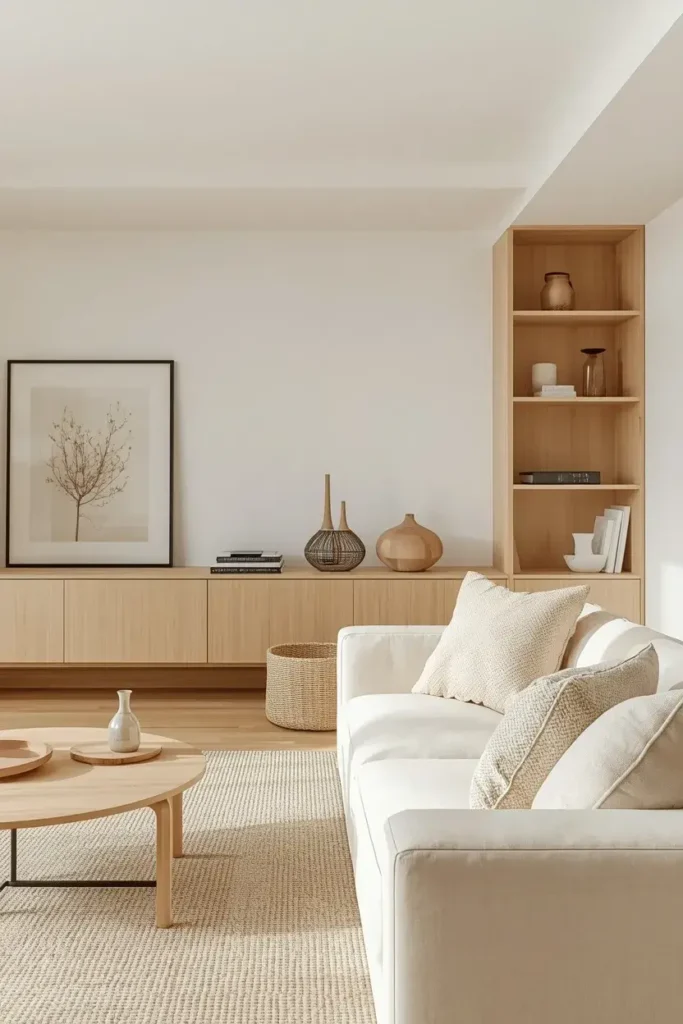
Instead of filling shelves and tables with decorations, choose a few pieces that genuinely add beauty or meaning. A handmade ceramic vase, small wooden sculpture, framed neutral artwork, or woven basket can provide personality without creating clutter.
This thoughtful approach keeps the room visually peaceful while making it feel personal rather than empty. Every object has room to breathe, allowing its shape and craftsmanship to stand out.
Tip: before adding another accessory, remove one item first and see whether the room feels more balanced.
8.Use a Natural Fiber Rug
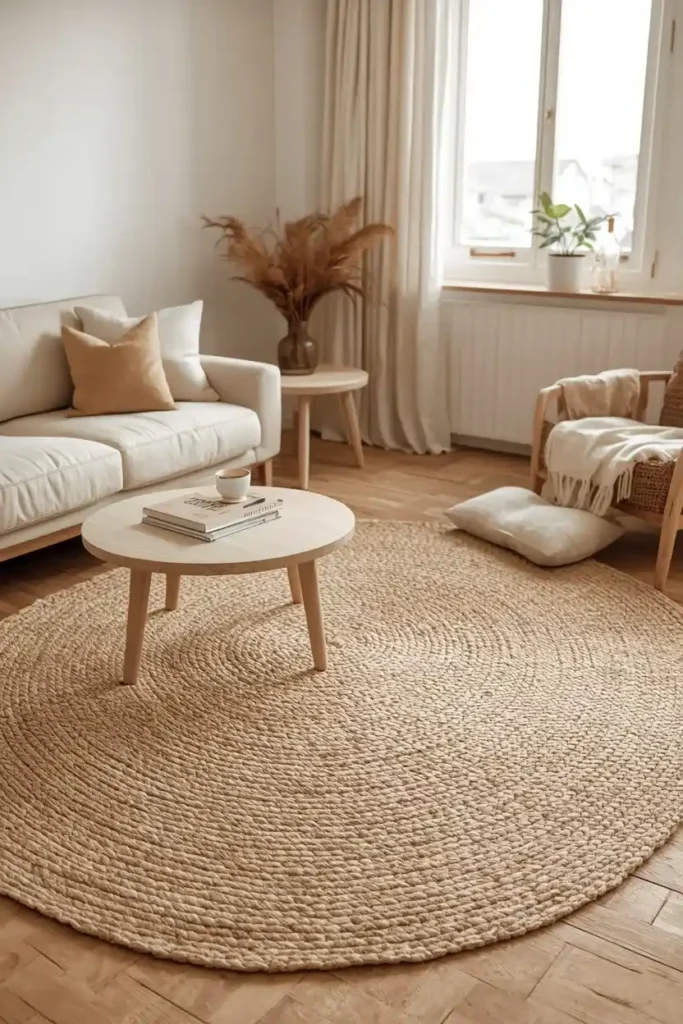
A natural fiber rug can instantly make your living room feel warmer and more grounded. Choose jute, wool, cotton, or a softly woven rug in beige, ivory, oatmeal, or warm taupe. A subtle pattern can add interest while keeping the overall look calm and understated.Place the rug beneath the main seating area so the sofa, chairs, and coffee table feel visually connected. Natural fibers add texture while complementing wood furniture beautifully.
Tip: choose a rug large enough for at least the front legs of your seating to rest comfortably on it.
9.Add Organic-Shaped Accessories
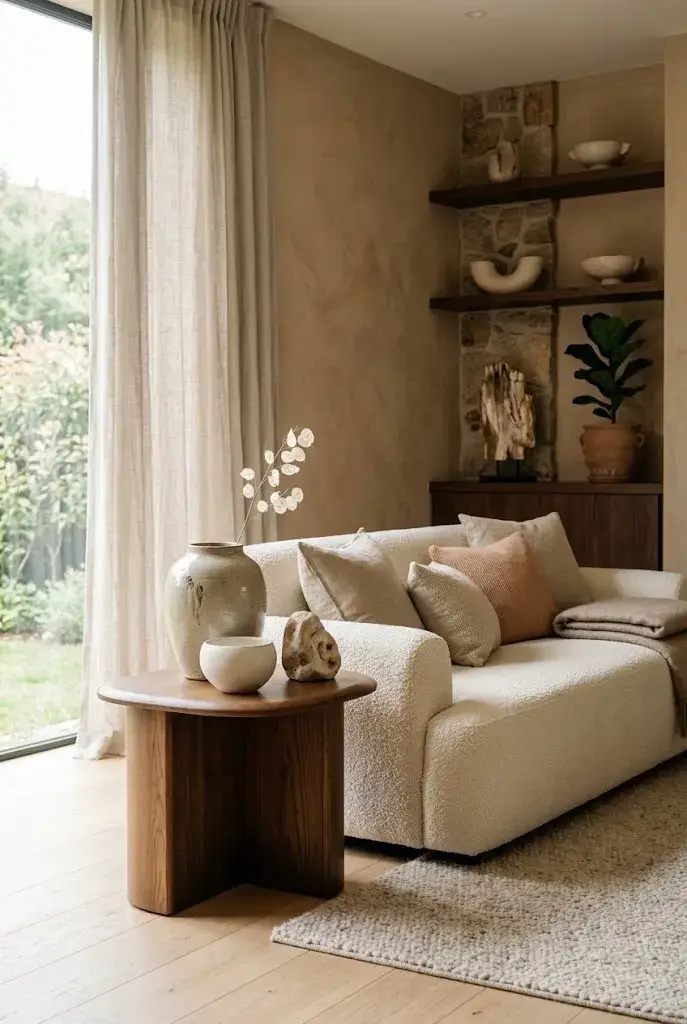
Soft, organic shapes help balance the clean lines often found in Japandi interiors. Look for rounded ceramic vases, curved bowls, pebble-shaped objects, sculptural lamps, and softly shaped mirrors. Choose finishes such as matte clay, natural stone, pale wood, or lightly textured ceramics.These gentle forms create visual movement without making the room feel busy. They also bring a handcrafted quality that makes the space feel warmer and more personal.
Tip: group two or three curved accessories together rather than scattering many small decorative pieces throughout the room.
10.Keep Windows Light and Airy
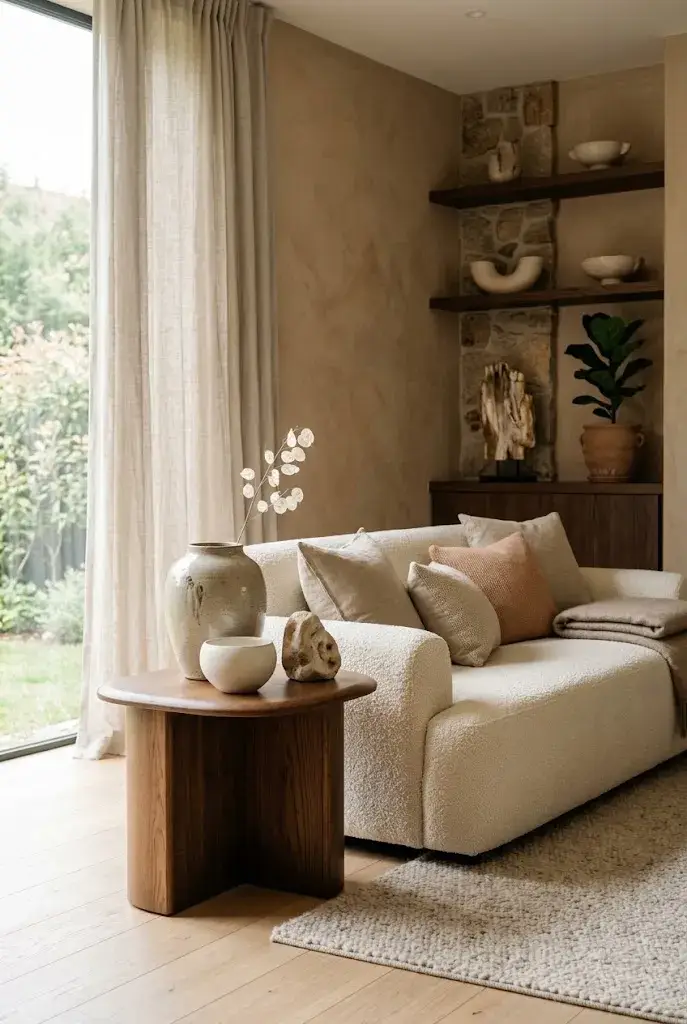
Natural light is an important part of creating a peaceful Japandi atmosphere. Use lightweight linen or cotton curtains in cream, ivory, or soft beige to let sunlight filter gently into the room. Avoid heavy window treatments that make the space feel dark or enclosed.Soft daylight can highlight natural wood, woven textures, and neutral upholstery while making the room feel larger and fresher. Keep windows visually simple so they remain connected to the outdoors.
Tip: hang curtains slightly wider and higher than the window to create a more spacious appearance.
11.Create a Calm Reading Corner
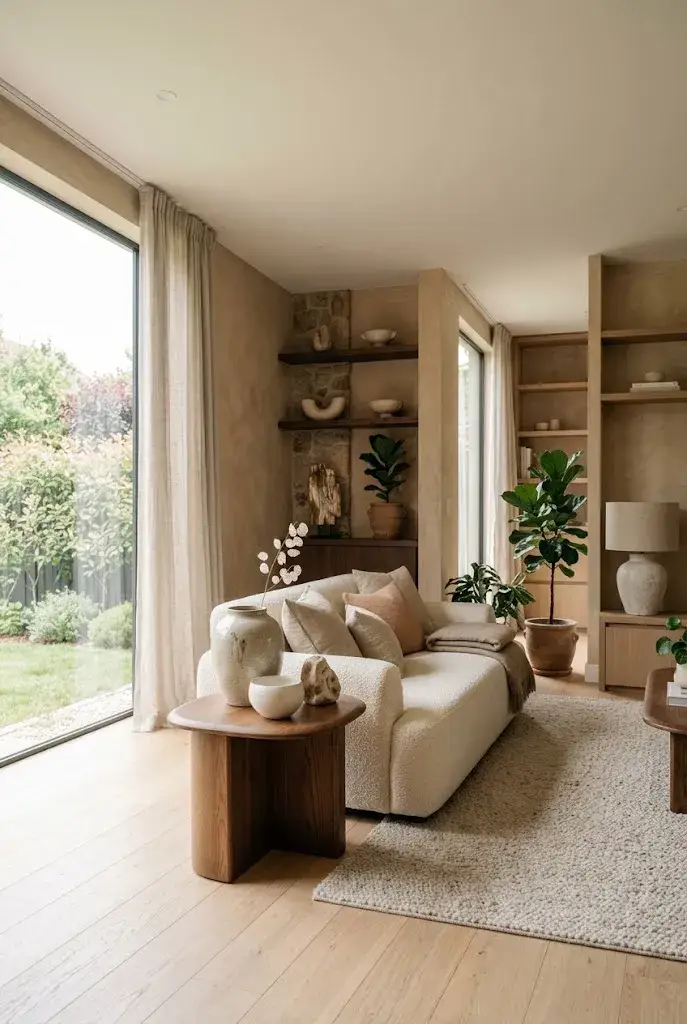
A quiet reading corner can make your living room feel more useful while preserving its peaceful character. Place a comfortable lounge chair near a window with a small wooden side table and a warm floor lamp. Add a soft throw for extra comfort and texture.Keep the colors consistent with the rest of the room, using cream, beige, warm gray, or muted brown. This creates a cozy little retreat without disrupting the open layout.
Tip: leave enough space around the chair for easy movement and avoid turning the corner into a storage area.
12.Balance Function With Empty Space
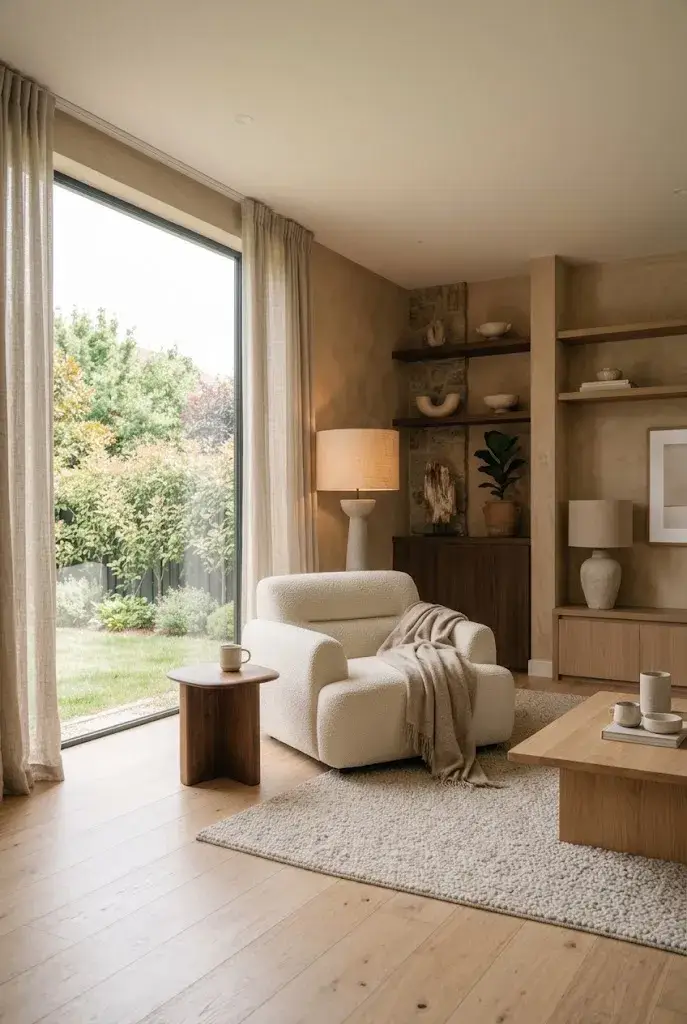
One of the most beautiful things about Japandi design is that empty space is treated as part of the decoration. Resist the temptation to fill every wall, shelf, or corner. Allow areas of open floor and uncluttered surfaces to create visual breathing room.
This balance makes furniture, artwork, plants, and natural materials feel more intentional. The room becomes easier to maintain and much more relaxing to live in every day.
Tip: walk through the room after decorating and remove anything that blocks movement or feels unnecessary.
Conclusion
Creating a Japandi living room is less about following strict decorating rules and more about creating a home that feels peaceful, warm, and intentional. Start with soft neutral colors, natural wood, comfortable textures, simple lighting, and a few meaningful pieces. Let greenery, handmade details, and open space add personality without creating clutter. Most importantly, choose furniture and accessories that make everyday life feel easier and more comfortable. When simplicity meets warmth, your living room can become a calming retreat where you love spending time, relaxing, reading, and connecting with the people you care about.