14 Kitchen Cabinet Color Ideas for a Beautiful and Welcoming Kitchen
A kitchen can feel dull even when everything is clean and organized. The right cabinet color can completely change that feeling, making the room brighter, warmer, or more elegant. If your kitchen feels outdated, you do not always need a full renovation. A fresh shade can create a surprising transformation. These kitchen cabinet color ideas will help you choose a color that fits your style, lighting, countertops, and overall home. From soft neutrals to rich dramatic shades, there is an option here to inspire your next kitchen makeover.
Classic Warm White Cabinets
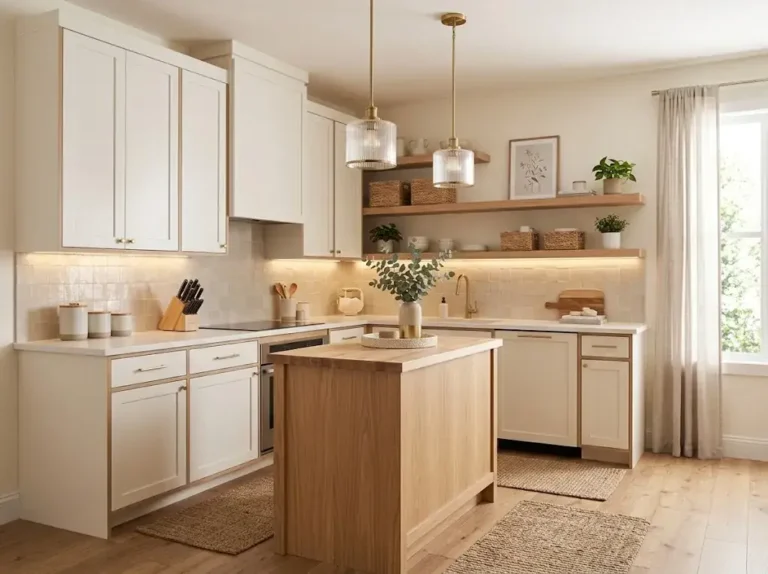
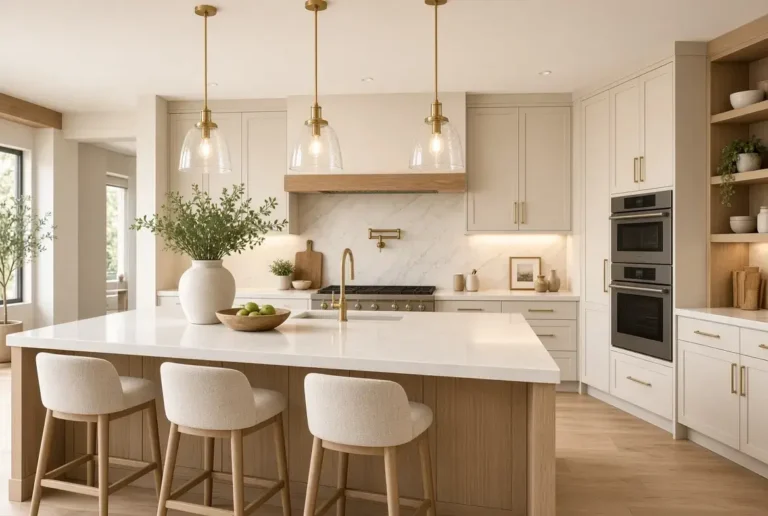
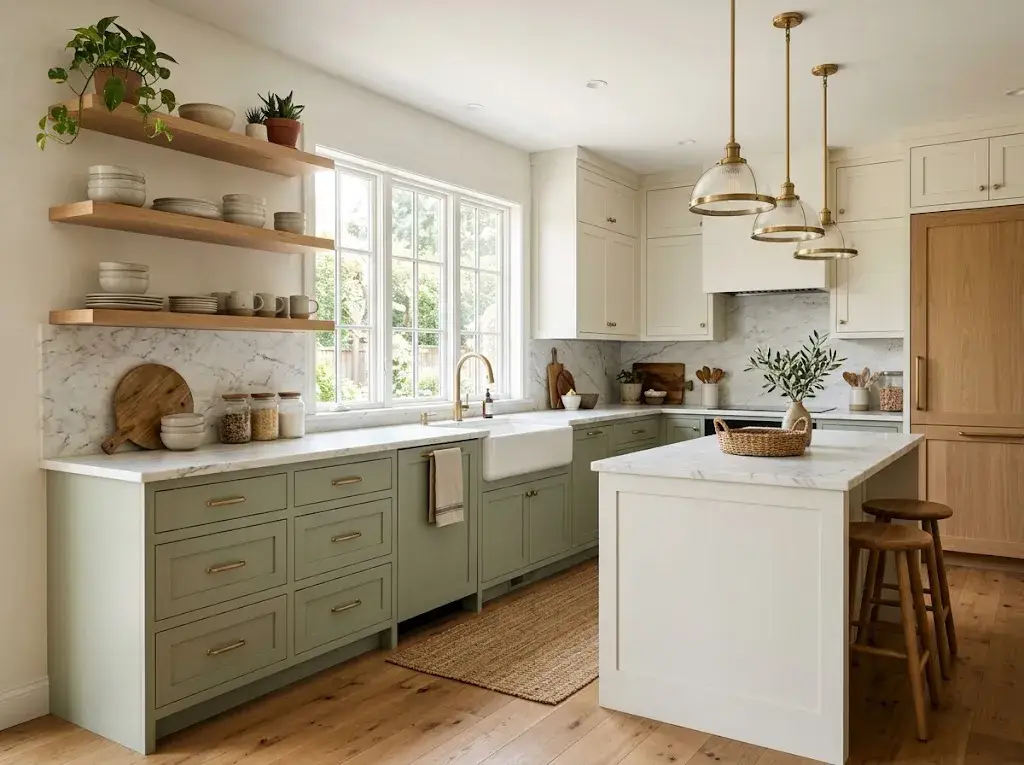
Warm white cabinets create a bright, timeless kitchen without feeling cold or overly modern. Choose creamy white rather than stark white, especially if your floors or countertops have warm undertones. Pair the cabinets with natural wood accents, brass handles, and soft pendant lighting for a welcoming look.
This color works beautifully in both small and large kitchens because it reflects light and makes the room feel spacious. It also gives you plenty of freedom when choosing backsplashes, rugs, and accessories.
Tip: Test white samples beside your countertops before painting.
Soft Sage Green Cabinets
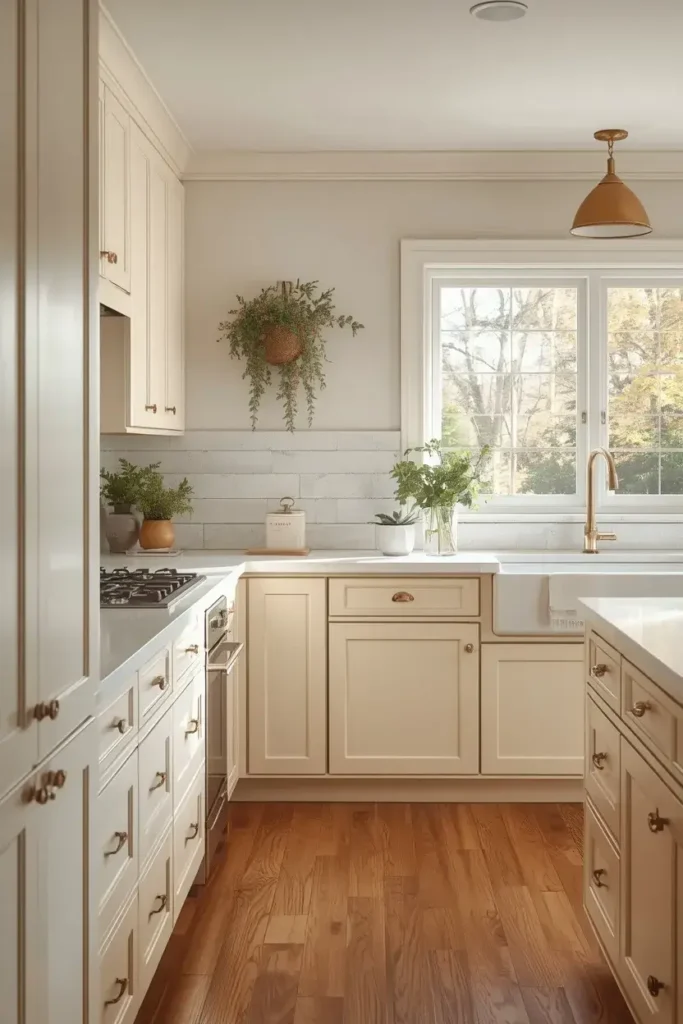
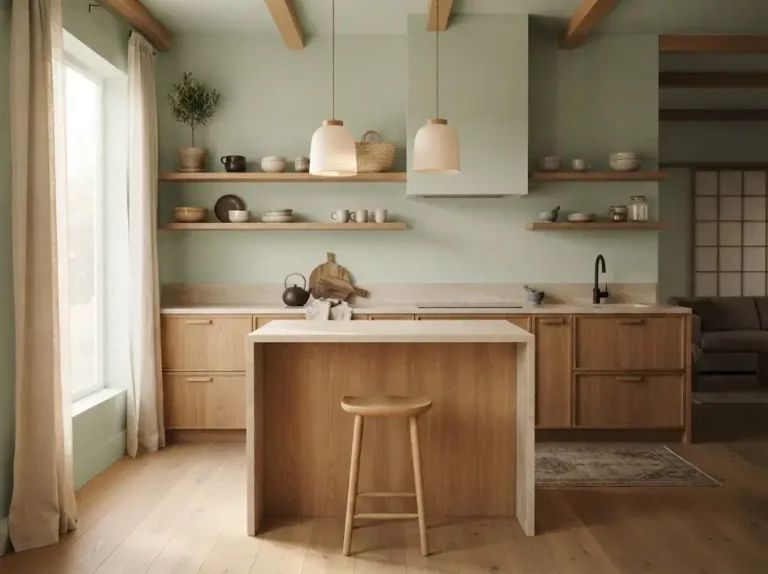
Sage green brings a calm, natural feeling into the kitchen. Its muted tone works especially well with white countertops, natural wood floors, woven textures, and aged brass hardware. It adds personality without making the room feel overwhelming or too colorful.
This shade is perfect if you want a kitchen inspired by nature. Morning sunlight makes sage look fresh, while warmer evening lights create a cozy appearance. It also pairs beautifully with plants and earthy decorations.
Tip: Choose a dusty sage if your kitchen receives limited natural light.
Navy Blue Cabinet Color Ideas
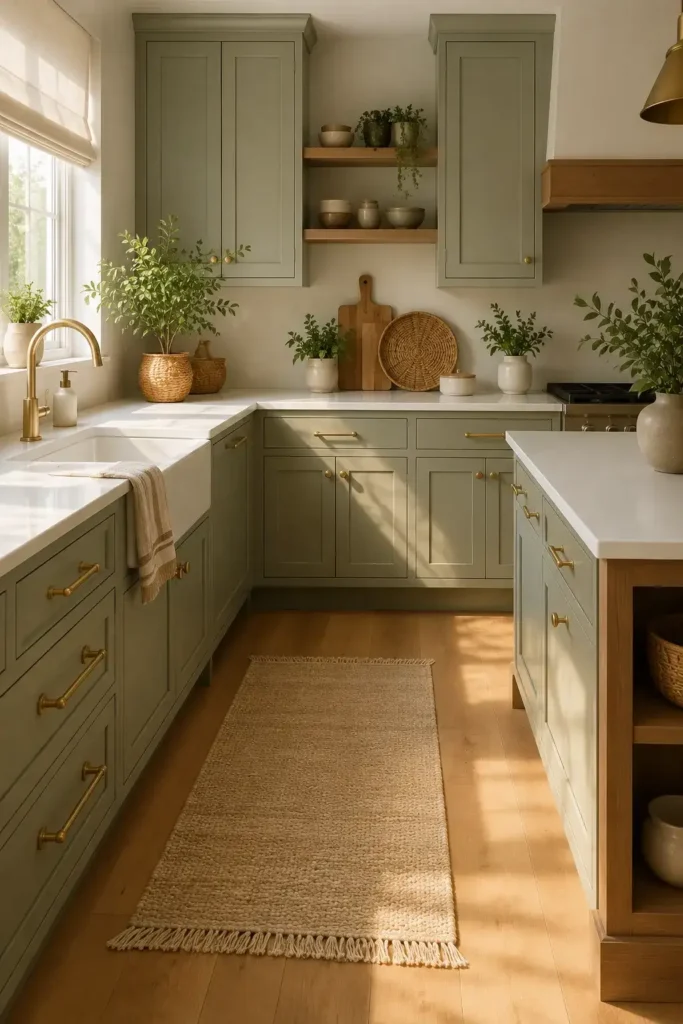
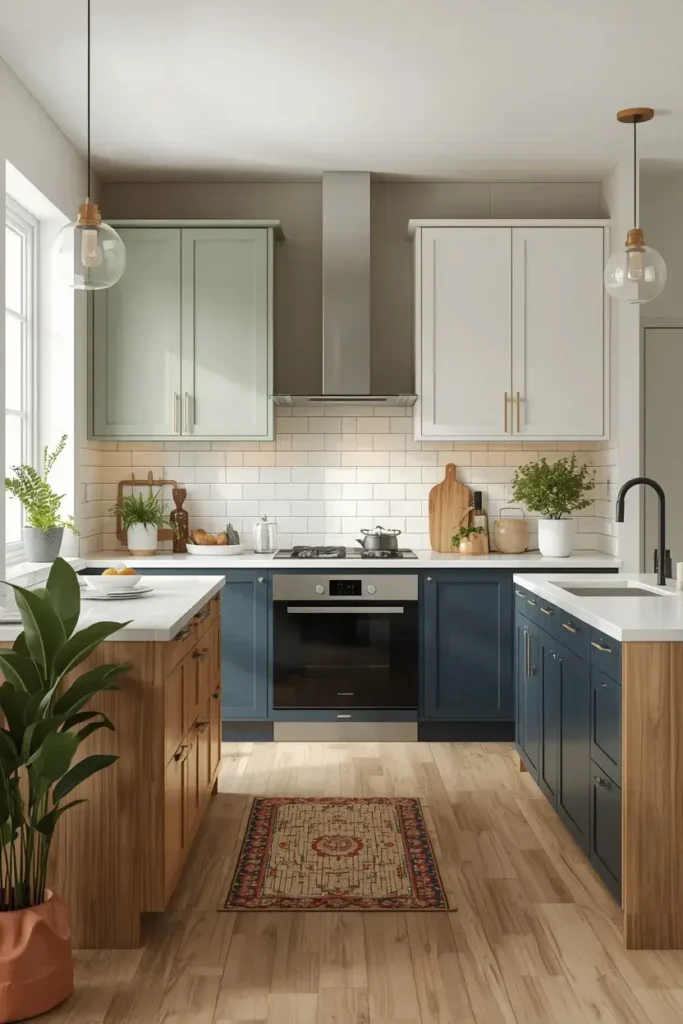
Navy blue cabinets create a rich and sophisticated kitchen with plenty of visual depth. They look especially striking with white marble countertops, light backsplashes, gold hardware, and warm wooden flooring. Navy works well on both upper and lower cabinets when balanced with lighter surfaces.
This deep color can make a kitchen feel elegant without looking too formal. It is particularly attractive in kitchens with plenty of natural light because sunlight keeps the shade from appearing heavy.
Tip: Use lighter countertops to balance dark navy cabinetry.
Natural Wood Cabinets
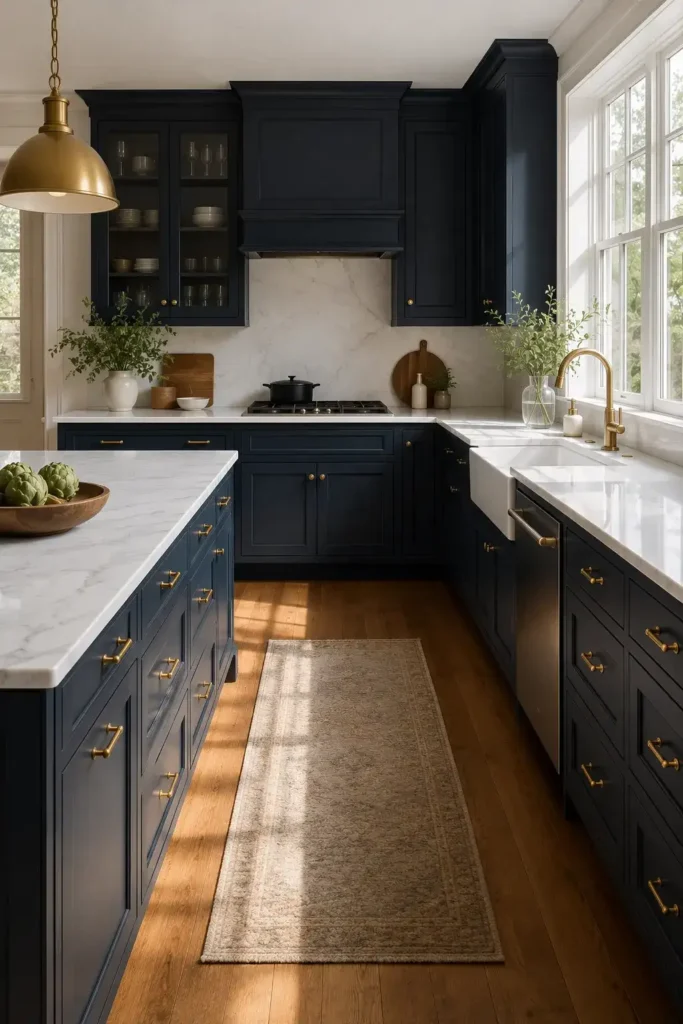
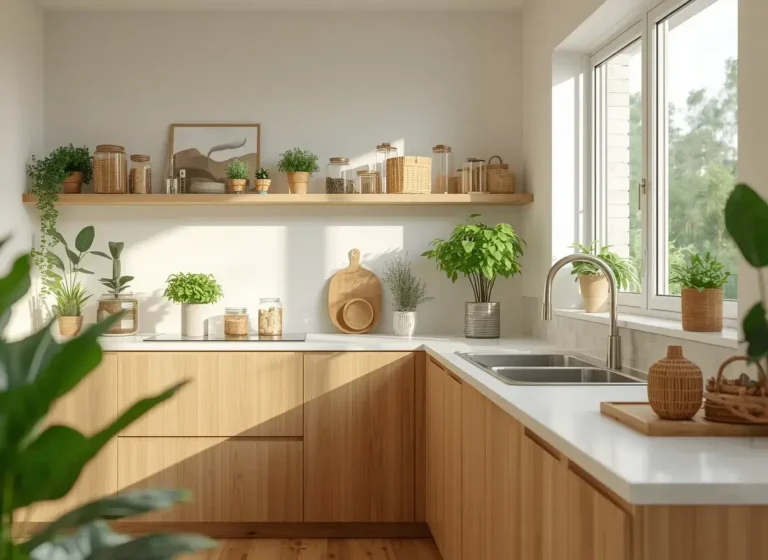
Natural wood cabinets bring warmth, texture, and character into the kitchen. Oak, maple, walnut, and similar finishes can create anything from a light Scandinavian style to a rich traditional appearance. The natural grain also adds visual interest without relying on bright colors.
Wood cabinets work wonderfully with stone countertops, ceramic tiles, greenery, and woven accessories. Their organic appearance makes the kitchen feel comfortable and connected to nature. They can also age beautifully when properly maintained.
Tip: Choose a wood finish that complements your existing flooring.
Charcoal Gray Cabinets
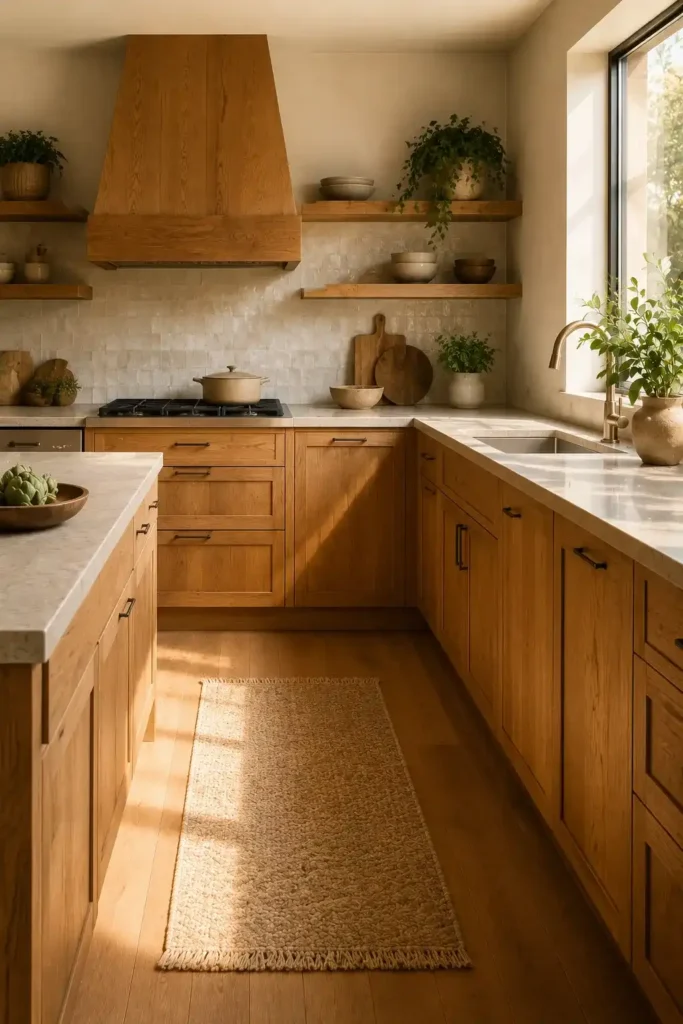
Charcoal gray cabinets offer a dramatic alternative to black while remaining versatile and sophisticated. This deep neutral looks beautiful with white countertops, brushed metal hardware, warm wood, and simple ceramic backsplashes. It can give an ordinary kitchen a polished, designer-inspired appearance.
Charcoal is especially effective when you want contrast without using a strong color. It works in contemporary, industrial, and transitional kitchens. Good lighting is important because darker cabinetry can absorb light rather than reflect it.
Tip: Add under-cabinet lighting to brighten charcoal cabinetry.
Creamy Beige Cabinets
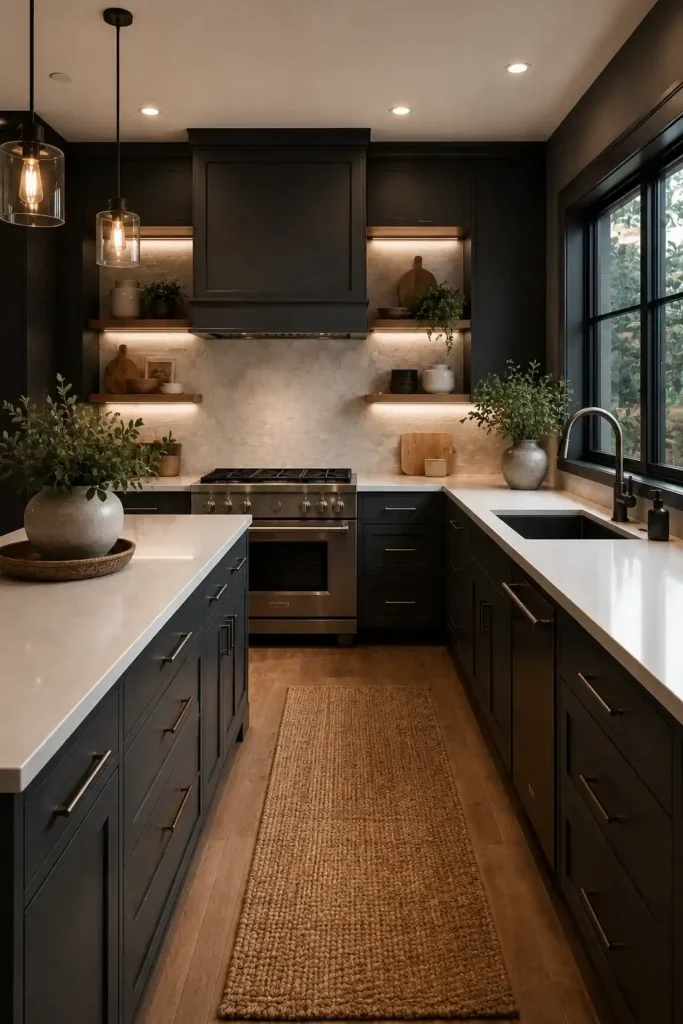
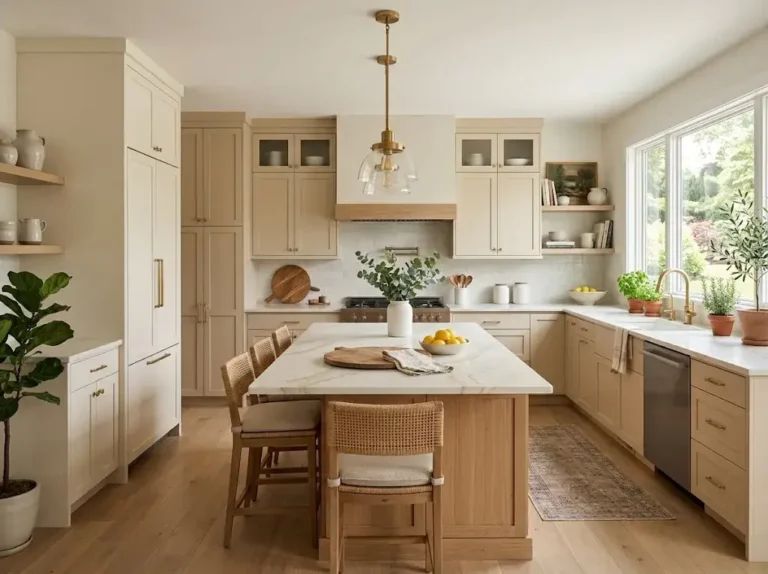
Creamy beige cabinets create a soft, cozy kitchen with an inviting appearance. Unlike cooler gray tones, beige adds warmth and works beautifully with natural stone, wood, rattan, and bronze or brass hardware. It is an excellent choice for homes with traditional or relaxed interiors.
This color can make the kitchen feel comfortable without becoming visually busy. It also blends easily with different countertop shades, from white quartz to warm marble.
Tip: Pair beige cabinets with a slightly lighter backsplash for gentle contrast.
Two-Tone Cabinet Colors
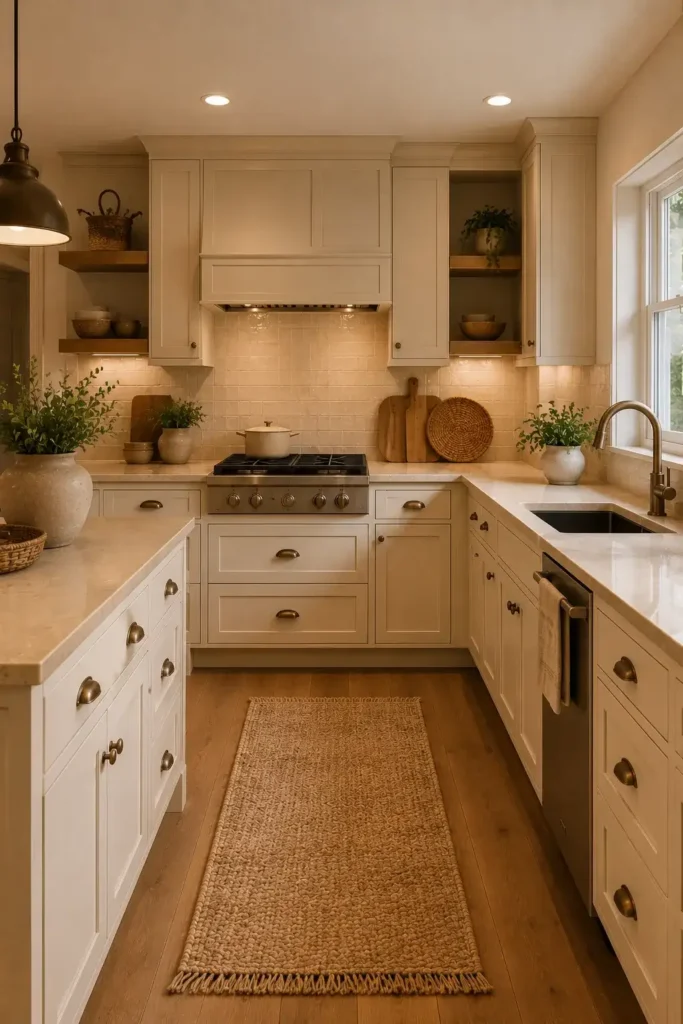
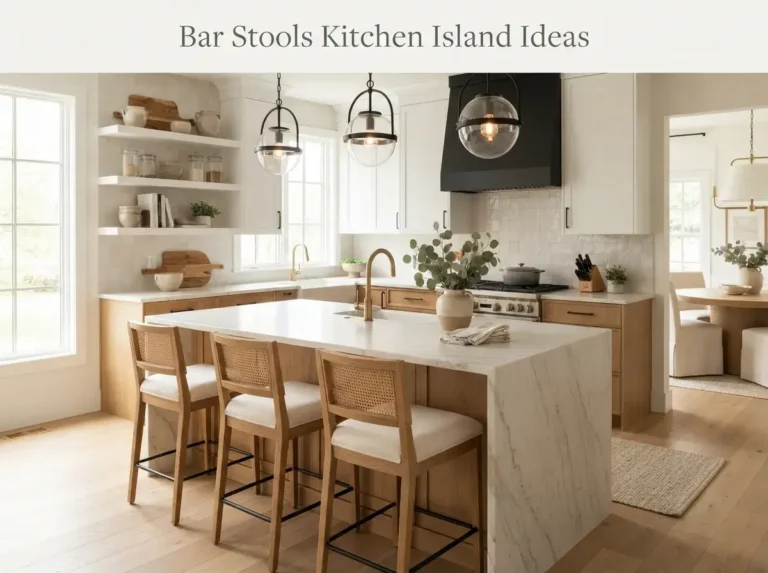
Two-tone cabinets let you combine two complementary shades for a more personalized kitchen. Try white upper cabinets with deep green, navy, or charcoal lower cabinets. Another option is natural wood below and creamy white above for a warm, balanced appearance.
This approach adds depth and helps visually separate different areas of the kitchen. It can also make an island stand out as a beautiful focal point. Keep the remaining finishes simple so the cabinetry stays visually appealing.
Tip: Use the darker color on lower cabinets to ground the room.
Dusty Blue Cabinets
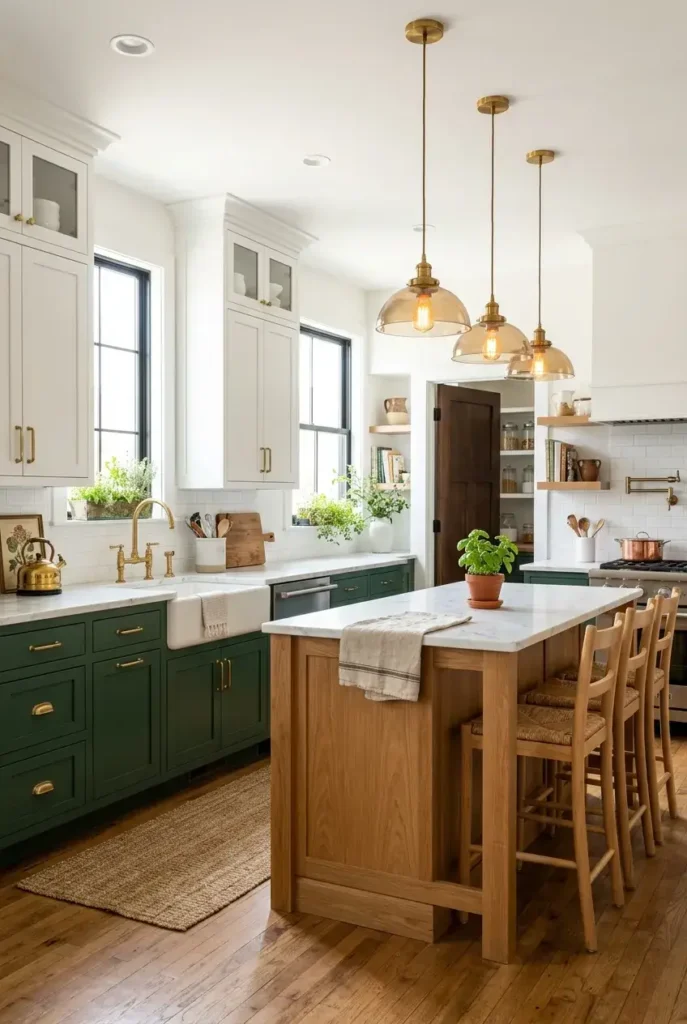
Dusty blue cabinets bring a soft, peaceful feeling to the kitchen without looking too colorful. This muted shade works beautifully with white countertops, light oak floors, brushed nickel hardware, and simple subway tiles. It is especially lovely in kitchens with plenty of natural sunlight.
The gentle blue tone can make the room feel fresh while still maintaining a cozy atmosphere. It works well with coastal, farmhouse, and modern decorating styles.
Tip: Choose a blue with gray undertones for a more sophisticated finish.
Deep Forest Green Cabinets
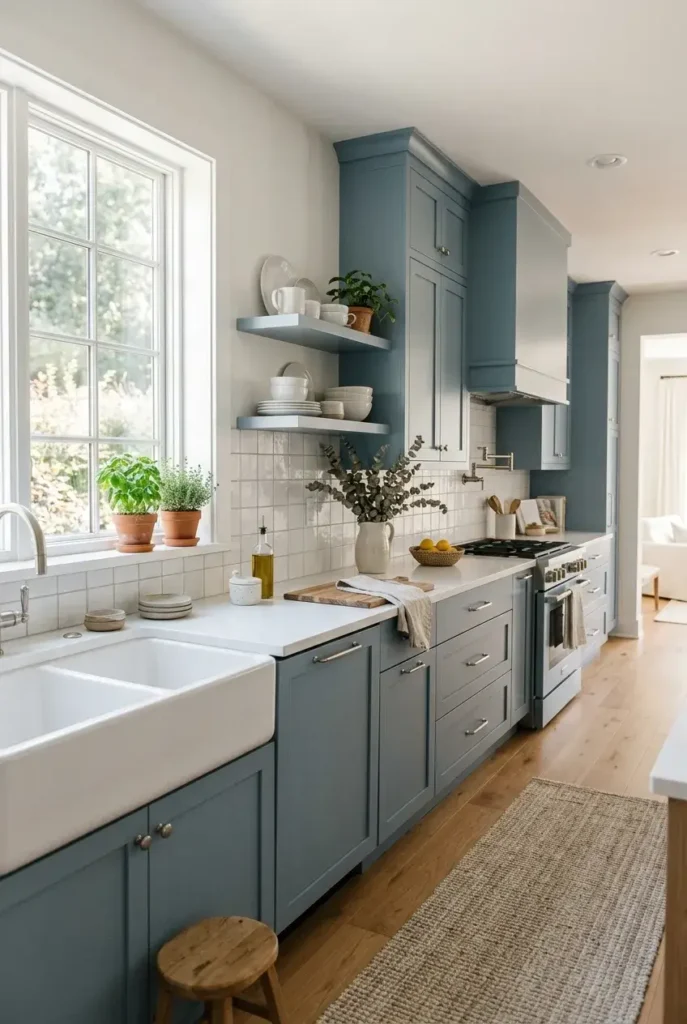
Forest green cabinets create a dramatic yet natural kitchen filled with warmth and character. This rich color pairs beautifully with cream countertops, natural wood, brass hardware, and stone backsplashes. It can turn ordinary cabinetry into a strong visual feature.
The shade feels luxurious without being too formal, especially when combined with warm lighting and organic textures. Forest green is also a wonderful choice for homeowners who love earthy interiors.
Tip: Use warm white lighting to keep deep green cabinets inviting.
Greige Cabinets
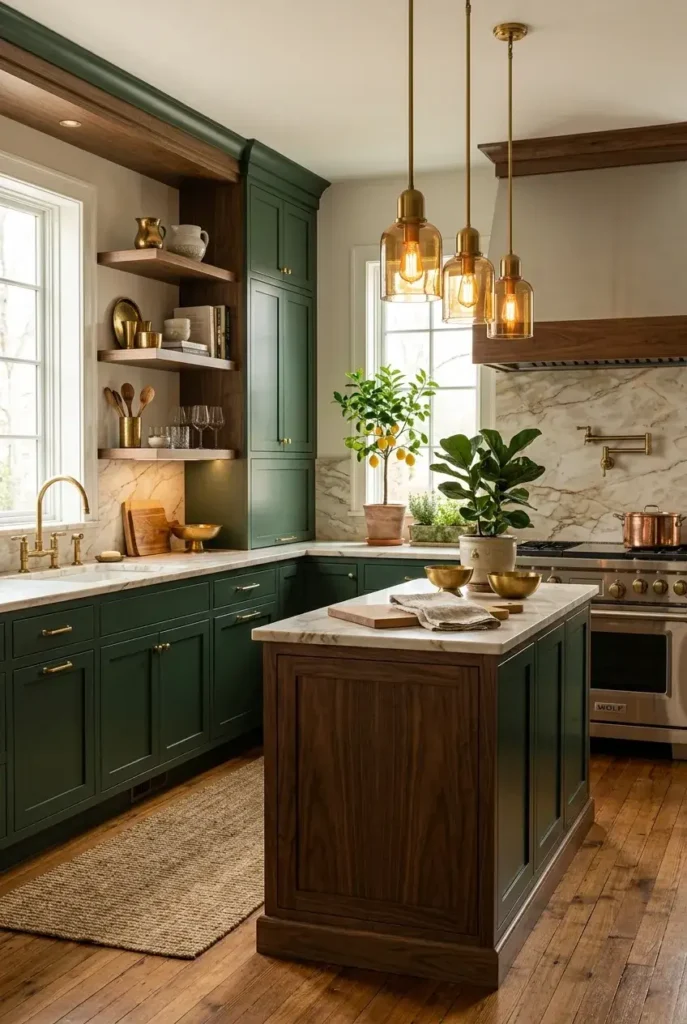
Greige combines gray and beige to create a balanced neutral that feels both modern and warm. It is a practical choice when you want something more interesting than plain white but still easy to decorate around. Greige looks beautiful with marble, wood, and matte metal finishes.
Because it sits between two popular neutral colors, greige can adapt to many decorating styles. It also works well with different lighting conditions and does not easily feel dated.
Tip: Compare greige samples during morning and evening light.
Black Kitchen Cabinets
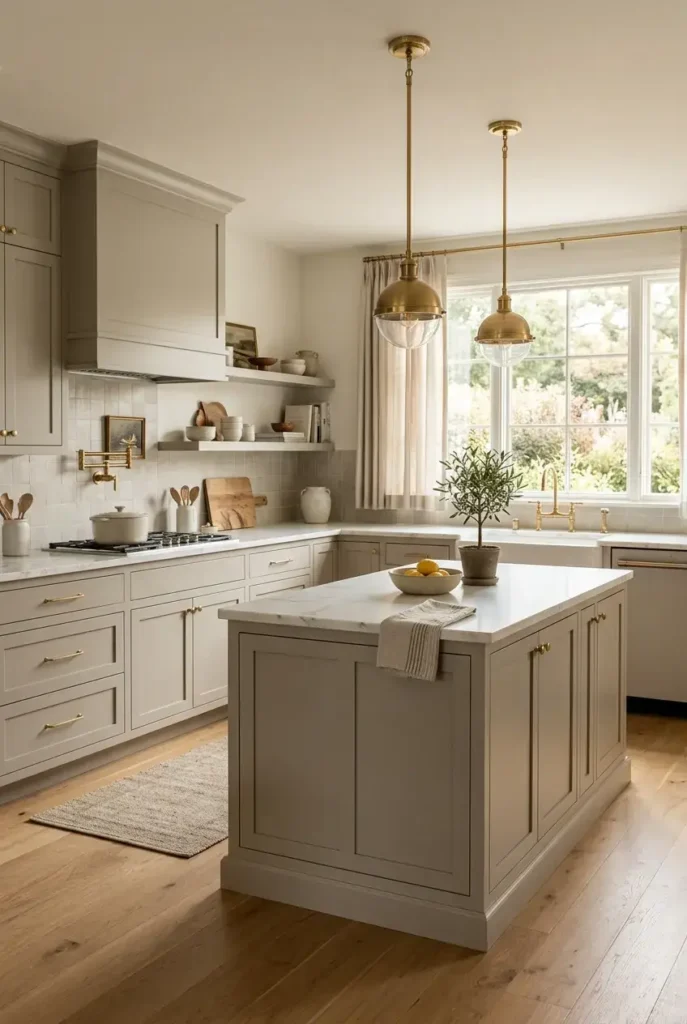
Black cabinets make a bold statement and can give your kitchen a sophisticated, contemporary appearance. They look especially striking beside white countertops, light walls, warm wood, and metallic hardware. Matte black creates a softer appearance than glossy finishes.
Dark cabinetry works best when the room has enough natural or artificial light. Open shelving, glass doors, and lighter surfaces can prevent the space from feeling too enclosed.
Tip: Add light-colored countertops to create strong but balanced contrast.
Terracotta Cabinets
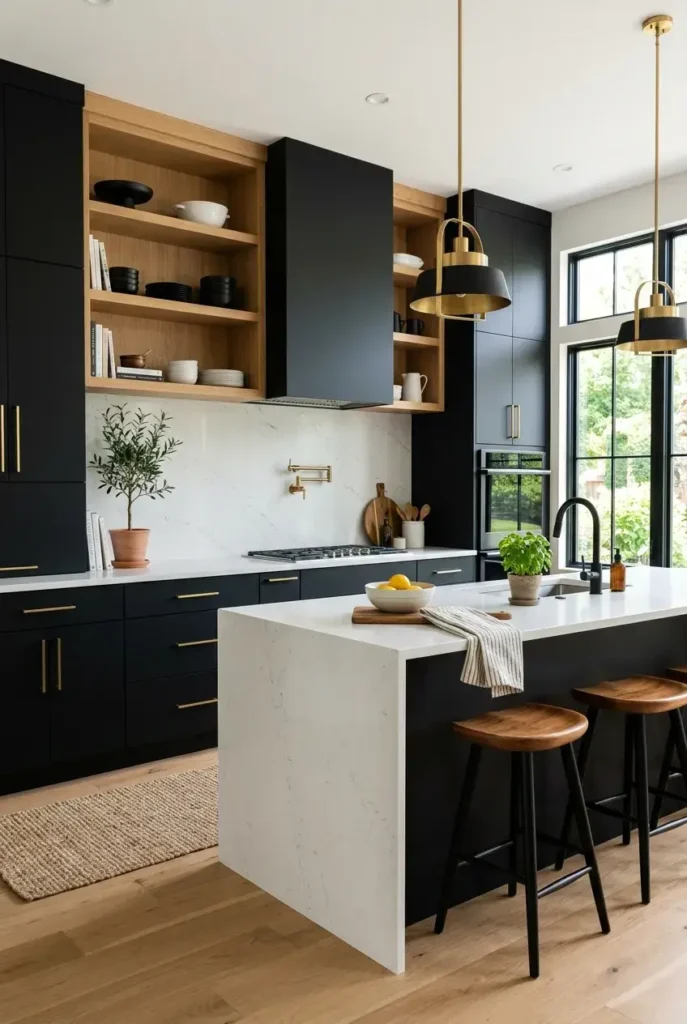
Terracotta cabinets bring warmth and personality into the kitchen with their earthy orange-red tone. This color works beautifully with cream walls, natural wood, handmade tiles, woven accessories, and aged brass hardware. It is ideal for creating a relaxed Mediterranean or Southwestern atmosphere.
Terracotta feels especially inviting in kitchens filled with natural textures and warm lighting. If you love colorful spaces but want something grounded, this earthy shade offers a beautiful middle ground.
Tip: Balance terracotta with neutral walls and countertops.
Pale Gray Cabinets
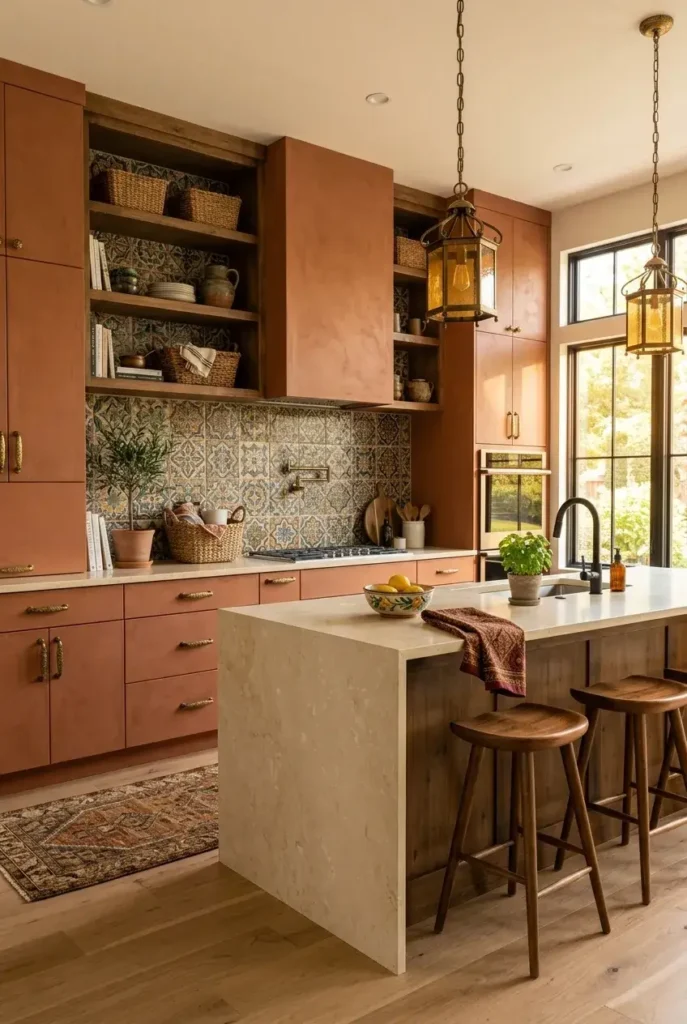
Pale gray cabinets provide a clean, understated look without the starkness of pure white. This versatile color pairs easily with marble, quartz, wood, stainless steel, and both warm and cool hardware finishes. It can make the kitchen feel polished while remaining comfortable.
The light tone reflects plenty of natural light, making it useful for smaller kitchens. Pale gray also creates an excellent background for colorful rugs, artwork, plants, and decorative pieces.
Tip: Add warm wood accents to prevent pale gray from feeling too cool.
Warm Taupe Cabinets
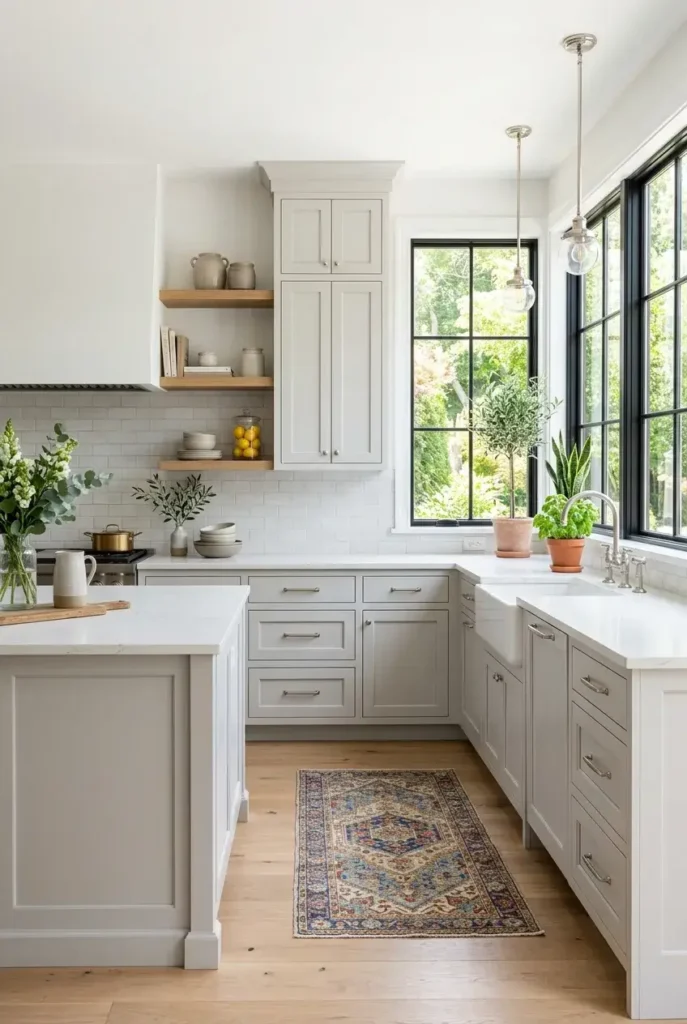
Warm taupe cabinets offer a refined neutral look with more depth than traditional beige. The subtle brown-gray shade creates a cozy backdrop for stone countertops, wooden floors, cream walls, and aged metal hardware. It is a beautiful choice for timeless kitchen designs.
Taupe works particularly well when you want your cabinets to feel elegant without becoming the main attraction. Its gentle color allows lighting, textures, and decorative details to shine. Tip: Pair taupe with warm white walls for a soft layered look.
Conclusion
Choosing the right cabinet color can completely change how your kitchen feels. You can create a bright and airy space with warm white, add calm with sage or dusty blue, or make a bold statement with navy, forest green, or black. Natural wood and warm neutrals offer timeless choices when you want comfort and flexibility.
The best kitchen cabinet color ideas are the ones that work with your home’s lighting, flooring, countertops, and personal style. Before making a final choice, test your favorite shades in the actual room.
Tip: View paint samples at different times of day before committing to a color.