12 Japandi Kitchen Ideas for a Calm and Timeless Home
A kitchen can feel beautiful without feeling busy. If you love warm minimalism, natural textures, and peaceful spaces, a Japandi kitchen could be the perfect style for your home. This look blends Japanese simplicity with Scandinavian warmth, creating a room that feels organized, welcoming, and effortlessly elegant. Think soft wood tones, creamy neutrals, clean cabinetry, and carefully chosen details. Whether your kitchen is large or compact, these ideas can help you create a calming space that feels modern while still being wonderfully cozy.
Choose Warm Natural Wood Cabinets
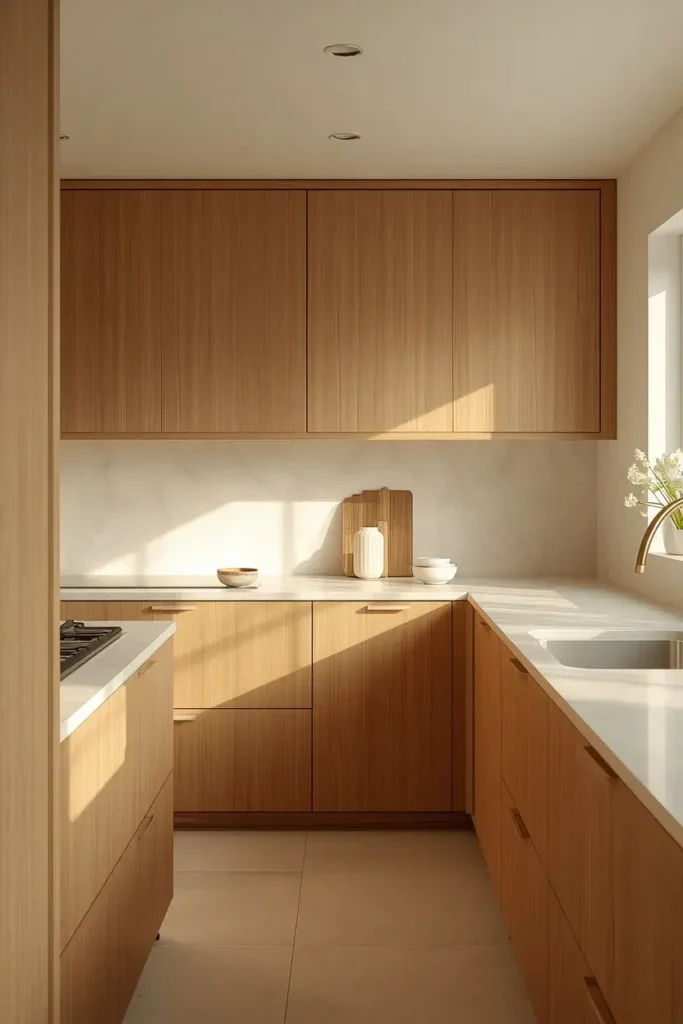
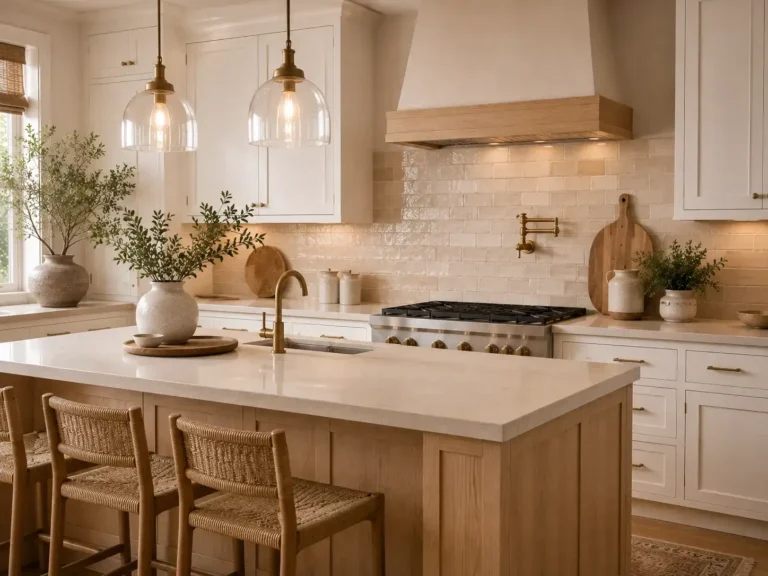
Natural wood cabinetry is one of the easiest ways to bring Japandi warmth into your kitchen. Choose light oak, ash, or softly stained wood with visible grain and a matte finish. Pair it with cream walls and simple hardware to create a relaxed, organic atmosphere that feels refined rather than overly decorated.
The beauty of wood is its ability to soften modern kitchen lines. It adds texture without creating visual clutter, while the natural grain gives the room personality. For a practical touch, choose a durable matte finish that is easy to clean and resistant to everyday kitchen marks.
Tip: Keep the wood tone consistent across cabinets or shelving for a more peaceful look.
Use a Soft Neutral Color Palette
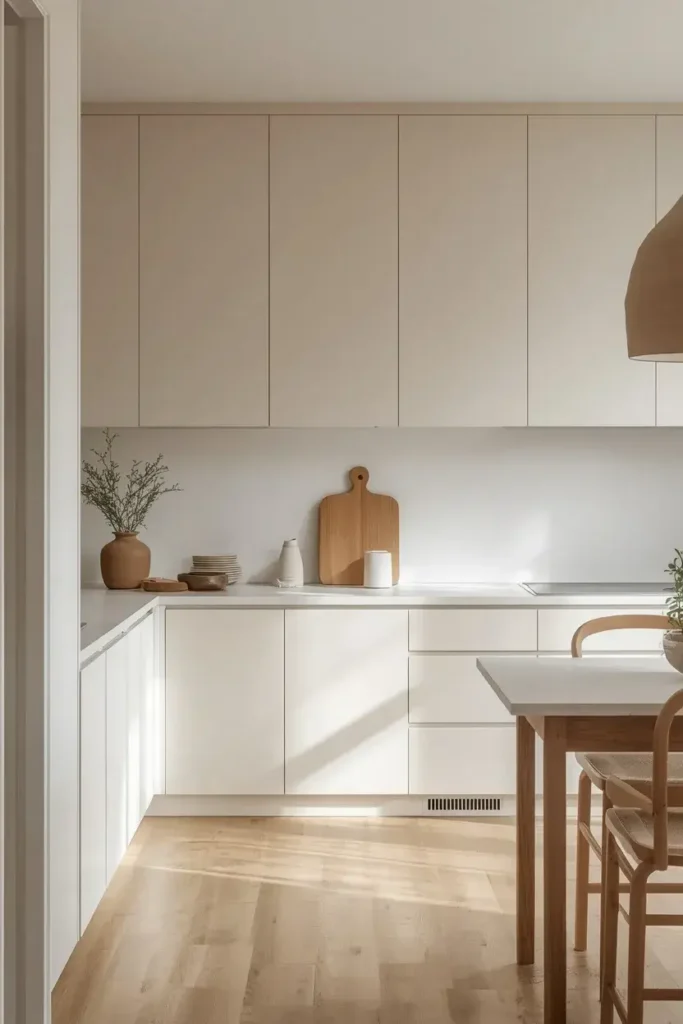
A calm palette instantly gives your kitchen the quiet character associated with Japandi design. Start with warm white, ivory, beige, taupe, or soft greige, then layer in natural wood and subtle earthy shades. These colors reflect light beautifully and make the kitchen feel open, airy, and welcoming.
Avoid using too many contrasting shades because Japandi style depends on visual harmony. Instead, combine slightly different neutral tones through cabinetry, walls, countertops, and textiles. A warm cream backsplash can add depth without overwhelming the room.
Tip: Test paint samples in morning and evening light before making your final choice.
Add a Simple Stone Countertop
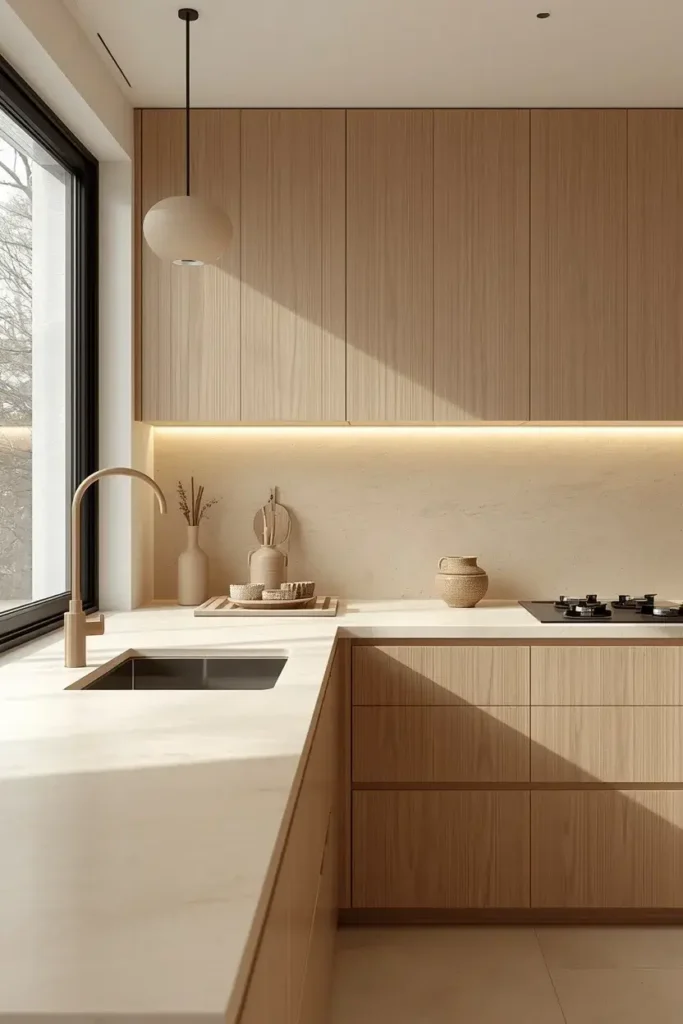
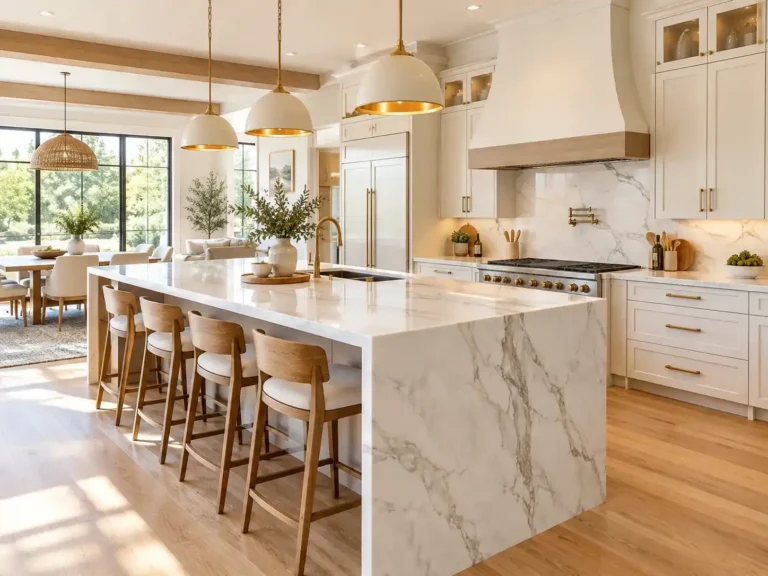
A simple stone countertop can give your kitchen a sophisticated yet grounded appearance. Look for surfaces in soft white, warm beige, light gray, or subtle stone patterns rather than dramatic veining. The understated finish works beautifully with natural wood and keeps the overall space feeling clean and balanced.
Stone also introduces an organic texture that complements the natural materials commonly used in Japandi interiors. Choose a countertop with a smooth or softly honed finish for a more relaxed appearance.
Tip: If you have several materials in the kitchen, keep the countertop pattern quiet so it does not compete with the wood grain.
Install Minimalist Pendant Lighting
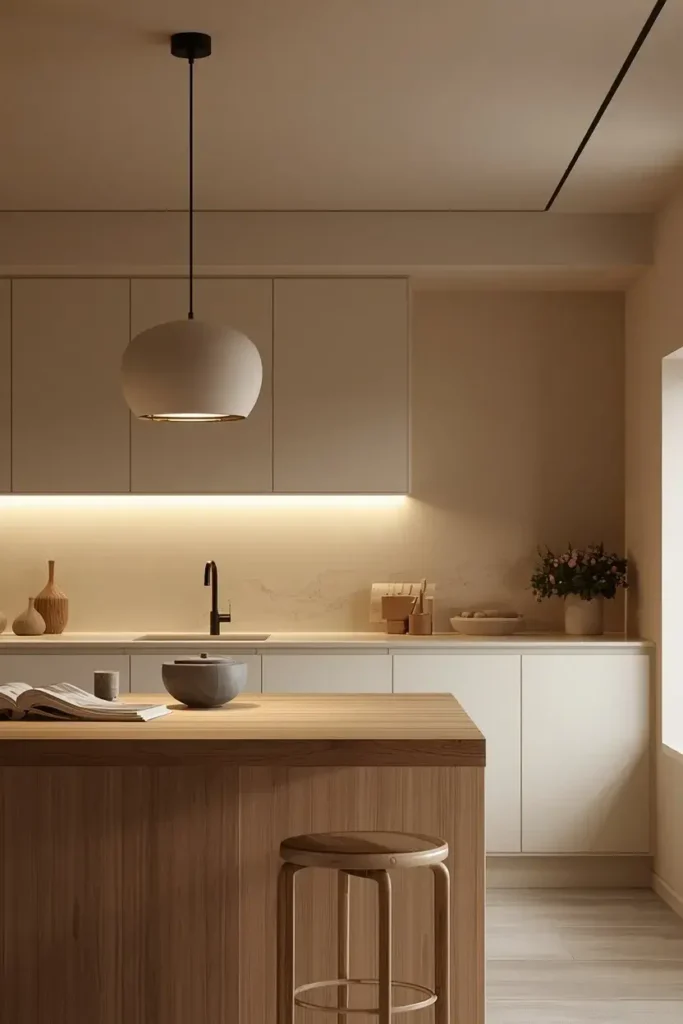
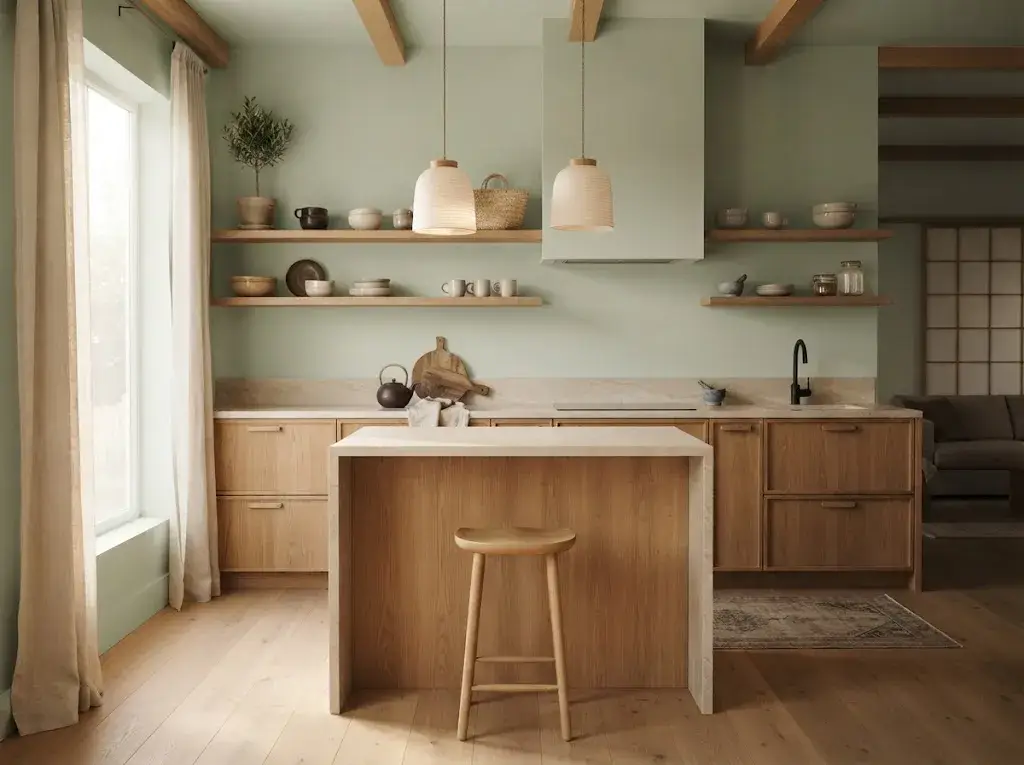
Lighting can completely change the mood of your kitchen, especially when you want a warm and peaceful atmosphere. Choose simple pendant lights made from wood, linen, paper, ceramic, or matte metal. Soft diffused light works especially well above a kitchen island or dining area.
Instead of choosing oversized decorative fixtures, look for designs with clean silhouettes and gentle shapes. Warm bulbs can make cream cabinetry and natural wood appear even more inviting after sunset.
Tip: Use warm white bulbs around 2700K to create a cozy evening glow without making the space feel yellow.
Create an Open and Clutter-Free Layout
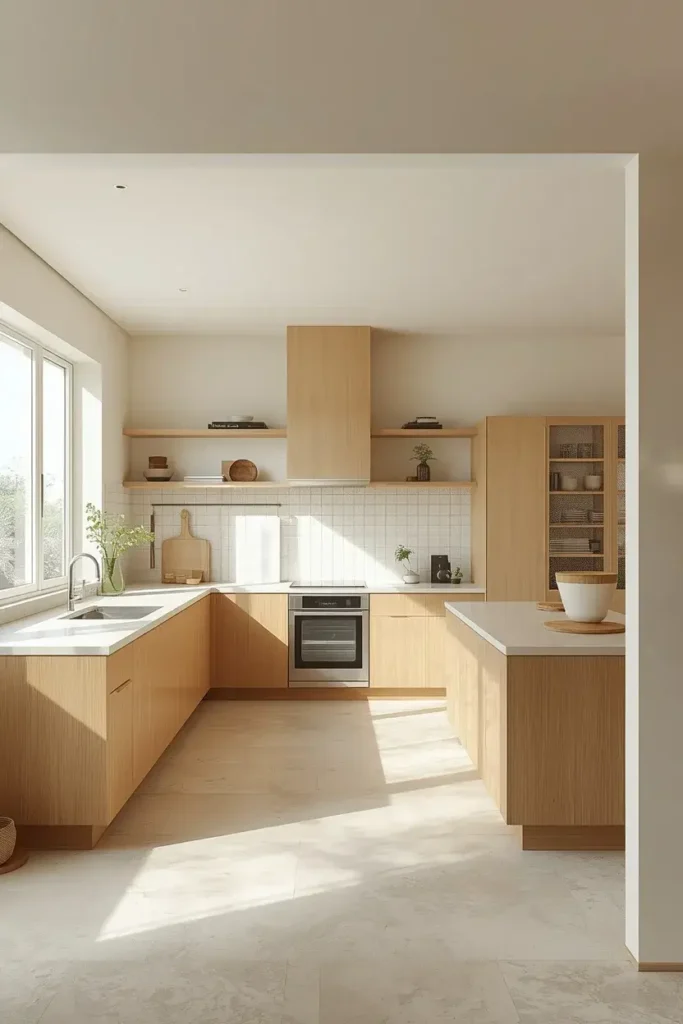
Japandi design is not simply about choosing beautiful materials. It is also about creating a kitchen that feels easy to use and visually calm. Keep countertops mostly clear, organize everyday items inside cabinets, and leave enough breathing room around major work areas.
Open space allows the natural textures and carefully selected details to stand out. Instead of filling every shelf, display only a few meaningful objects such as a ceramic bowl, wooden cutting board, or small plant.
Tip: Give frequently used appliances a dedicated cabinet space so your counters stay visually uncluttered.
Bring in Handmade Ceramic Details

Handmade ceramics add warmth and personality to a minimalist kitchen without making it feel crowded. Look for mugs, bowls, vases, or serving dishes in cream, sand, charcoal, muted green, or earthy brown. Slight imperfections make these pieces feel authentic and beautifully connected to natural materials.
Place a few ceramics on open shelving or an island rather than displaying an entire collection. Their subtle shapes and tactile surfaces can create visual interest while maintaining simplicity.
Tip: Combine different ceramic shapes in similar colors to create a curated look that still feels relaxed.
Add Greenery for a Natural Touch
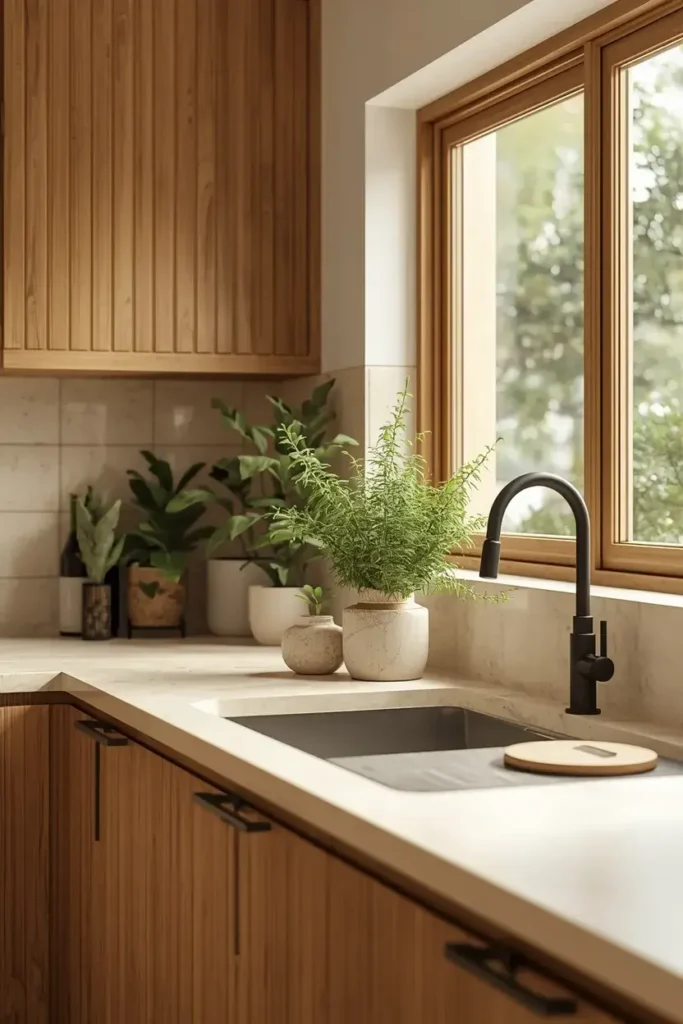
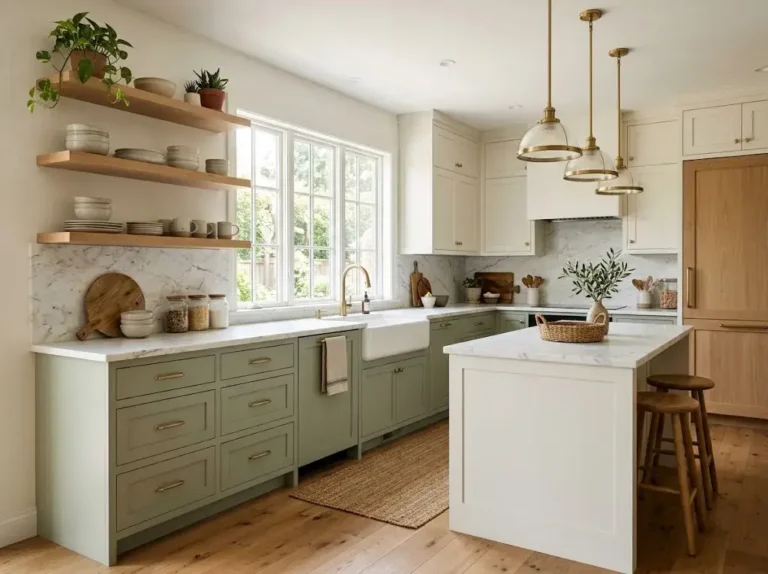
A small amount of greenery can make a Japandi kitchen feel fresher and more alive. Choose simple plants with soft foliage, such as herbs, olive branches, or compact leafy plants. Their natural green tones contrast gently with beige, cream, and warm wood without disrupting the peaceful color palette.
Place greenery where it is easy to see, such as beside a window, on an open shelf, or near the kitchen sink. Avoid filling the room with too many plants because the style works best when every element has breathing space.
Tip: Use one larger plant or two small plants instead of creating a crowded display.
Choose Open Wooden Shelving
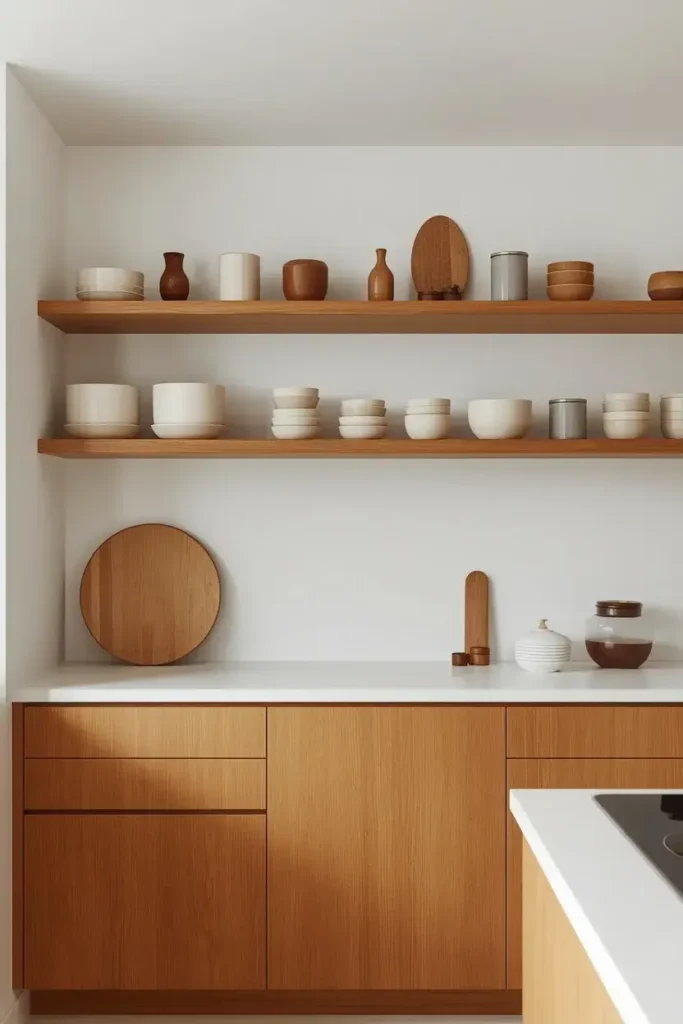
Open wooden shelves can make a Japandi kitchen feel lighter and more connected to natural materials. Choose simple oak or light wood shelves with clean edges, then style them with a few ceramic bowls, glass jars, and neutral-toned accessories. The result feels warm, functional, and effortlessly organized.
The key is to avoid overcrowding the shelves. Leave plenty of empty space between objects so the display feels intentional rather than busy. Natural wood adds softness against painted walls or tile backsplashes.
Tip: Keep everyday dishes on the lower shelf and decorative pieces higher up for an attractive but practical arrangement.
Add a Soft Textured Backsplash
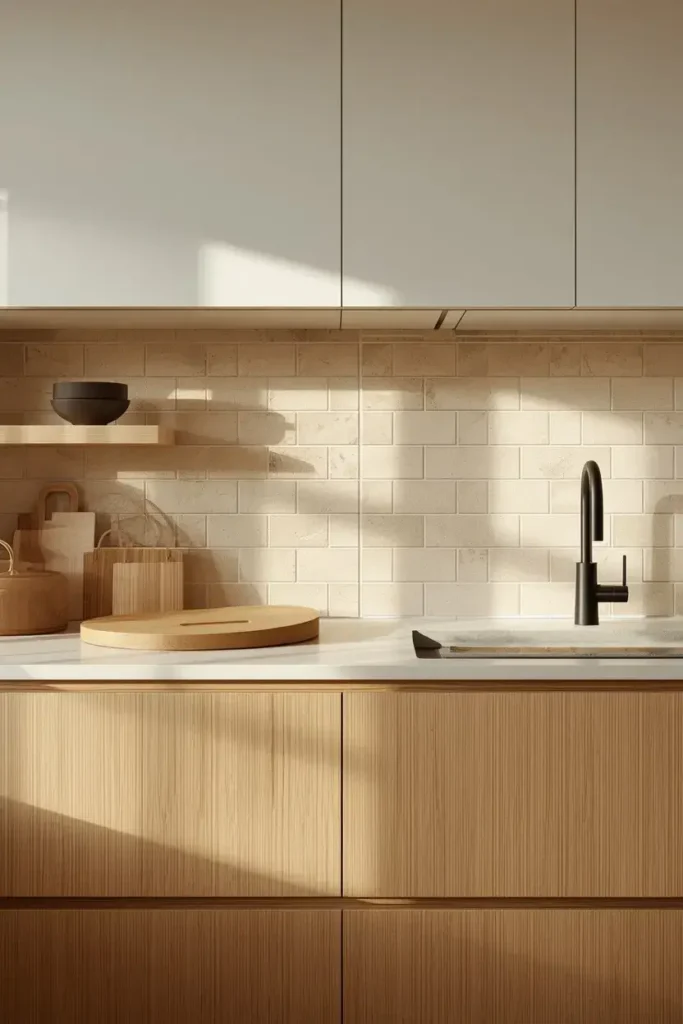
A textured backsplash can bring subtle character to a Japandi kitchen while keeping the overall design understated. Consider handmade-look tiles in warm white, cream, beige, or pale gray. Slight variations in shape and texture create depth while maintaining the calm appearance of the room.
Choose a simple tile layout rather than a complicated pattern. Softly uneven surfaces can catch natural light beautifully throughout the day, giving the kitchen a gentle sense of movement.
Tip: Select grout that closely matches your tiles to create a seamless appearance and prevent the backsplash from becoming the main visual focus.
Mix Wood With Matte Black Accents
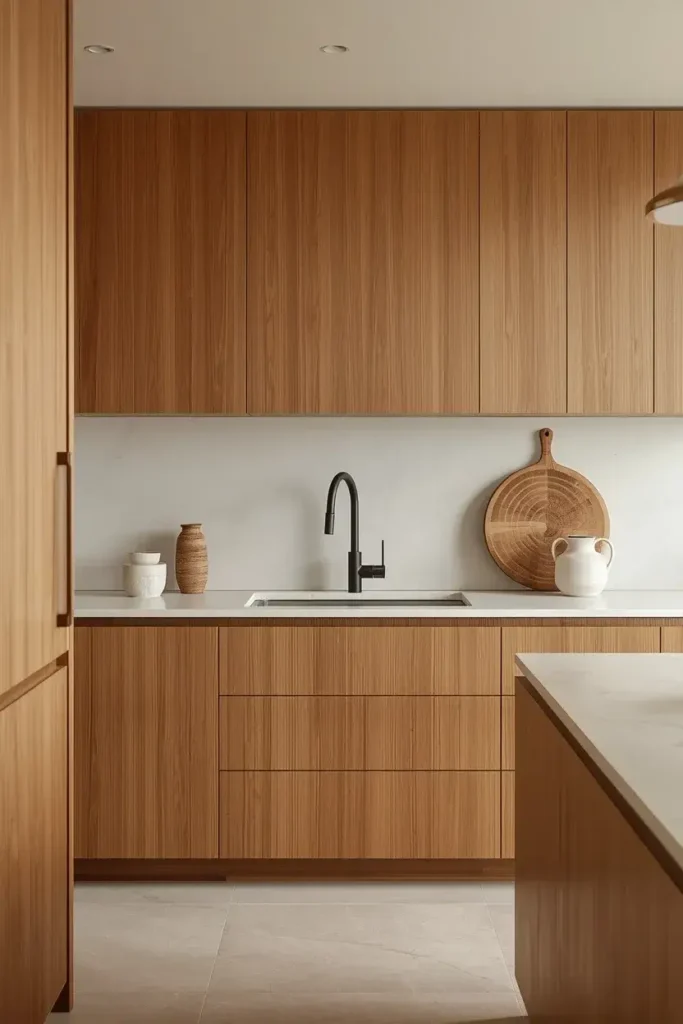
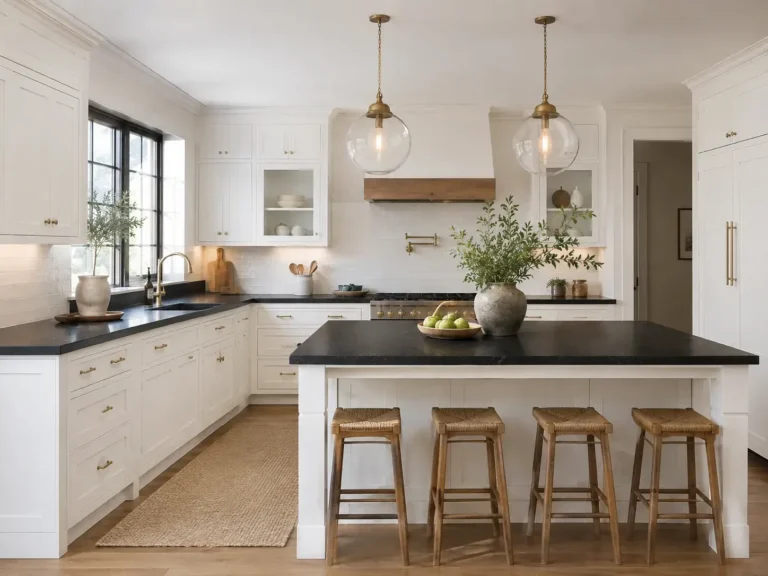
Matte black accents can add definition to a warm Japandi kitchen without making it feel harsh. Consider black cabinet pulls, faucets, pendant fixtures, or slim shelving brackets. Against light wood and creamy walls, these small details create contrast and give the space a more polished appearance.
Use black sparingly because Japandi interiors generally favor softness and balance. A few carefully placed accents are enough to outline important features and add visual structure.
Tip: Repeat the same black finish in two or three areas so the details feel connected rather than randomly scattered.
Design a Calm Japandi Kitchen Island
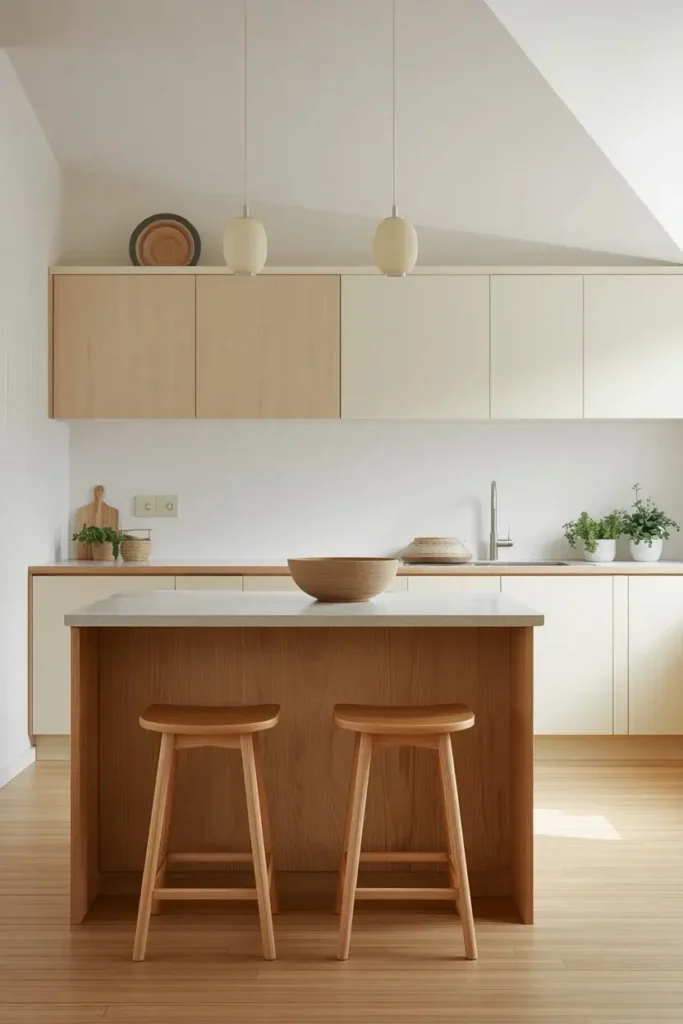
A kitchen island can become the peaceful centerpiece of your space when its design remains simple and functional. Choose natural wood cabinetry, a pale stone countertop, and minimal hardware. Keep the shape clean and allow enough surrounding space for comfortable movement and an uncluttered appearance.
Add two or three simple stools in wood, woven material, or neutral upholstery to complete the look. Soft pendant lighting above the island can create a welcoming gathering spot for meals and conversations.
Tip: Keep the island countertop mostly clear, displaying only one useful or beautiful object such as a ceramic bowl.
Layer Natural Textures Throughout
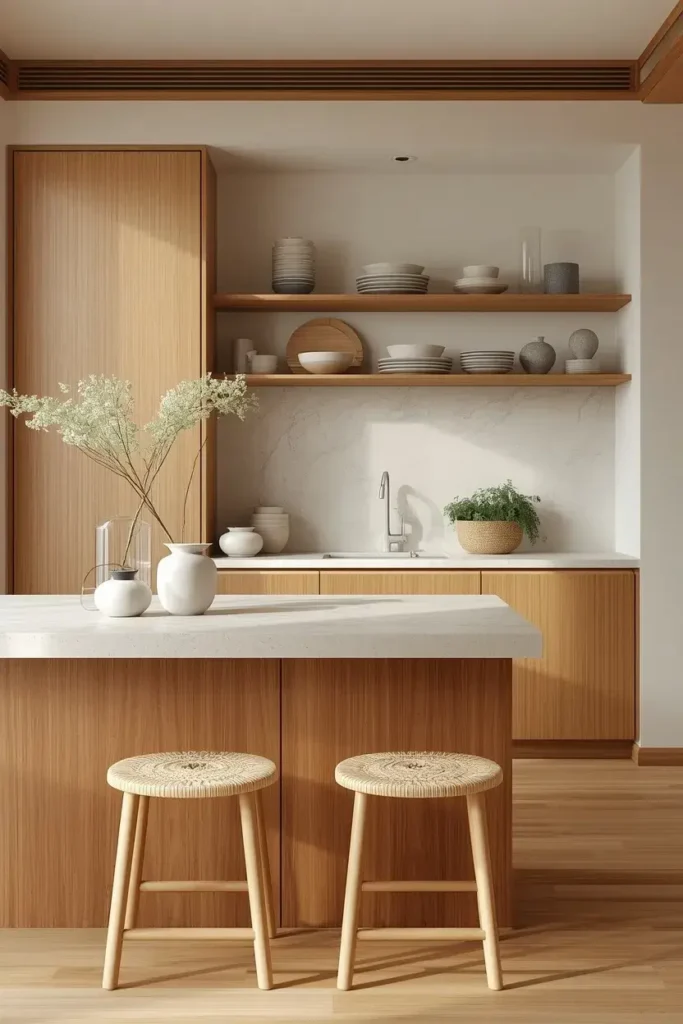
Layering natural textures is an easy way to make a minimalist kitchen feel warm instead of cold. Combine wood cabinetry with stone countertops, ceramic accessories, woven stools, linen textiles, and subtle greenery. Each material contributes a different tactile quality while maintaining a cohesive, earthy atmosphere.
The goal is not to add more decoration but to create richness through materials. When colors remain within a soft neutral palette, even several textures can feel beautifully balanced.
Tip: Before buying new accessories, identify which natural texture is missing and add only one piece that fills that gap.
Conclusion
Creating a beautiful Japandi kitchen is less about following strict rules and more about choosing elements that make your home feel calm, useful, and welcoming. Warm wood, soft neutrals, natural stone, handmade ceramics, gentle lighting, and thoughtful greenery can work together to create a space with lasting character. Keep your surfaces uncluttered, choose quality materials, and allow plenty of visual breathing room. Most importantly, make the kitchen practical for the way you actually live. With a few intentional choices, you can create a peaceful kitchen that feels timeless, comfortable, and naturally elegant every day.