10 Living Room Dining Room Combo Layout Ideas for a Beautiful, Connected Home
When your living room and dining room share one space, it can feel tricky to make everything look intentional. You want the room to feel open, cozy, and stylish without making the furniture look crowded. The right living room dining room combo layout can completely change that feeling. With thoughtful furniture placement, coordinated colors, layered lighting, and clear zones, even a small open-plan room can feel polished and welcoming. These ideas will help you create a space where relaxing, dining, and entertaining flow naturally together.
1. Create Two Clear Zones With Furniture
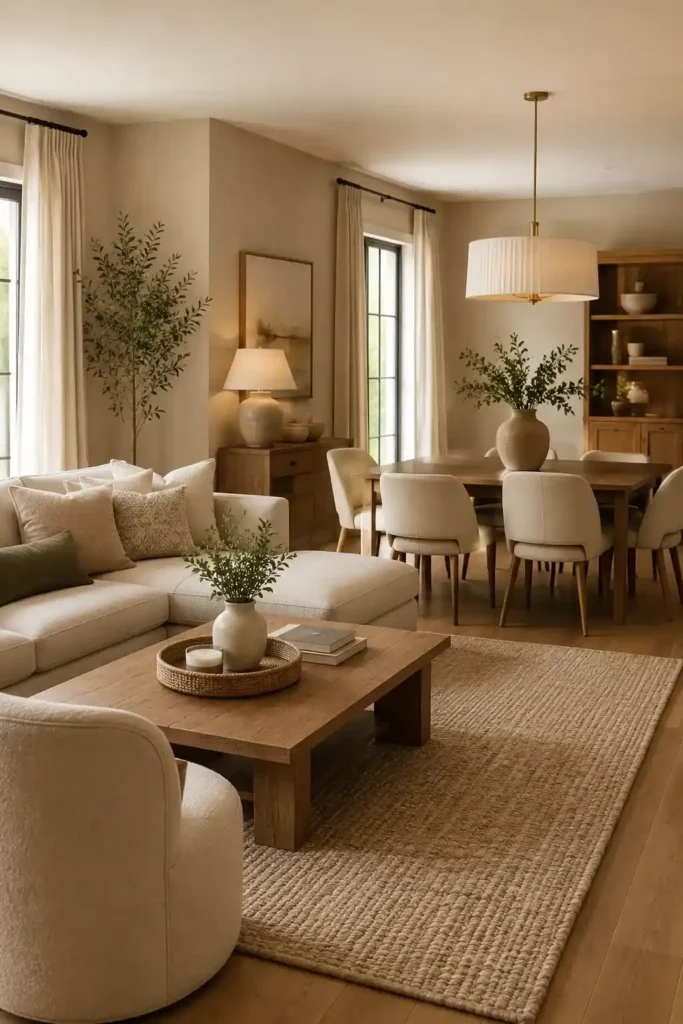
One of the easiest ways to organize a combined space is to give the living and dining areas their own visual zones. Place the sofa facing a television, fireplace, or focal wall, while positioning the dining table behind or beside it. This creates separation without closing off the room.
Use a large area rug beneath the sofa and coffee table to anchor the living area. For the dining zone, try a statement pendant above the table. Keep both areas connected through similar wood tones, fabrics, or accent colors so the room feels cohesive rather than divided. Tip: Leave comfortable walking space between both zones.
2. Use a Sofa to Separate the Spaces
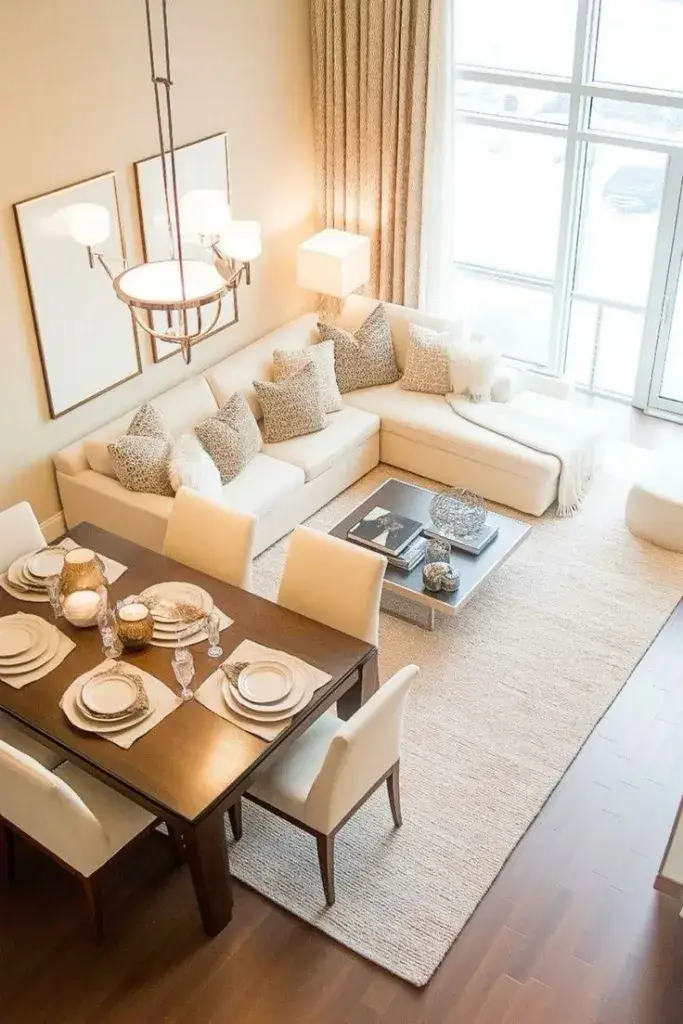
A sofa can act like a soft architectural divider when you don’t have a wall between your living and dining areas. Position the back of the sofa toward the dining table, creating a natural boundary while keeping the overall room open and airy.
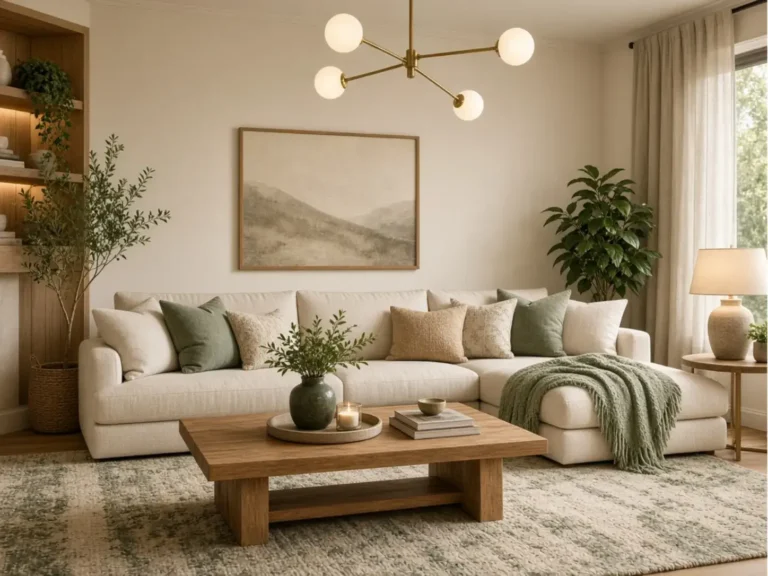
Choose a sofa in warm beige, creamy white, or soft gray to maintain a calm backdrop. Add a slim console table behind it with a lamp, ceramic vase, or greenery for extra style. This arrangement works especially well in rectangular rooms because it creates a natural visual flow from one end to another.
Tip: Choose a narrow console so the walkway stays open.
3. Try an Open Living Room Dining Room Combo Layout
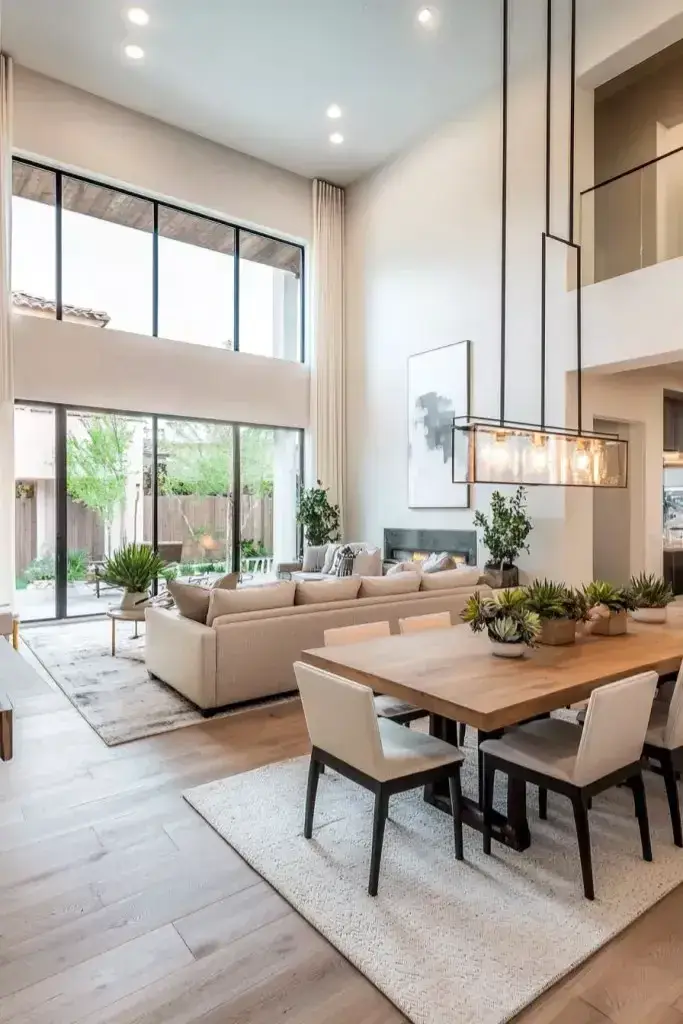
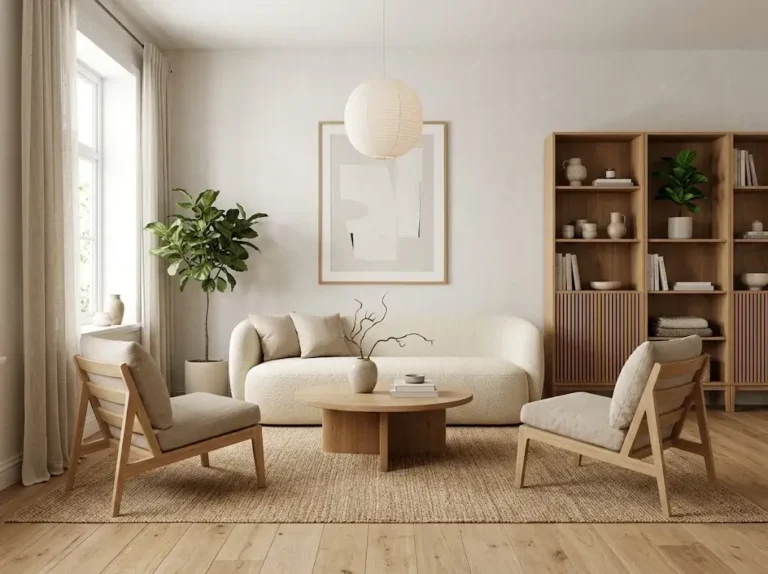
If you love spacious interiors, keep the furniture arrangement open and avoid placing bulky pieces between the two zones. A compact sofa, round coffee table, and streamlined dining table can make the entire room feel lighter and more connected.
Choose pale walls, natural oak furniture, woven textures, and soft linen curtains to enhance the airy feeling. A neutral palette also allows you to introduce personality through cushions, artwork, ceramics, and greenery. This approach is particularly useful when natural light enters from one side and needs to travel throughout the room.
Tip: Keep furniture legs visible to make the space feel more spacious.
4. Define the Dining Area With a Statement Light
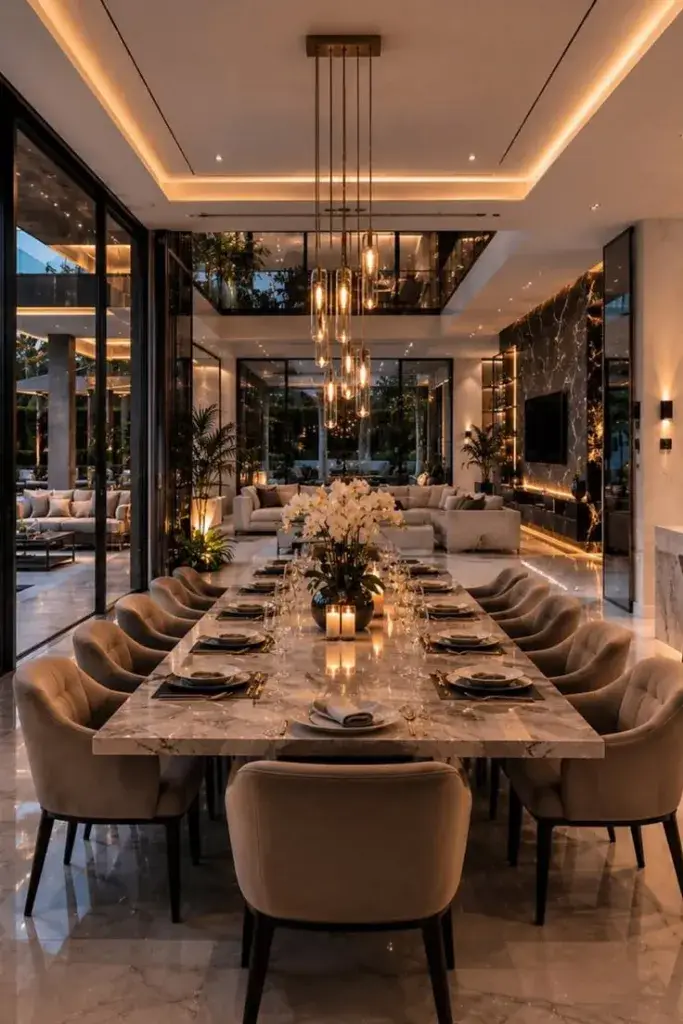
Lighting can create a beautiful invisible boundary between your living and dining areas. Hang an oversized pendant or sculptural chandelier directly above the dining table so the eating area immediately feels intentional and separate.
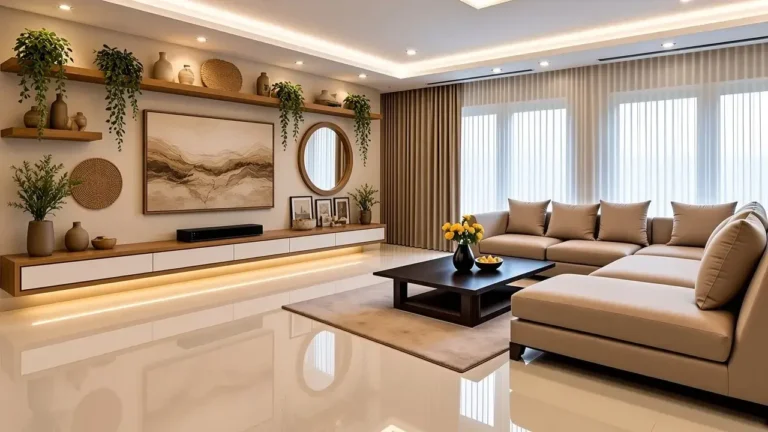
Keep the living room lighting softer with a floor lamp, table lamps, and warm recessed lights. Brass, aged bronze, or matte black fixtures can add character while complementing the finishes throughout the room. The result feels layered and sophisticated without requiring a physical divider.
Tip: Hang the dining light low enough to feel intimate, but high enough to avoid blocking conversation.
5. Pair a Round Dining Table With a Cozy Living Area
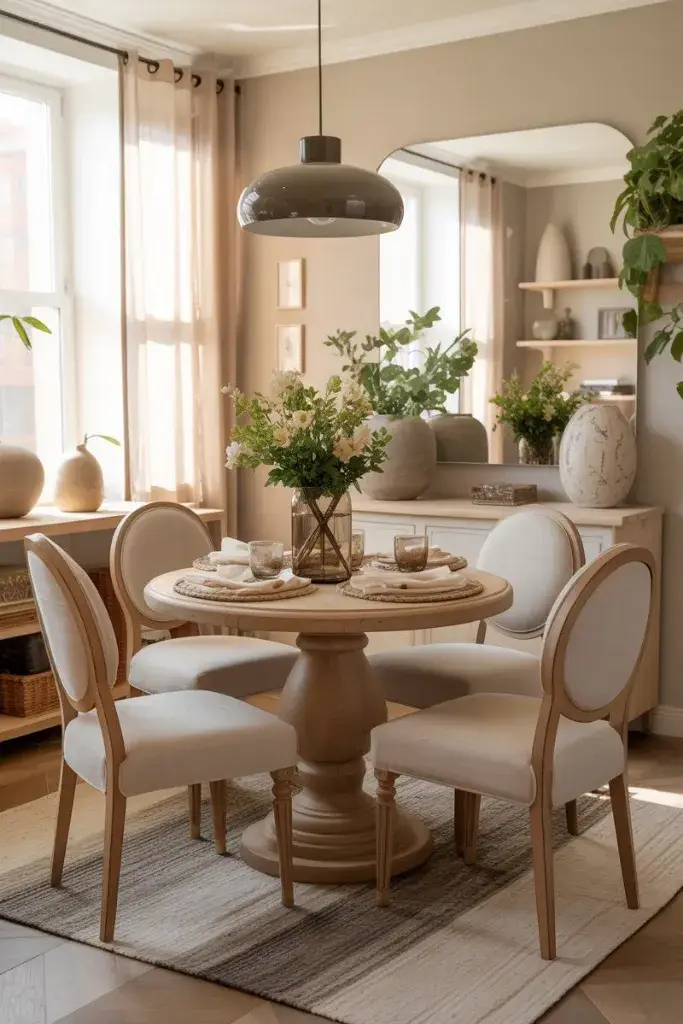
A round dining table is an excellent choice when you’re working with limited space. Without sharp corners, it creates easier movement between the dining chairs and nearby living room furniture. It also encourages a more intimate, conversational atmosphere.
Try a light wood round table with curved upholstered chairs, then balance it with a soft boucle sofa and rounded coffee table nearby. Cream, taupe, warm white, and natural wood create a relaxed modern organic palette. This combination feels welcoming while keeping the room visually soft.
Tip: Choose armless dining chairs when possible to save valuable space.
6. Add a Rug to Anchor Each Zone
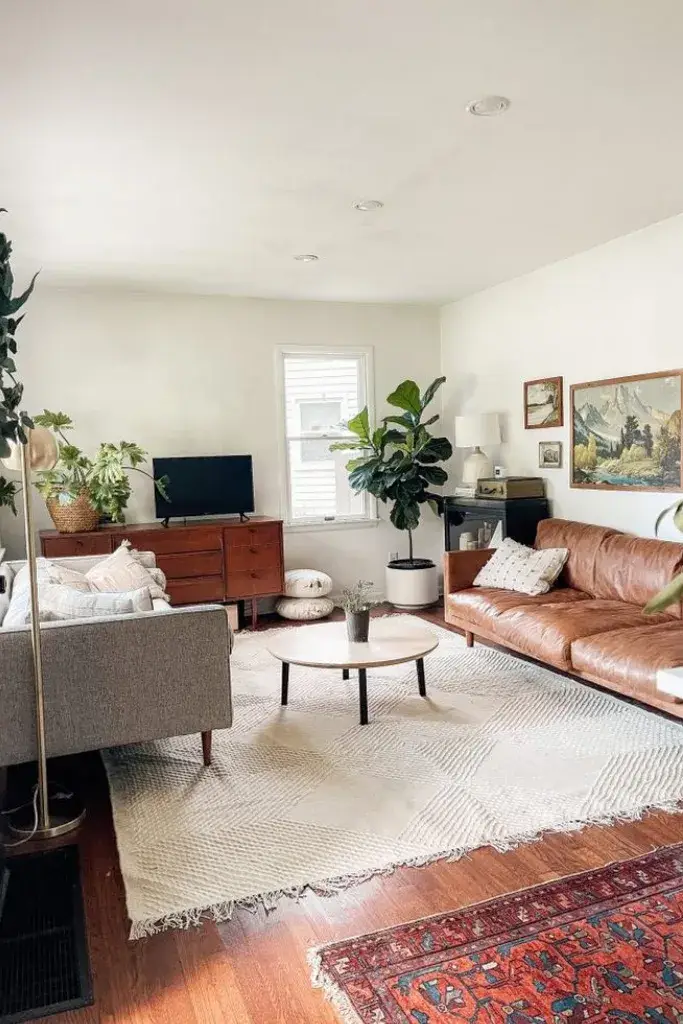
Rugs are one of the simplest ways to make a combined room feel organized. Place a generously sized rug beneath the living room furniture so the sofa, chairs, and coffee table feel connected as one area.
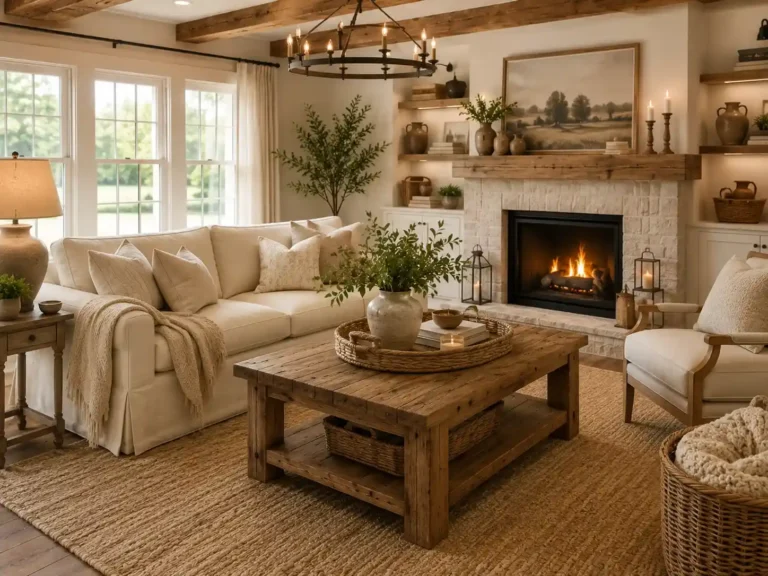
For the dining zone, you can use another rug underneath the dining table if there is enough space. Choose complementary textures rather than identical patterns. A cream living room rug paired with a subtle beige or woven dining rug can add depth without making the room look busy.
Tip: Make sure the dining rug extends beyond the chairs when they are pulled out.
7. Keep the Color Palette Connected
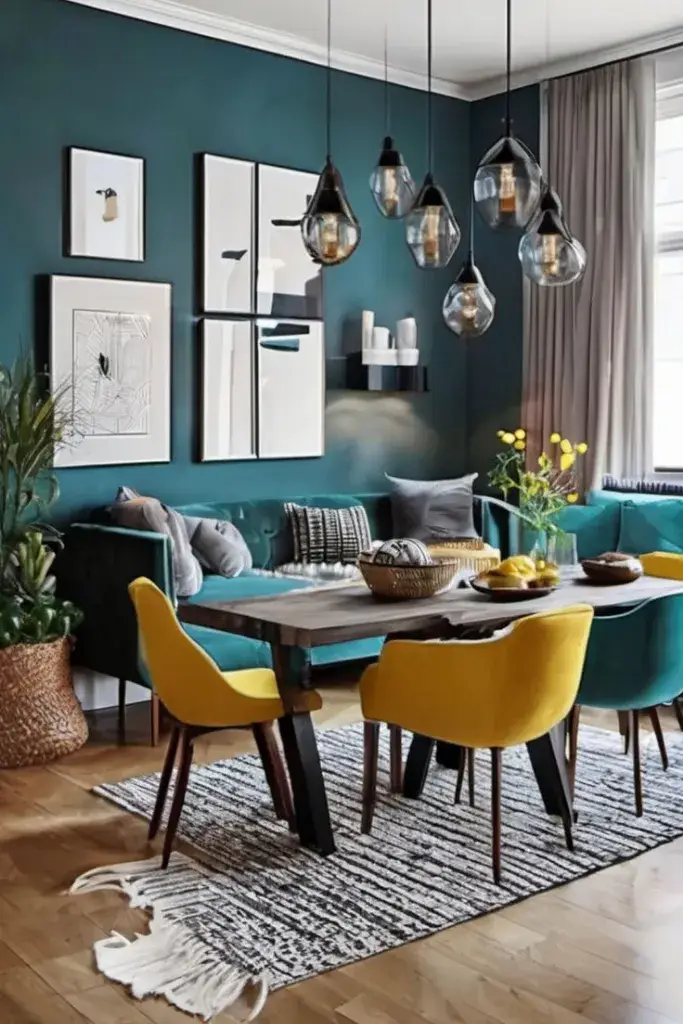
A shared color palette can make separate living and dining zones feel like one beautifully designed room. Start with a neutral foundation such as warm white, beige, greige, or soft taupe, then repeat two or three accent shades throughout both areas.
For example, introduce walnut furniture, olive green cushions, and aged brass details in the living room, then repeat those tones through dining chairs, artwork, or table accessories. Repetition creates harmony without requiring matching furniture.
Tip: Pick one main color and repeat it in small details across both zones.
8. Use a Slim Dining Table for Small Spaces
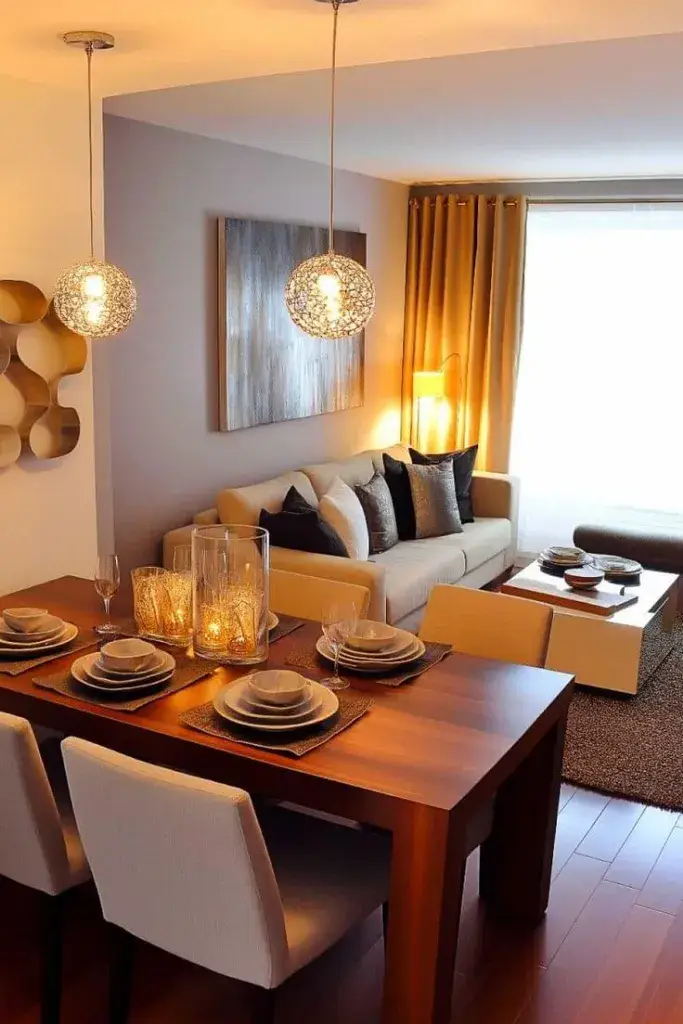
A slim rectangular dining table can make a compact combined room feel much easier to navigate. Position it along a wall or behind the living sofa, depending on your room’s shape. Light oak, whitewashed wood, or a simple glass top can keep the area visually light.
Pair the table with streamlined chairs in cream, beige, or soft gray. Add a small pendant overhead and a simple centerpiece to create an inviting dining moment without overwhelming the living area.
Tip: Choose a table with rounded corners if your walkway is narrow.
9. Place the Dining Area Near Natural Light
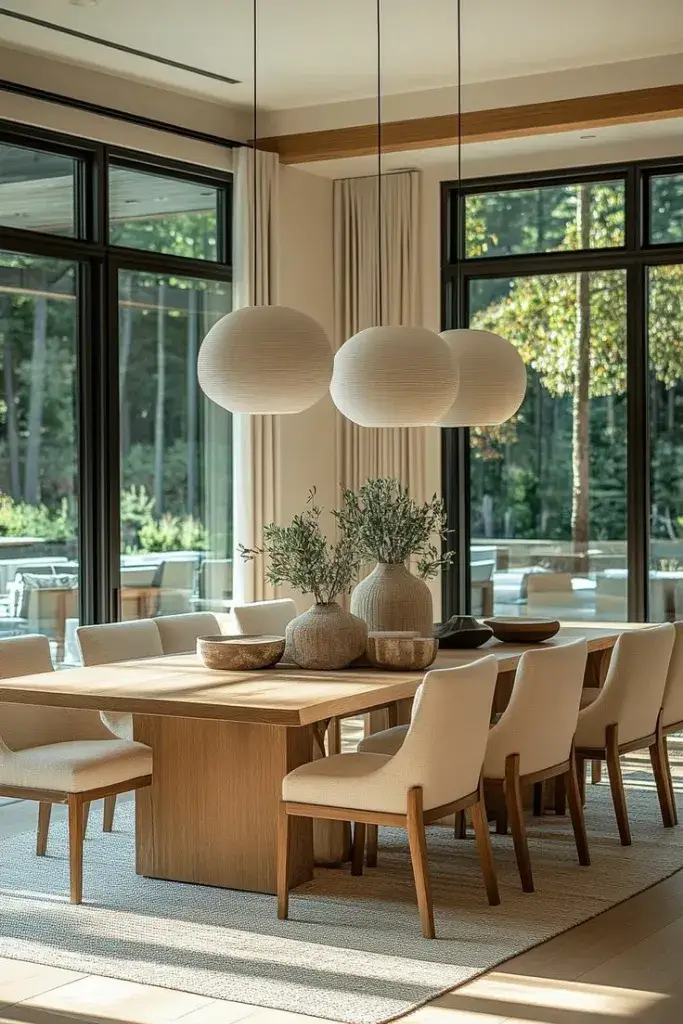
If your room has a large window, consider placing the dining table nearby. Natural daylight makes meals feel brighter and more welcoming, while the living area can occupy the deeper part of the room with softer layered lighting.
A wooden dining table, linen curtains, woven chairs, and a small vase of greenery can create a relaxed atmosphere around the window. Keep the living room palette slightly darker or warmer to create gentle contrast while maintaining visual harmony.
Tip: Leave enough space around the window so curtains can open fully.
10. Create a Balanced Symmetrical Arrangement
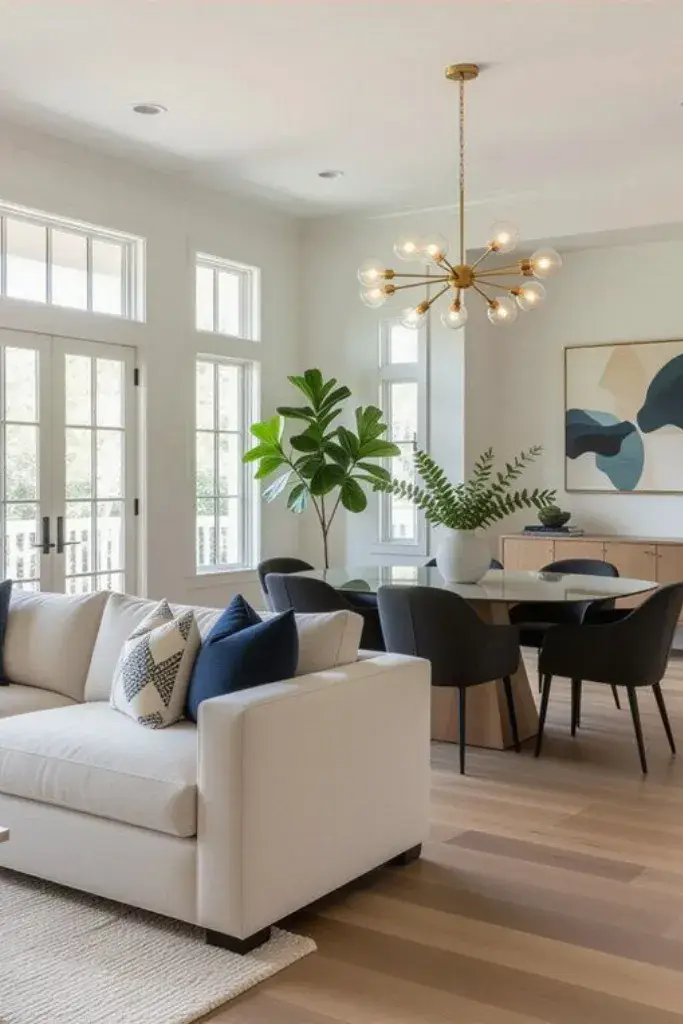
Symmetry can make a shared living and dining room feel calm, polished, and intentionally designed. Center the living sofa on one wall, then position the dining table so both zones have similar visual weight without competing for attention.
Use matching lamps, balanced artwork, or pairs of decorative objects to reinforce the arrangement. Warm neutrals, natural wood, and soft textiles prevent the symmetrical design from feeling too formal or rigid. Tip: Step back from the room and check whether one side feels visually heavier.
Final Thoughts
A combined living and dining room can become one of the most inviting spaces in your home when every piece has a purpose. You don’t need walls or expensive renovations to create definition. The right furniture placement, thoughtful lighting, coordinated colors, and carefully chosen textures can make both areas feel comfortable and connected.
Whether you prefer a warm modern organic look, a minimalist space, or a more traditional style, there are plenty of ways to personalize your living room dining room combo layout. Start with the room’s natural flow, keep walkways comfortable, and choose pieces that make you want to stay awhile. Tip: Prioritize comfort first, then layer in decorative details.