12 Area Rugs in Living Room Ideas That Make Your Space Feel Finished
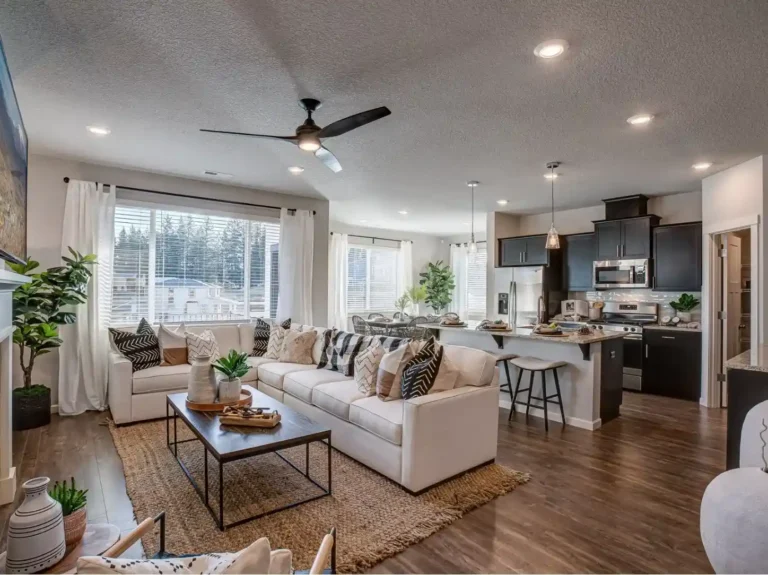
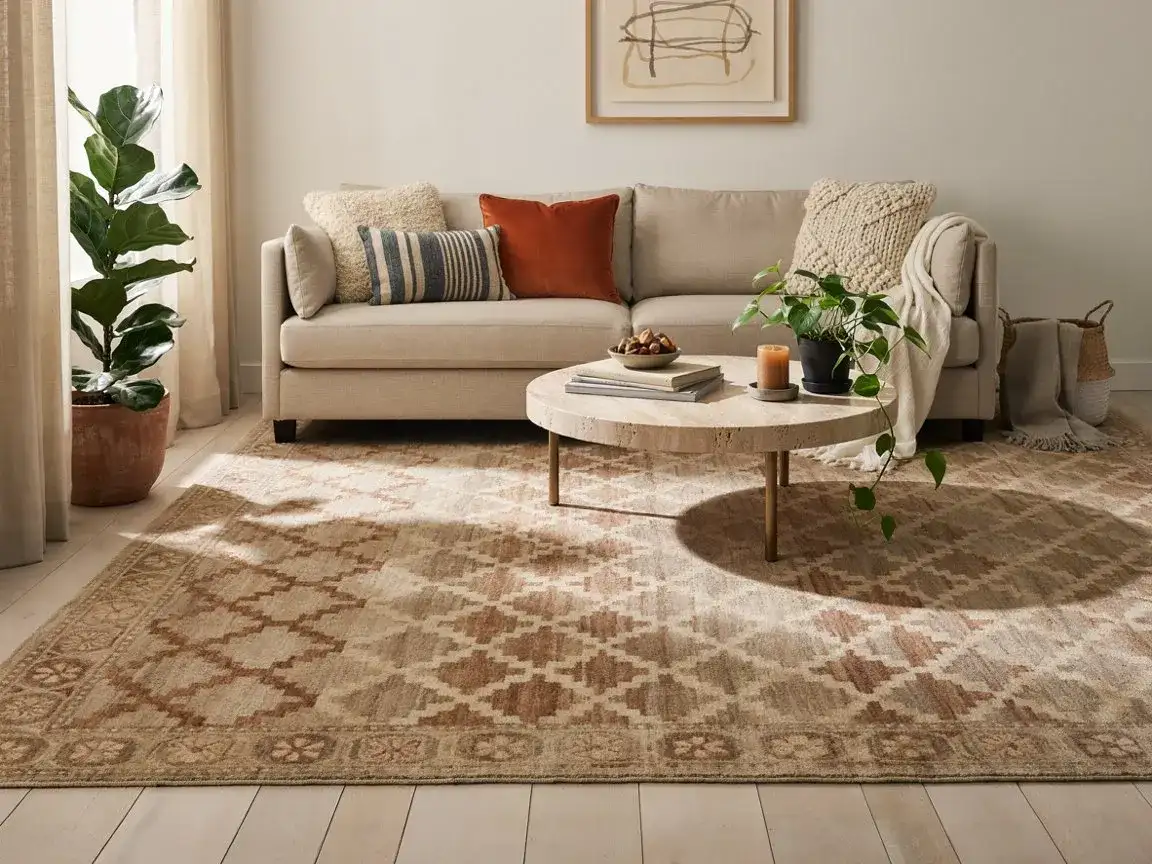
A living room can have beautiful furniture, soft lighting, and carefully chosen decor, yet still feel strangely unfinished. Often, the missing piece is right under your feet. The right area rug can instantly make a room feel warmer, more inviting, and thoughtfully designed. Whether your style is cozy farmhouse, modern minimalist, or colorful bohemian, the perfect rug can connect everything together. These area rugs in living room ideas will help you choose colors, textures, sizes, and placements that make your space feel beautifully pulled together.
Layer a Soft Neutral Rug for a Cozy Look
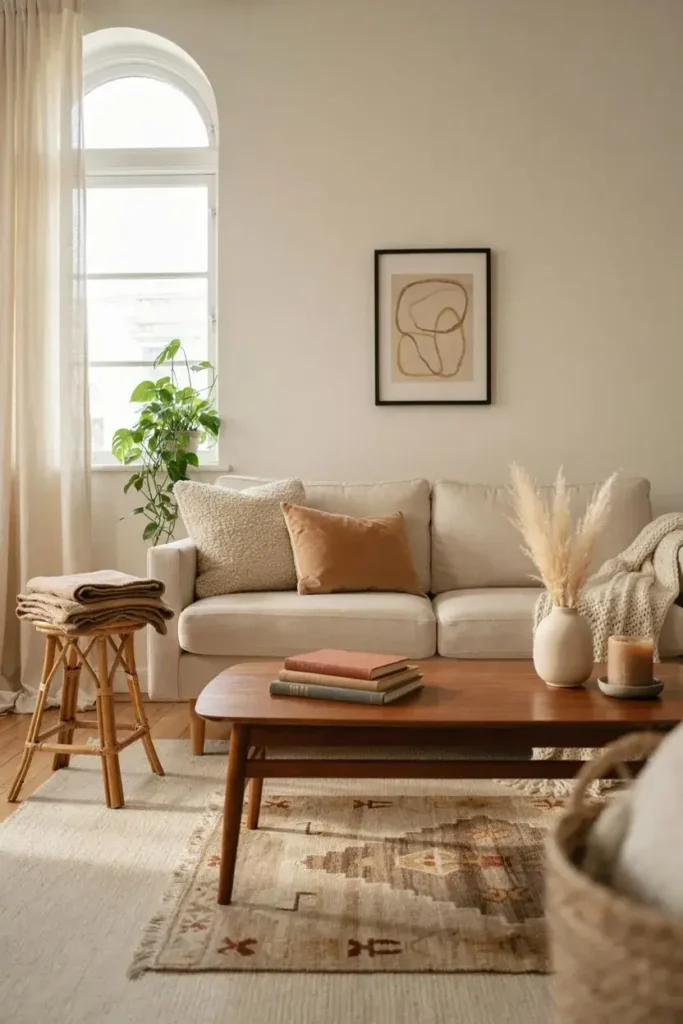
A creamy beige or warm ivory rug can soften a living room without competing with your furniture. Choose a plush wool, cotton, or textured jute style for an inviting foundation. Pair it with a caramel sofa, wooden coffee table, and warm lamps for a relaxed atmosphere.
This look works especially well when your walls and furniture already have color or pattern. The neutral rug creates breathing room while adding softness underfoot. It also reflects natural window light beautifully, making the room feel brighter and more spacious.
Tip: Choose a slightly textured neutral rug to add depth.
Choose a Bold Pattern for Personality
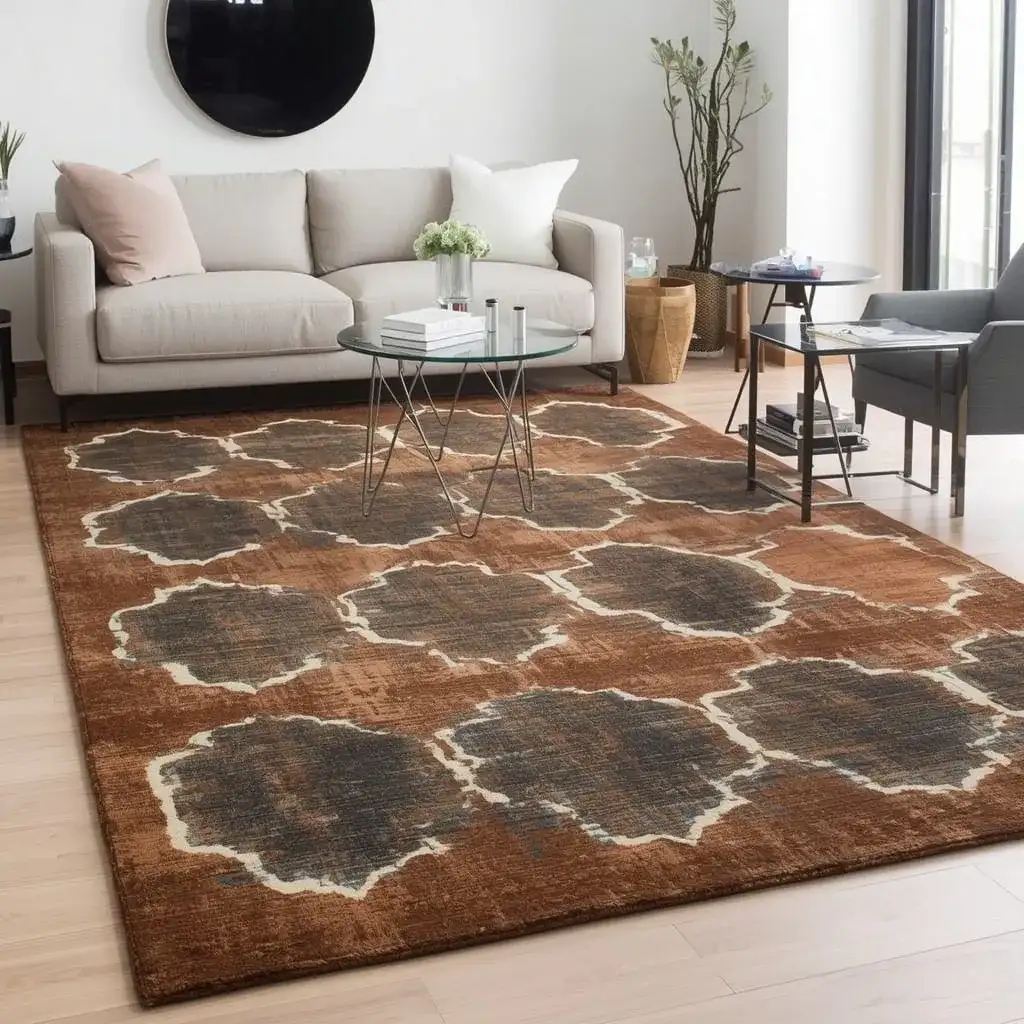
If your living room feels flat or overly plain, a patterned rug can become the room’s artistic focal point. Try geometric shapes in navy and cream, vintage motifs in rust and blue, or an oversized floral pattern for a more romantic feeling.
A bold rug works because it gives your eye something interesting to explore while connecting different colors throughout the space. Keep nearby furniture relatively simple so the pattern feels intentional rather than overwhelming.
Tip: Pull one small color from the rug into your cushions or artwork.
Use a Large Rug to Define the Seating Area
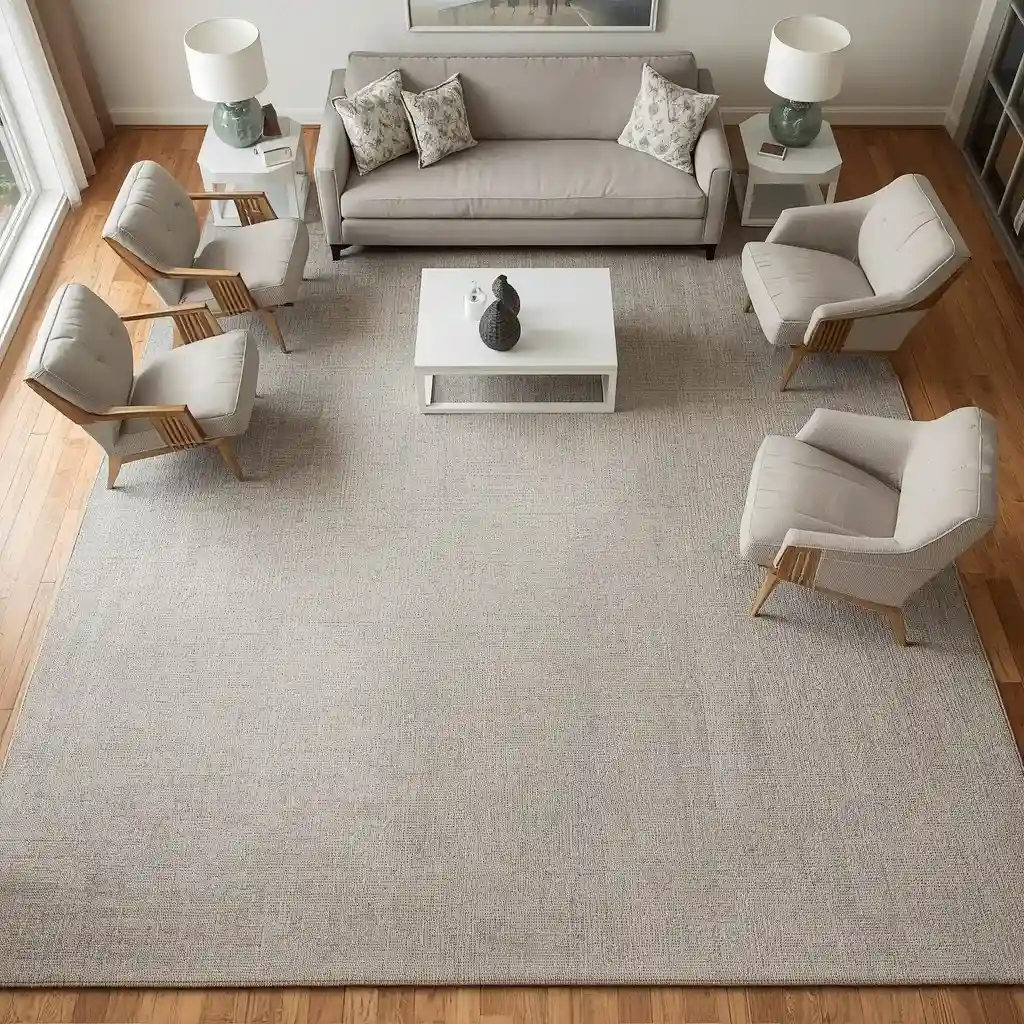
A generously sized rug can visually gather your sofa, armchairs, and coffee table into one comfortable conversation zone. Instead of letting furniture look scattered across the floor, the rug creates a clear boundary and makes the arrangement feel more polished.
For a balanced look, allow the front legs of your main seating pieces to sit on the rug. In larger rooms, placing all furniture completely on the rug can create an elegant, anchored effect.
Tip: Measure your seating area before buying so the rug does not look undersized.
Try a Vintage Rug for Instant Character
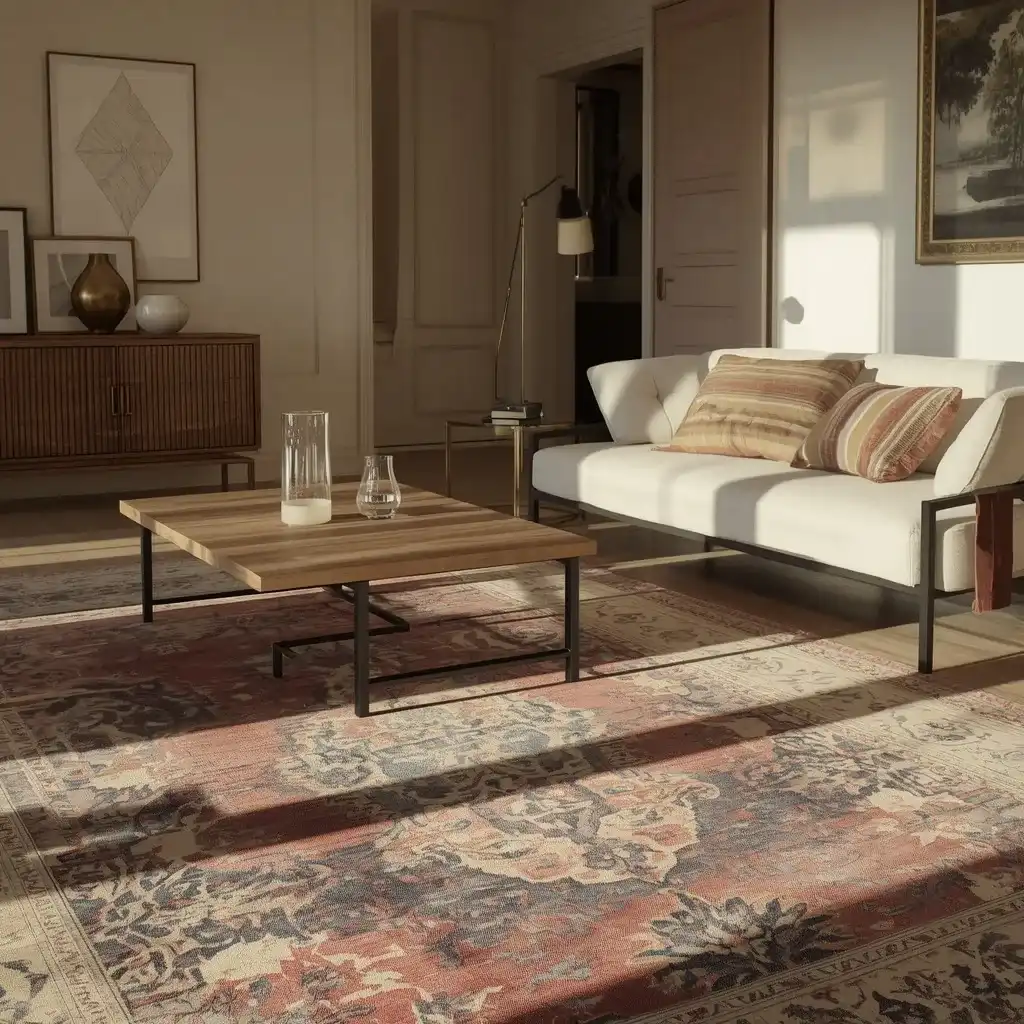
A faded Persian-inspired rug can give your living room the charming feeling of a space collected over time. Look for muted terracotta, dusty blue, olive, cream, and faded gold tones with slightly distressed patterns.
Vintage-style rugs are particularly useful in modern rooms because they introduce warmth and visual history. Place one beneath a streamlined sofa, glass coffee table, or contemporary chairs to create an appealing contrast between old-world character and modern simplicity.
Tip: Choose a low-pile vintage rug if you want an easier-to-clean everyday option.
Bring Warmth With Earthy Rug Colors
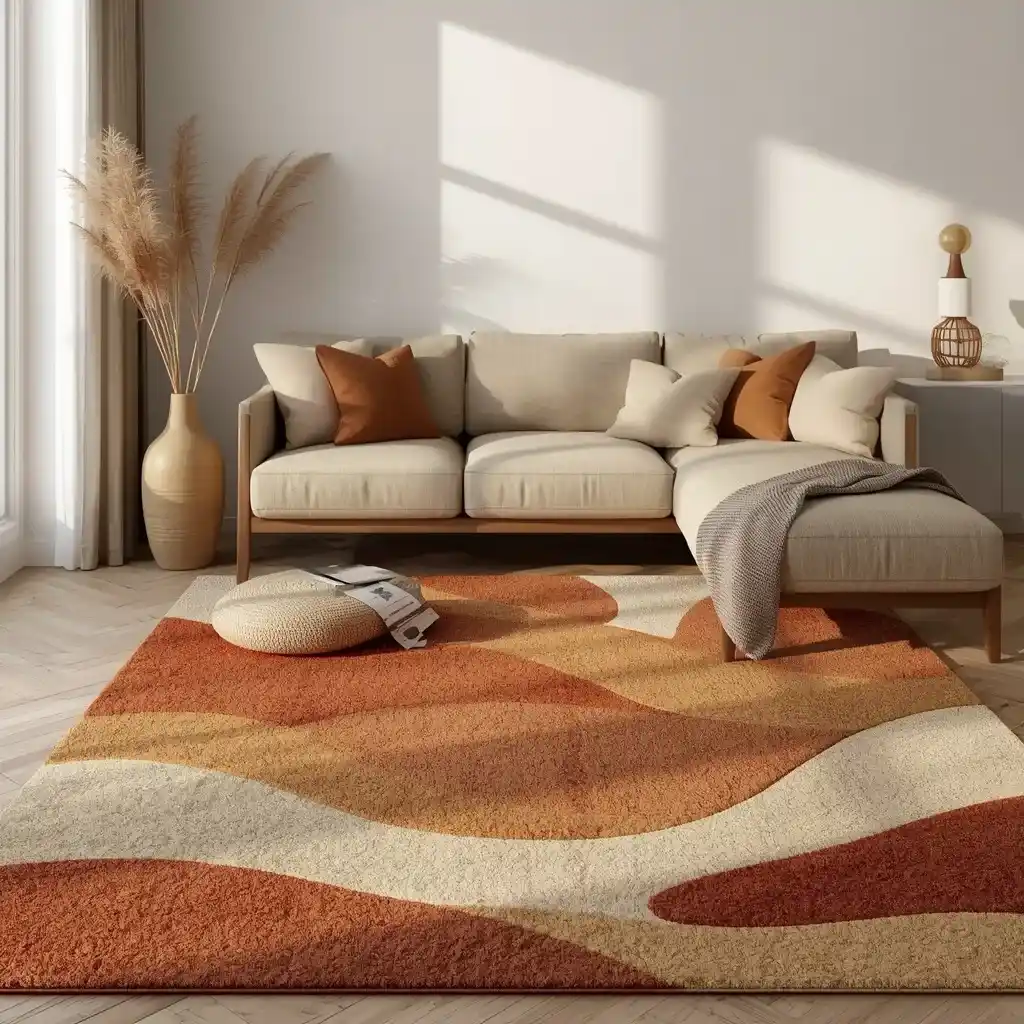
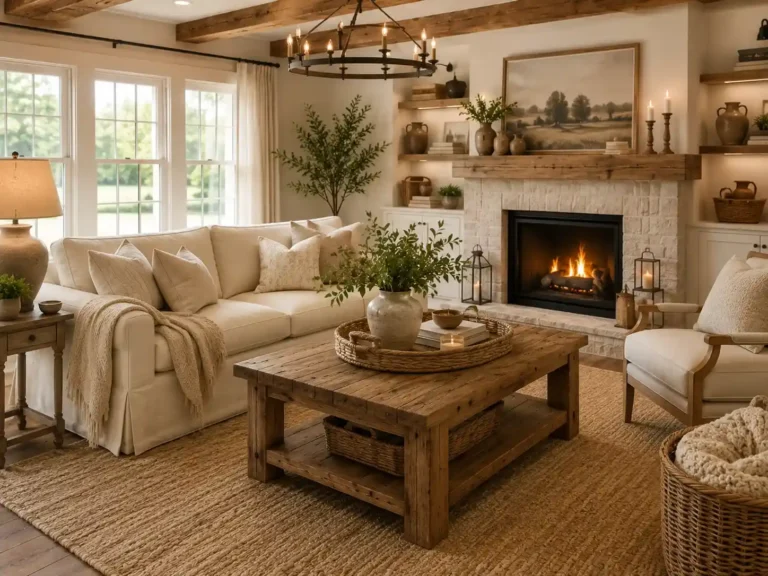
Terracotta, cinnamon, sand, olive, and warm brown rugs can make a living room feel grounded and naturally cozy. These shades work beautifully with cream sofas, walnut furniture, woven baskets, and soft amber lighting.
Earthy colors are especially lovely during evenings because they complement warm bulbs and create a relaxed, intimate mood. They can also make a large or sparse room feel more welcoming without relying on heavy decoration.
Tip: Add one or two natural materials nearby, such as rattan or unfinished wood, to reinforce the earthy palette.
Add Texture With a Shag or Plush Rug
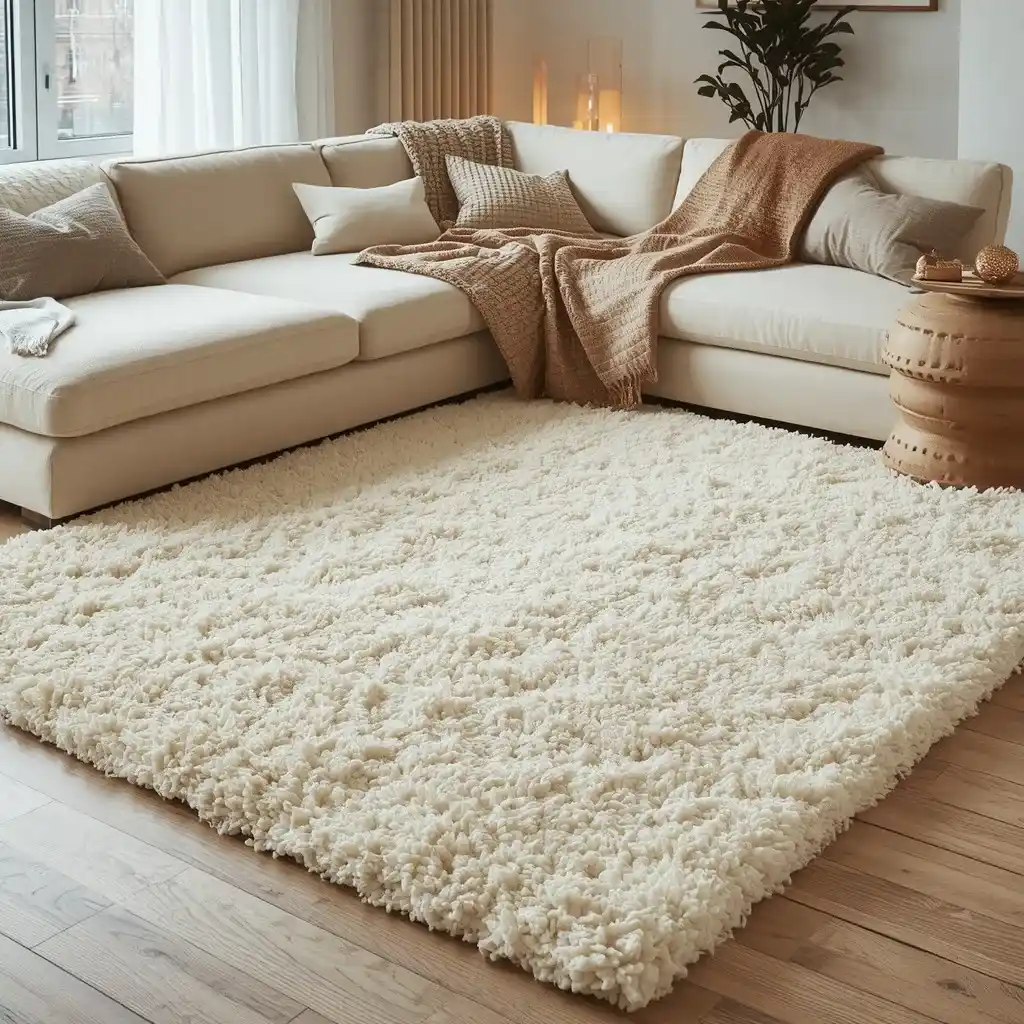
For a living room that feels irresistibly comfortable, consider a plush shag rug or thick textured design. Cream, oatmeal, soft gray, and muted taupe are versatile choices that create a calm, cozy foundation.
Texture adds dimension even when the rug has very little pattern or color. Imagine sinking your feet into a soft rug beside a linen sofa while sunlight filters through sheer curtains. It instantly creates a relaxed atmosphere.
Tip: Keep heavily textured rugs away from areas where doors need extra clearance.
Make a Small Living Room Feel Larger
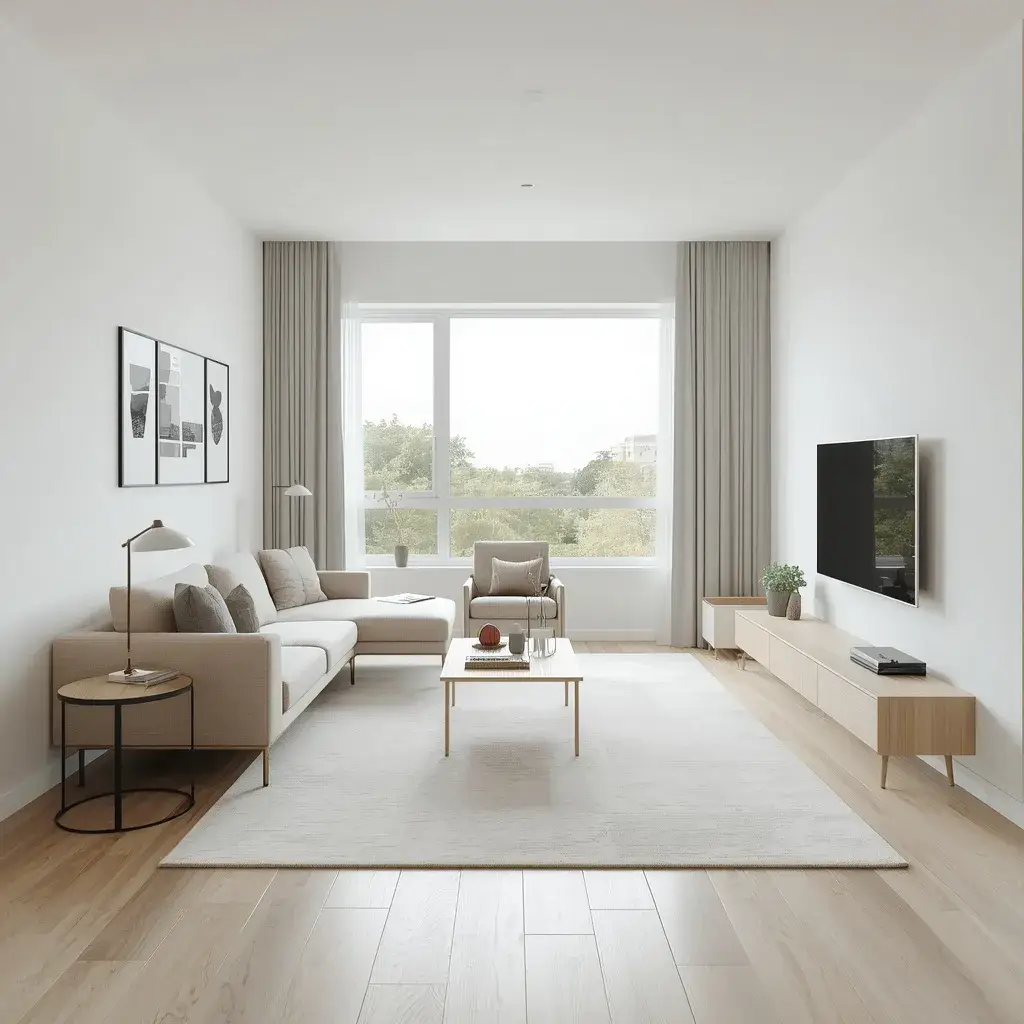
A carefully chosen rug can make a compact living room appear more open. Light colors, subtle patterns, and a rug that extends beyond the seating area can visually stretch the floor and create a stronger sense of continuity.
Avoid choosing a tiny rug that sits only beneath the coffee table, as it can make the furniture arrangement feel disconnected. Instead, use a larger design in cream, light gray, or soft beige to unify the room.
Tip: Leave a consistent border of visible flooring around the rug for a spacious effect.
Mix a Rug With Natural Wood Tones
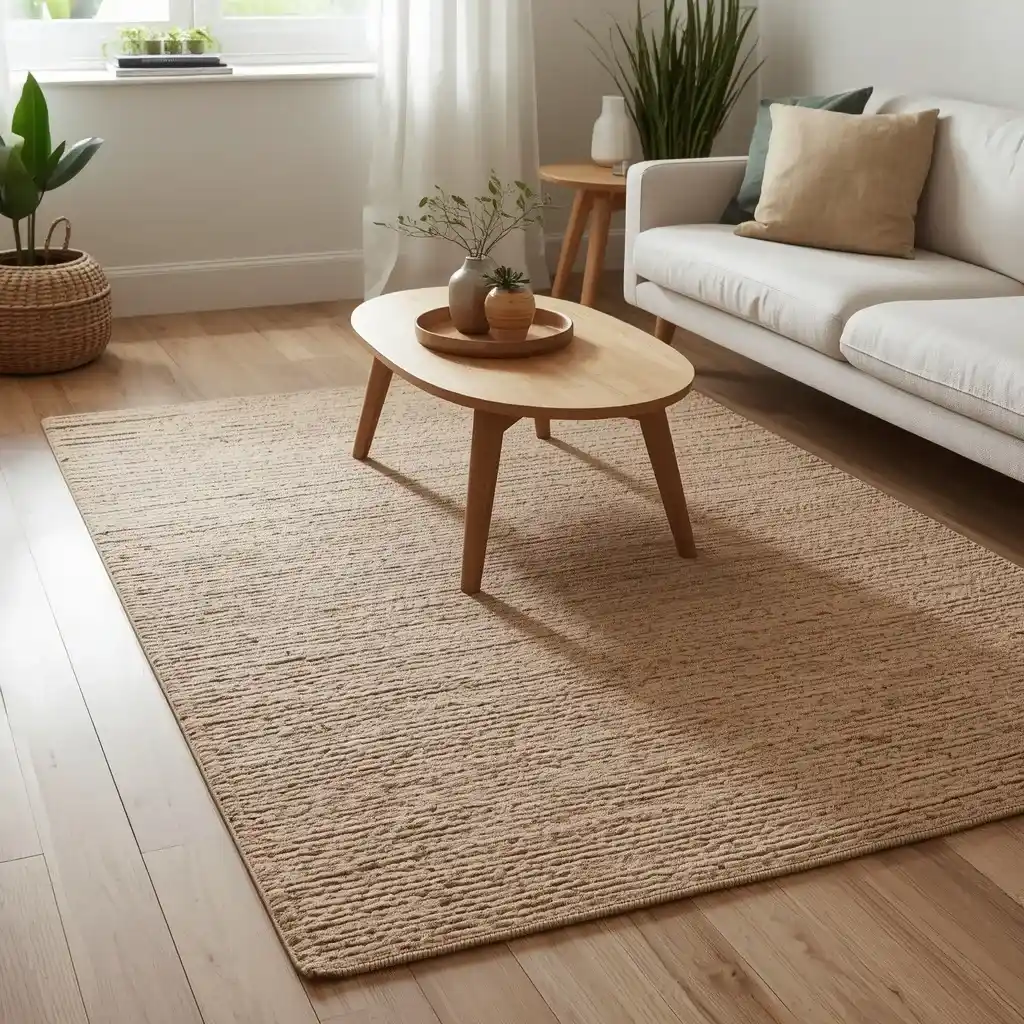
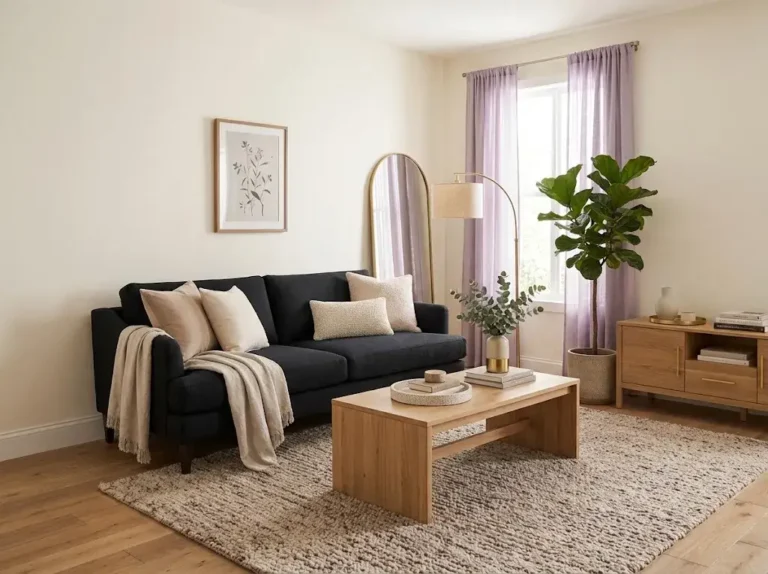
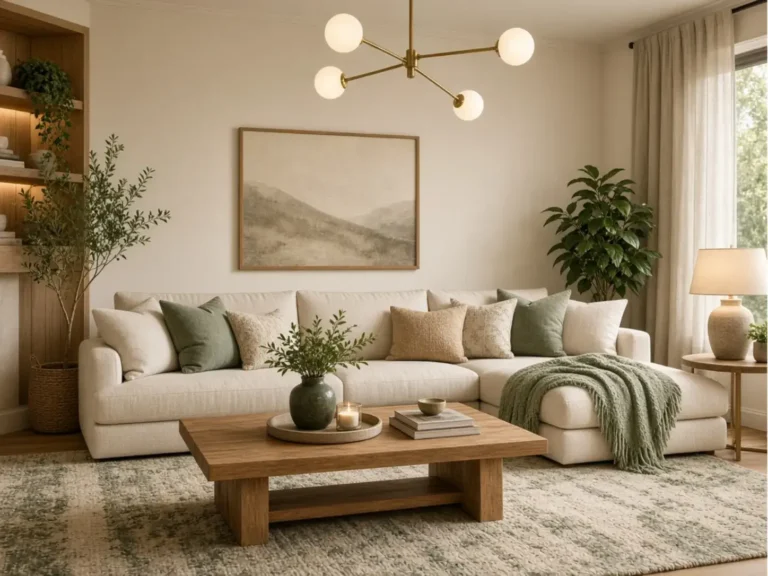
A rug in cream, beige, tan, or muted green looks beautiful against natural wood floors and furniture. The combination feels warm without becoming visually heavy. Add a linen sofa, woven baskets, ceramic decor, and soft daylight for an effortlessly comfortable living room.
Natural materials work together because they create subtle layers of texture and color. A simple rug can soften the harder appearance of wooden floors while making the seating area feel more welcoming.
Tip: Choose a rug with a small amount of texture to complement the natural grain of the wood.
Create Contrast With a Dark Area Rug
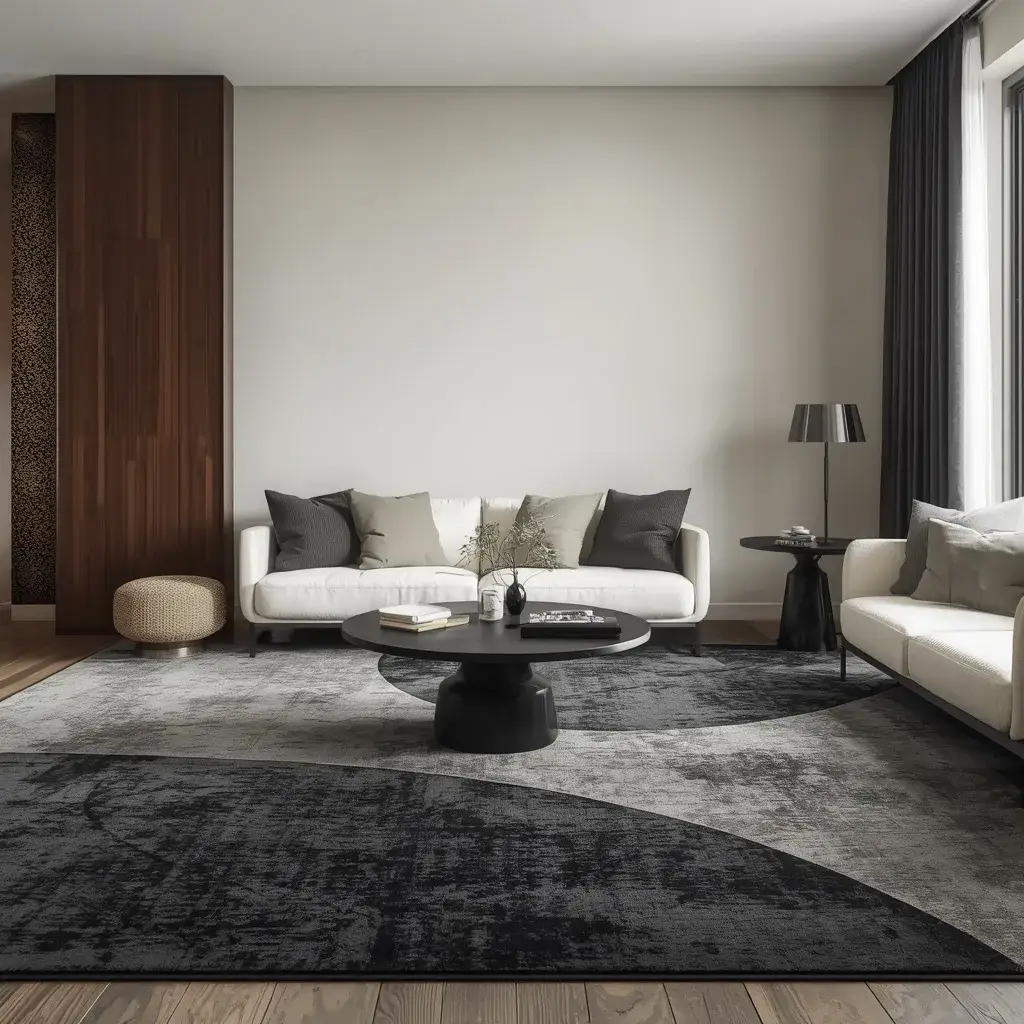
A charcoal, deep navy, or chocolate-brown rug can make a light living room feel dramatic and sophisticated. Place it beneath a cream sofa with pale walls, brass accents, and warm wood furniture for a striking yet comfortable contrast.
Dark rugs can also visually ground a room, especially when the furniture is light or the space has lots of windows. To keep the atmosphere balanced, repeat a darker shade in small accessories such as cushions, picture frames, or lighting.
Tip: Use a patterned dark rug to hide everyday marks more easily.
Define an Open-Plan Living Space
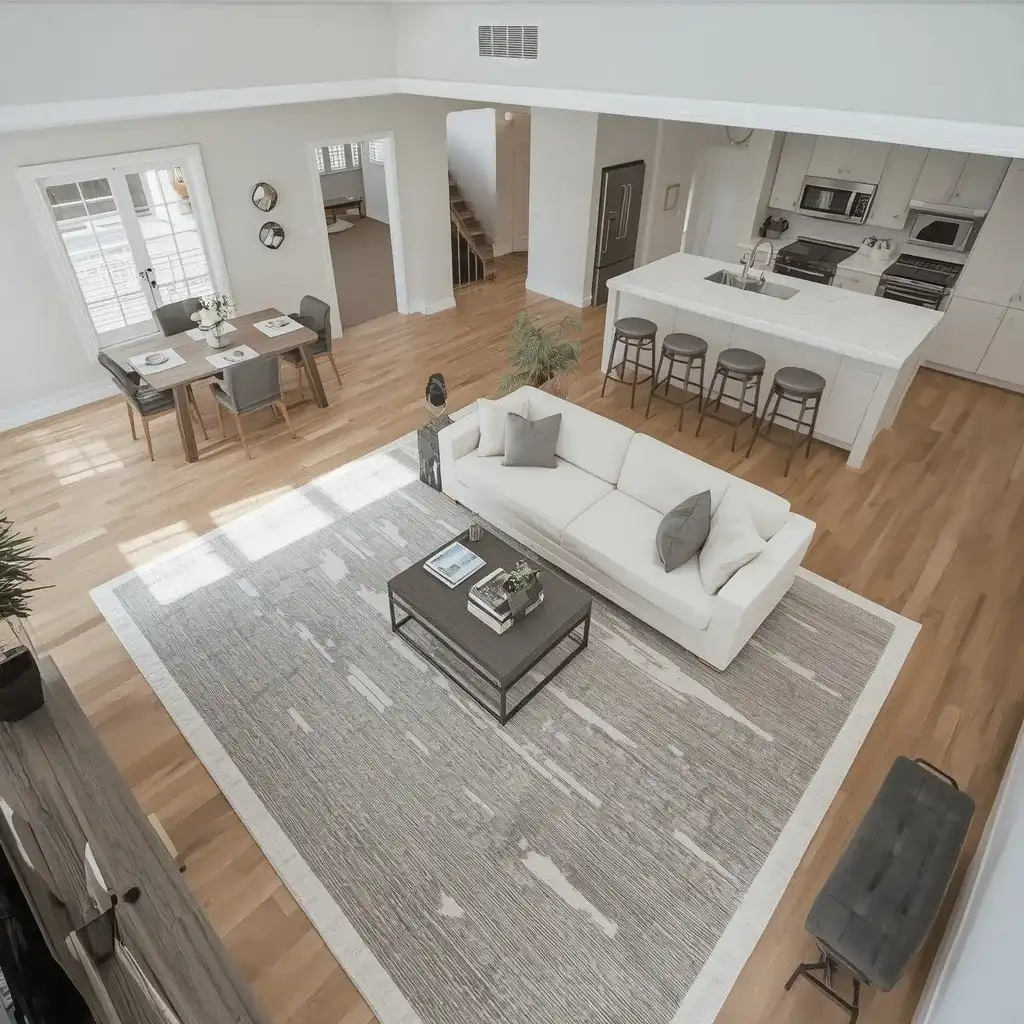
In an open-plan home, a well-sized rug can clearly separate the living room from the dining or kitchen area. Choose a design that complements the surrounding colors while giving the seating zone its own visual identity.
The rug creates an invisible boundary without blocking light or making the room feel divided. Try a soft geometric pattern with a neutral background for a modern space, or a faded traditional design for something warmer.
Tip: Keep the rug centered beneath the main seating arrangement so the zone feels intentional.
Try a Round Rug for a Softer Shape
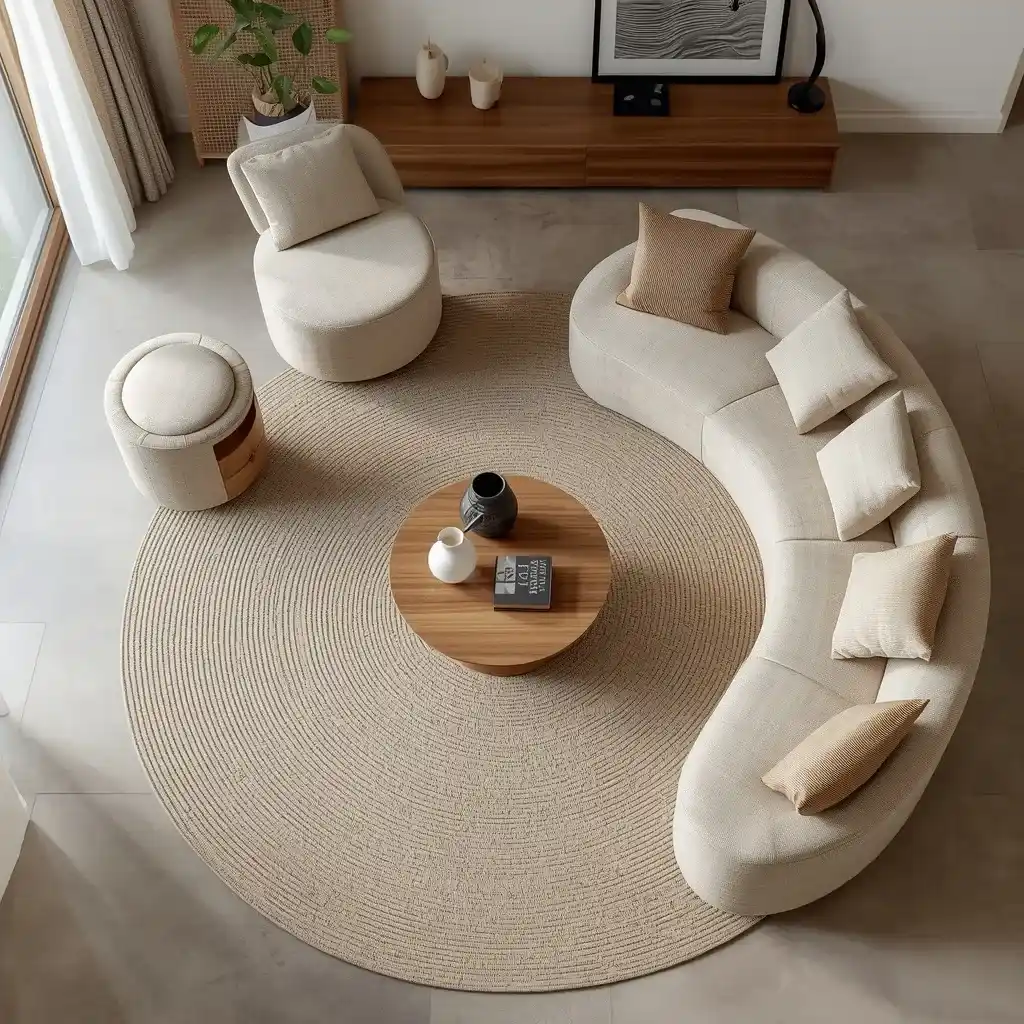
A round rug can bring an unexpected softness to a living room filled with straight lines. It works beautifully beneath a circular coffee table, curved sofa, or compact seating arrangement, especially in rooms where you want a more relaxed and playful mood.
Choose ivory, muted sage, dusty blue, or warm tan for a subtle look, or select a patterned round rug when you want it to become a decorative focal point. The curved shape naturally draws attention toward the center.
Tip: Use a round rug where its shape will remain visible instead of hiding most of it beneath furniture.
Coordinate the Rug With Your Decor
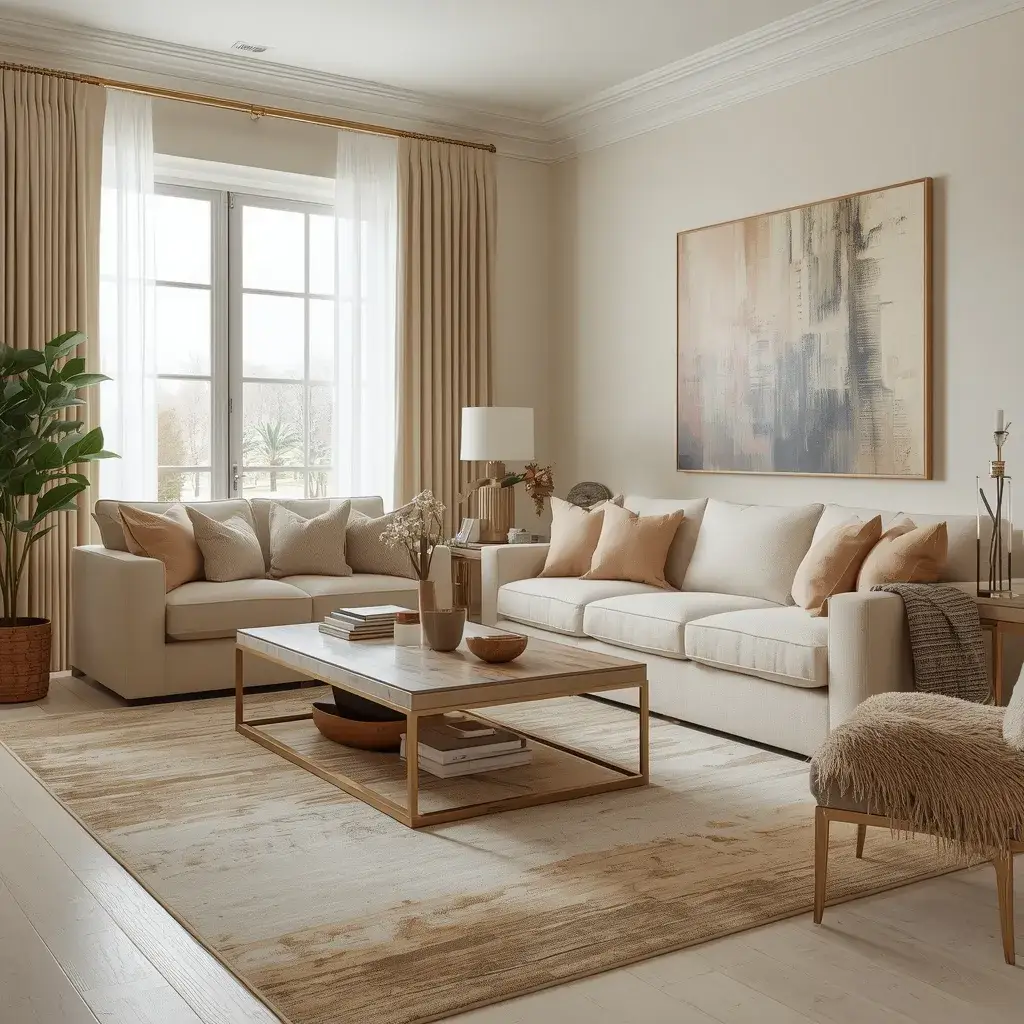
One of the easiest ways to make your living room look professionally styled is to let the rug connect several existing colors. If your cushions feature rust and cream, for example, choose a rug that includes those shades without copying the exact pattern.
This creates a cohesive room where every element feels connected rather than randomly selected. Repeat the rug’s colors through artwork, curtains, throws, or small accessories while keeping the overall palette relaxed. Tip: Take photos of your room before shopping so you can compare potential rug colors in your actual space.
Conclusion
The right rug can completely change the feeling of your living room. It can make a large space feel cozy, give a small room more visual breathing room, or bring together colors that previously felt disconnected. Whether you love soft neutrals, vintage patterns, earthy tones, bold designs, or luxurious textures, there is an option that can suit your home beautifully.
When choosing area rugs in living room spaces, focus on how the rug works with your furniture, lighting, flooring, and everyday lifestyle. Most importantly, choose something that makes you want to relax, linger, and enjoy your home. Tip: Measure your room first, then choose the rug size and style that best supports how you actually use the space.